Door 5 of 6 Research desk and studio
Bring us your mystery. We’ll find the answer.
A history hunt. Every clue is true™. Every answer is in the record.
Lost ancestors, forgotten places, heirlooms no one can explain, and the family story nobody has checked. If it was ever written down, we will look for it and tell you honestly what we find. And when what you have is a faded photograph or a story worth showing, the studio can image it, design it, model it or film it.





- Kinds of research
- 10
- Studio services
- 10
- First read
- Honest
- First reply
- Days


Pictures made, mended and studied in the studio. See the studio’s work
The research desk
Some questions have waited a hundred years for someone to look properly. Every statement we write is marked with how strong its evidence is, and every source is cited.
Lost ancestors
Census rolls, death certificates, deeds, wills, church books and old newspapers, compared line by line. When the records disagree, we work out who was remembering, and when.
Forgotten places
A vanished mill, a schoolhouse, a cabin or a whole village, found again on old plat maps, surveyors’ field notes and county atlases.
Heirlooms no one can explain
An old photograph, a lodge badge, a deed, a letter or a piece of jewelry, traced through the people who owned it.
Ask about this (Heirlooms no one can explain)See the heirlooms
Mysteries, resolved
Giant bones, underground rivers, buried treasure. We read the story against the records and tell you which parts hold up and which don’t.
Who said it first
A family story, a famous quote or a local legend, traced back to the first time it was printed. Who wrote it down? Were they there? Who told them?
Family histories and registers
Every descendant of one couple, or every ancestor of one person, in an ancestral monograph, built from the records, with every statement marked and every gap shown honestly.
Ask about this (Family histories and registers)See a specimen
Is the family story true?
The Ellis Island name change, the famous ancestor, the three brothers who came over together. We find where the story began and what the records say.
Ask about this (Is the family story true?)Test a family legend
Lodges, churches and old societies
Rosters, proceedings and minute books, where they survive and their keepers allow access, to learn who belonged, when, and what they did.
A second pair of eyes
A family history, a book chapter or an article checked against its sources before it goes out into the world.
Other research
Background for books, films and exhibits, house and building histories, and the question that fits none of the boxes above. Ask; we will say honestly whether the record can answer it.
The studio
The same care, turned on pictures, landscapes and the record itself: imaging, design, photography, film and 3D. Everything you send is handled gently and returned as you sent it.

Visit the studio and see its work
Digital imaging
Careful, high-resolution images of photographs, letters, certificates, maps, Bibles and heirlooms, so the originals can be put safely away and the copies shared.
Imaging analysis
Faded ink brought back, water-stained pages made readable again, and the small details in an old photograph studied: the clothes, the buildings, the signs in a window.
Image creation and restoration
Torn and faded photographs repaired, old maps redrawn clean, and new illustrations made from what the record describes, always labeled as new work.
Graphic design
Family-history books and their covers, ancestral charts, reunion and memorial pieces, logos, signs and brochures.
Web design
Websites for families, historical societies, museums and small businesses: easy to read, quick on a phone, and easy to keep up to date.
Ask about this (Web design)This site is an example
Photography
Heirlooms, documents and family pieces photographed properly, and the places that matter to a family history, from the ground or the air.
Video production
Short family-history films, recorded interviews with the people who still remember, and documentaries built from the record and the photographs.
3D LiDAR imaging
Landscapes modeled in three dimensions from public LiDAR elevation surveys, which show old roads, field lines, mill races and shorelines. Made from the data, with no need to set foot on anyone’s land.
3D animation
Fly-throughs of a landscape, and buildings or places shown as the record describes them, every reconstruction labeled as a reconstruction.
Living documents
Research papers, timelines and family records that keep growing as new evidence turns up, every change dated, so the latest version is always the true one.
How a case works
Five steps from your first message to the report in your hands.
- Tell us what you know.A name, a place, rough dates, and whatever the family says. The message form lays it out for you to send by email or Messenger.
- Get an honest first read.We tell you what the records are likely to show, and what they probably can’t, before you commit to anything.
- Agree on the question.One clear question, and where we will look to answer it.
- We search the record.Certificates, deeds, censuses, old newspapers, county histories and maps, compared line by line.
- You get the report.Plain English, every statement marked, every source listed, and what is still open. You own the report.
For studio work it is simpler: tell us what you have and what you would like made, we tell you honestly what can be done, and you get the finished files, with your originals returned as you sent them.
See a sample report (PDF) See a sample family register (PDF)
What do you have?
Pick the one closest to yours, and we will tell you which part of the desk or the studio takes it.
Found in the record
A few things the desk has turned up for the stories on this site, each one checked against what had been published before. Every finding is listed in Discoveries, with what we searched.
Identification
An unnamed atlas, named
Every history said an “atlas of 1823” first spelled the river “Kikalemazo”, and none said which. We believe it is Carey & Lea’s American Atlas: its 1822 map of Michigan Territory letters the river “Kikalemazo R.”
Read the story: How Kalamazoo got its nameThe finding in full (An unnamed atlas, named)
Earliest record
A visitor in the snow
The earliest visitor’s account of the Bonine household: on 2 January 1850 an English Quaker minister, crossing Michigan in deep snow, reached “our friend Isaac Bonine’s, of Prairie Grove” at eight in the evening.
Read the story: The Bonine House at VandaliaThe finding in full (A visitor in the snow)
Myth tested
A legend, tested
Titus Bronson really was fined over a cherry tree, by a jury in 1833. But the tale that it cost him the town’s name has no source we can find: not the histories of 1877, 1880 or 1906, though each tells of Bronson and the renaming.
Read the story: How Kalamazoo got its nameThe finding in full (A legend, tested)
Correction
A figure set right
Every later account gives the raiders’ bail as $2,600. Their own home paper, in September 1847, put it at “something over four thousand dollars.”
Read the story: The Kentucky Raid of 1847The finding in full (A figure set right)
Earliest record
An old society, dated
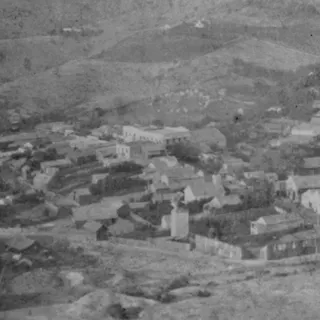
The earliest dated mention of E Clampus Vitus yet found anywhere: a letter from Connersville, Indiana, printed on 27 February 1846. The order’s own histories had nothing before 1847.
Read the story: E Clampus Vitus: the complete recordThe finding in full (An old society, dated)
Map reading
A forgotten road, found
A warning chalked on a tree, “Turn to the left and go to the Devil”, recorded in 1882 and read against the township plat: the left-hand road seems to have been the road to Dewey’s Lake.
Read the story: The True Story of the Dewey Lake MonsterThe finding in full (A forgotten road, found)


Is my question answerable?
Four quick questions for an honest first read. Nothing you choose leaves this page.
- Do you know at least one full name?
- Do you know a place, even just a county or a town?
- Do you know a rough date, within twenty years or so?
- Did it happen before about 1950?
Questions people ask
How much does it cost?
It depends on the question and on what survives, so there is no price list. Ask us: every commission starts with an honest first read, before you commit to anything.
How long does a research case take?
Some mysteries open in an afternoon; some take a season. Expect a first reply within a few days. A full read of your records takes longer, and we say how long before we start.
Is it only Michigan?
No. It started in one Michigan county, but the methods work anywhere, and so does the research. The St. Joseph River does not stop at the state line, and neither did the families: South Bend, Mishawaka and Elkhart mysteries are as welcome as Cassopolis ones.
What if the records can’t answer it?
Then we say so, plainly, and show where we looked. A gap shown honestly is worth more than a guess written up as a fact. Records after about 1950 are often closed for privacy, and we don’t locate living people.
What happens to my photographs and papers?
Everything you send is handled gently and returned as you sent it. For studio work you get the finished files; for research, the report is yours.
Who runs Project Scroll?
Michael Urbanski, an independent historian and author who writes narrative nonfiction about the history of the St. Joseph River Valley of southwest Michigan and northern Indiana, trained in visual communications. The research behind those books is the same research we offer you. More about Project Scroll.
Bring us your mystery.
Tell us the name, the place and the rough dates, and whatever the family says. For the studio, tell us what you have and what you would like made. Both reach the same desk.
For a business, a museum or a society: promotions and sponsor & advertise.
Your town in 3D
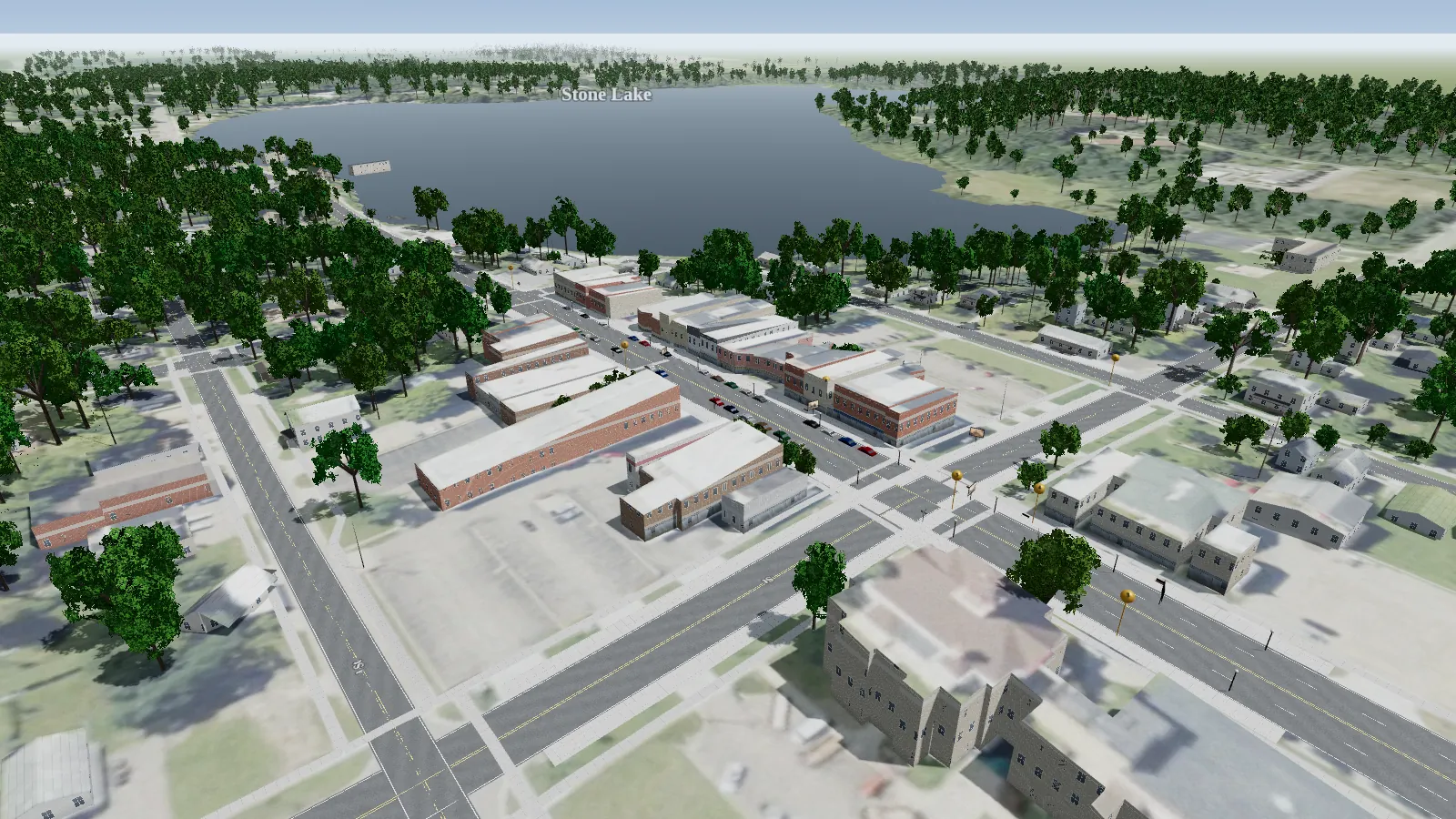
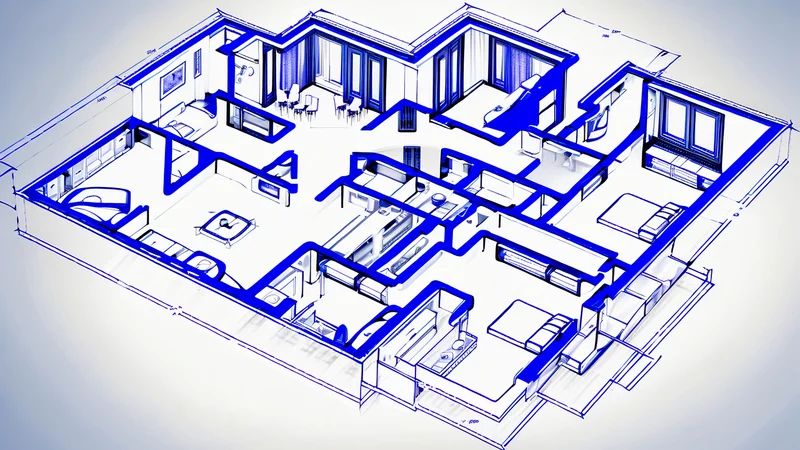

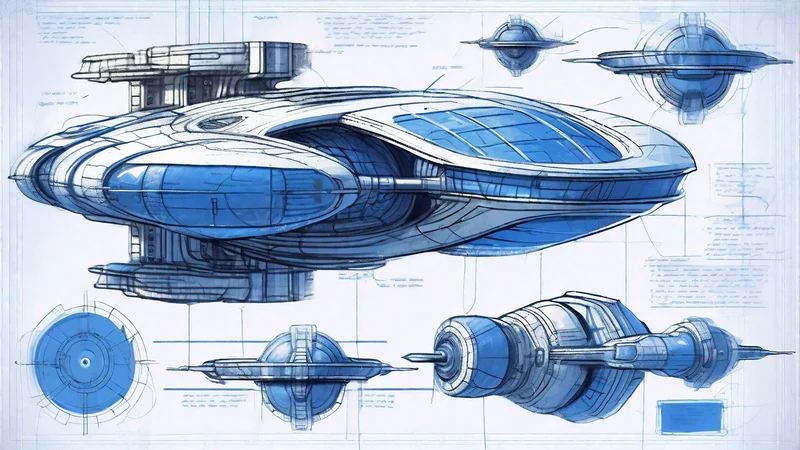

Drawn in line, then built in 3D: the studio starts from a plan.
We build walkable 3D models of towns, farms, lakes and trails from the public laser surveys, the way we built Broadway in 3D for Cassopolis. What goes in:
- Every building and tree at its measured height, the streets and sidewalks laid on the real ground
- A guided walk through your stories, with stops, narration and stamps to earn
- Old fire-insurance maps and town plans laid on the ground; old postcards standing where they were taken
- The businesses of a past year hung back on their buildings, from the old maps
- A flight over the whole place for meetings, booths and presentations
- Your own photographs fitted to the buildings, for a photo-real street