The Underground Railroad · Part 2
The Kentucky Raid of 1847
In the summer of 1847 a party of Kentuckians came to the Quaker farms of Cass County to carry nine people back into slavery. Their neighbors stopped them at O’Dell’s mill, a hearing at Cassopolis set the nine free, and the lawsuits ran on for five years. We went back to the papers of 1847, the court files and the county histories.
By Michael Urbanski · Project Scroll · First published · Updated · 29 min read
This is part 2 of a series. Start with Part 1 ›

New finding 7 new findings in this story. See what’s new ›
Cassopolis, Mich. In the summer of 1847 a party of Kentuckians rode into Cass County to take back people who had escaped from slavery and were living and working on the Quaker farms around Young’s Prairie. In one night they seized nine. By the next morning the neighbors had caught up with them near O’Dell’s mill, at what is now Vandalia, and a crowd of several hundred walked raiders and captives together to Cassopolis. There a county commissioner heard the case and set the nine free, and that same day a party of fifty-two started north for Canada.
The story is told every year in Cass County, and some of what is told has grown in the telling. We went back to what was written at the time: the Covington, Kentucky, newspaper that spoke for the raiders, the federal court papers, a freedom seeker’s own account, and the county histories of 1875, 1882 and 1906.
The case in brief
What the record shows
- The raiders came from northern Kentucky. Their own paper, the Covington Licking Valley Register, called the runaways people “from this county” (Kenton), and others came from Boone County.
- Nine people were seized, and several hundred neighbors stopped the raiders near O’Dell’s mill and took everyone to Cassopolis.
- A commissioner freed the nine because no certified copy of Kentucky’s slave laws was offered in evidence. A Niles man who was there wrote that the commissioner also held that only a United States officer could certify ownership.
- It was over within days. A letter written at Niles on Saturday, 21 August 1847, already tells of the seizure “on Friday morning last” and of the nine set free.
- Fifty-two freedom seekers left for Canada from Ishmael Lee’s farm, in the charge of Zachariah Shugart.
- The slaveholders sued in federal court. The jury disagreed in January 1851; two defendants settled, and the suits against Josiah Osborn and Stephen Bogue were dismissed in 1852.
Story or record? Play along
Here are eight things people say about the raid. For each, make your call: true, false, or no record either way. Then see what the paper shows.
“The raiders came from Bourbon County, Kentucky.”
Not as the record shows
The county histories say Bourbon, but the raiders’ own Covington paper wrote of runaways “from this county,” Kenton, and the freedom seekers’ accounts name Boone County.
“A commissioner freed the nine because there was no copy of Kentucky’s slave laws.”
True
Rogers (1875, p. 141): McIlvain decided against the Kentuckians “on the ground that there was no certified copy of the statutes of Kentucky offered in evidence.” Their own paper complained of “a demand … to prove that slavery was tolerated by the Constitution of Kentucky!”
“Hundreds of local people turned out to stop the raiders.”
True
The Kentucky paper itself said “a furious mob of several hundred.” The 1882 history says “at least three hundred.”
“Henry Clay cited the Cass County raid in the Senate.”
No record
The story starts with the county history of 1875, which says Clay cited the “Michigan riots” “in detail in Congress.” The Congressional Globe of 1848 to 1851 records no such speech, and the Senate report behind the 1850 law speaks of the Marshall case, not Cass County.
“The raiders’ wagon was rolled into Birch Lake.”
No record before the 1930s
The Kentucky paper of 17 September 1847 says the wagon’s wheels were taken, but that it “was then delivered up.” The earliest telling of the lake story we know of is from the 1930s: a sighting the House Divided Project dates to 1936, and the Unionville Crescent of 5 March 1937.
“Fifty-two freedom seekers left for Canada together.”
True, as printed
Rogers (1875, p. 141): at Ishmael Lee’s farm “a party of fifty-two runaway slaves was made up, put in charge of Zachariah Shugert and started toward Canada.”
“The Quakers won the federal case outright.”
No
The jury disagreed in January 1851. Two defendants then settled with the slaveholders’ lawyer, and the suits against Josiah Osborn and Stephen Bogue were dismissed in 1852.
“A thousand freedom seekers passed through Cass County.”
No count
The “thousand” is the low end of an estimate for Dr. Nathan Thomas’s own station at Schoolcraft: Siebert (1898, p. 88), on a letter from Pamela S. Thomas, wrote that he had “forwarded between 1,000 and 1,500 fugitives.” The 1882 history guessed “probably not less than fifteen hundred” through Cass County, which is a guess, not a count.
The Quaker line
DocumentedCass County lay on what the county history of 1875 called the “Quaker line,” a chain of Quaker settlements reaching up from the Ohio River through Indiana, at which freedom seekers “were harbored, fed and directed on their way.” Rogers names two stations in the county, “kept by Stephen Bogue and Zachariah Shugert.”
DocumentedIn the spring of 1847 two groups escaped from northern Kentucky. A Cincinnati paper of 28 April reported a “Grand Stampede” of twenty to twenty-five people from Kenton County, and a second party came from Boone County. One of them, Perry Sanford, told a Battle Creek paper in 1884: “Into that boat eleven of us crowded.” Many of them stopped on the Quaker farms of Young’s Prairie and stayed to work. Zachariah Shugart’s own account book lists arrivals that May.
ReadingThey had reason to think they were far enough away. They were not. The slaveholders of Kenton and Boone counties found out where they were.

The raid
DocumentedAbout the first of August, Rogers says, “a party of thirteen men” arrived at Battle Creek, some of them posing as salesmen, and were turned away by Erastus Hussey and the townspeople there. In Cincinnati, the Quaker Levi Coffin got warning of the plan and sent a messenger to Young’s Prairie, but, he wrote, the raiders had “started several days earlier.”
DocumentedThey came in the night, working in separate parties, to the farms of Josiah Osborn, Stephen Bogue, Zachariah Shugart and the East settlement. Perry Sanford remembered it: “About 4 o’clock, there came a knock at the door.” He fought and got away through a cornfield. Nine people were taken.
DocumentedSanford’s account of 1884 fills in the next hour. He and his friend Rube Stephens slept in the garret of Joe Sandford’s cabin; Sandford, his wife and little daughter were taken, but “Rube Stephens ran out and succeeded in escaping,” and Perry “pushed aside the shakes, crawled out, and then jumped to the ground.” He ran to Stephen Bogue: “I alarmed Stephen Bogue and he mounted his horse and ran him to Cassopolis to alarm the people there,” while “Mrs. Bogue secreted me upstairs in their house.” Rube made for the house of a Quaker neighbor, who “mounted his horse and headed off the whole party.” The slaveholders “had revolvers and Bowie knives”; the Quaker had no gun, but “told them he could shoot as fast as they could, and parleyed with them.” Then, Sanford said, “a party of forty men came up from Cassopolis under command of that good old Quaker, Stephen Bogue,” who “had got out the papers for their arrest for destroying his property and breaking into his houses.”
DocumentedA man who saw the end of it wrote from Niles on Saturday, 21 August: “On Friday morning last, a gang of Kentuckians, to the number of sixteen, … commenced their diabolical work just before the break of day, after having divided themselves into companies of three and four each; being armed with carbines, pistols, dirks, &c.” His letter was printed in Ann Arbor’s antislavery paper, the Signal of Liberty, on 28 August, and was copied as far as New York, where the Tribune’s reprint gives the writer as J. I. Alexander.
New findingA second paper of that week bears on the date. The Signal of Liberty of 4 September reprinted a report from Centreville, the St. Joseph County seat: “A messenger arrived in this village on Sabbath evening last, to procure the legal services of C. Gurney Esq.,” who could not go, “owing to sickness in his family.” The messenger said “the Kentuckians were still brandishing their bowie-knives.” So on a Sunday the case was still undecided. If that Sunday was 15 August, it fits the Niles letter, which by Saturday the 21st could already report the nine set free. The reprint does not name the paper or give its date. Centreville had two papers that summer, the Whig St. Joseph County Advertiser, published on Wednesdays, and the Democratic St. Joseph County Republican, and no issue of either from 1847 is known to survive. If it was the Advertiser, the Sunday was 15 or 22 August. So this report does not fix the day by itself; the Niles letter does most of the work.
ReadingThat leaves Friday, 13 August, for the raid and Monday, 16 August, for the hearing, the only reading that fits the Niles letter, the Centreville Sunday, the 1882 history’s “Monday,” and its “three days” between the raiders’ arrival in Cassopolis and the decision. The Niles letter was reprinted in the Chicago American and then in the New-York Daily Tribune of 6 October 1847, with the same “Friday morning last” and the same date line. The 20 August now given in several modern accounts traces to Cooper Wingert’s history for the House Divided Project (2024), whose note for it cites Perry Sanford’s interview of 1884, the county histories of 1875 and 1882, and the Cassopolis Advocate as reprinted in the Covington Licking Valley Register of 15 October 1847. The interview gives no date at all, only “about 4 o’clock,” and neither county history names the day. David Chardavoyne (2004) gives a third chronology, the raid on 16 August and the hearing at the Cassopolis court house on the 20th, but the 16th was a Monday, and the Niles letter says Friday.
New findingA paper from across the Indiana line shows the case over by the end of August. The South Bend Register of 27 August 1847, as the New-York Daily Tribune reprinted it on 11 September, told of Kentuckians who seized a man at the house of S. P. Judson at Bristol, Indiana, and went on: “At Cassopolis another lot of these hunters were stopped in their efforts to take back some runaways, and were obliged, to save themselves from trouble, to back out and call it a drawn game, leaving their slaves to the liberty they had achieved.” It gives no day. We have checked the wording on the page image.
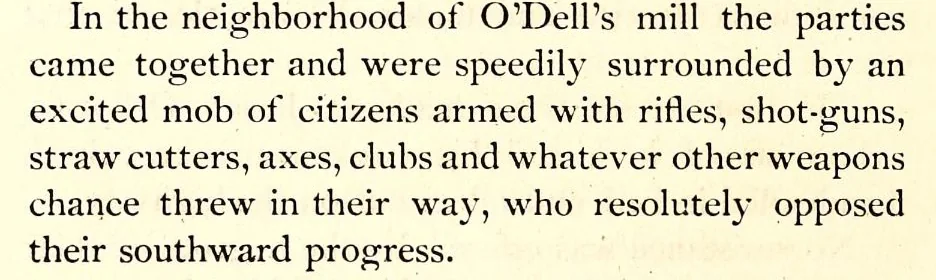
DocumentedBy morning the alarm had spread. “In the neighborhood of O’Dell’s mill,” Rogers wrote, the raiders “were speedily surrounded by an excited mob of citizens armed with rifles, shot-guns, straw cutters, axes, clubs and whatever other weapons chance threw in their way, who resolutely opposed their southward progress.”
Documented“A parley was had,” Rogers wrote, “high words and threats exchanged, weapons drawn, and a bloody riot seemed imminent; but, fortunately, more moderate counsels prevailed.” The two sides agreed to go to Cassopolis and put the case to the law. The 1882 history describes the procession: “thirteen Kentuckians, their nine shackled captives and a crowd of at least three hundred citizens.”
The hearing at Cassopolis
DocumentedAt Cassopolis the Kentuckians were arrested on complaints of kidnapping and trespass, and bailed. Their lawyers sought to hold the nine as fugitives; the freedom seekers’ lawyers, Ezekiel S. Smith and James Sullivan, with James Brown of Niles, asked for a writ of habeas corpus. The county’s own commissioner was away, so they sent to Niles for Ebenezer McIlvain, circuit court commissioner of Berrien County. On his arrival the writ was sworn out, “on the third day after the arrests,” and the hearing “came on Monday.”
DocumentedThe Niles letter tells the same days from the inside. The Kentuckians were charged with assault and battery and held to bail “in the sum of three thousand dollars, which they obtained by depositing $900 and their horses in the hands of some of the citizens.” Their trial was “deferred four days to enable them to send to Kalamazoo for counsel.” Meanwhile “two of the friends in Cassopolis came to Niles to obtain a writ of habeas corpus from E. McIlvaine Esq.,” and the writer rode back with them. The Kentuckians asked for time “to send to Indiana for witnesses,” and were refused.
New findingThe Kentuckians had a lawyer of their own from Kalamazoo. The Jackson Patriot, quoted in the Signal of Liberty of 6 November 1847, says that Charles E. Stuart, newly elected to Congress, took up their side: “Mr. Stuart got into his buggy, went over to Cassopolis, ascertained the situation of things in a few moments, held a consultation with the Prosecuting Attorney,” and “the complaint of kidnapping was dismissed.” The paper printed it as a charge against Stuart in an election season. He later sat in the United States Senate. The county history of 1882 knows him, as “Charles E. Stewart,” only as the Kalamazoo lawyer in whose office the Kentuckians’ spy, Carpenter, had gone to read law; no history we have read records his part at Cassopolis.
DocumentedMcIlvain decided “adversely to the Kentuckians, on the ground that there was no certified copy of the statutes of Kentucky offered in evidence showing the legal existence of slavery in that State.” The nine were free. The Niles letter gives a second ground: that McIlvain, “being a State officer, had no jurisdiction in the case—that no one but a United States officer could give a certificate of ownership.” The two accounts do not contradict each other.
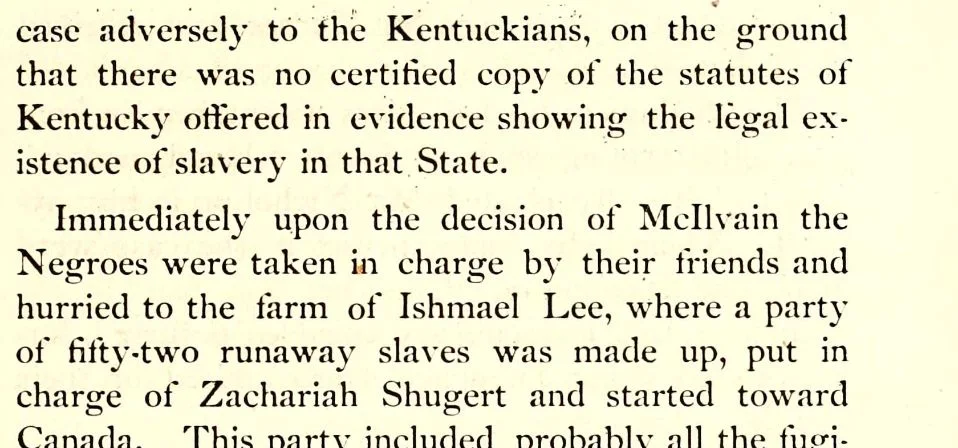
Documented“Immediately upon the decision,” Rogers goes on, the freed people “were taken in charge by their friends and hurried to the farm of Ishmael Lee, where a party of fifty-two runaway slaves was made up, put in charge of Zachariah Shugert and started toward Canada.” The 1882 history counts differently: the freed people, “a few days later, with more than forty others, left for Canada on a train of the Underground Railroad.” It says that Dr. Nathan Thomas and his wife fed the party at Schoolcraft on the way north.
What Kentucky read
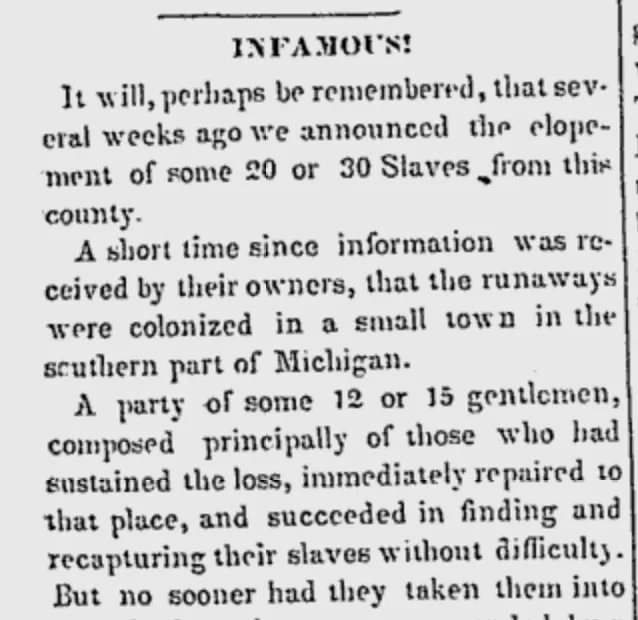
DocumentedThe Covington Licking Valley Register told its readers about it on 3 September 1847, under the heading “INFAMOUS!” A party “of some 12 or 15 gentlemen,” it said, had gone to reclaim “some 20 or 30 Slaves, from this county,” and been met by “a furious mob of several hundred abolitionists.”
DocumentedTwo weeks later the paper printed a “fuller account.” It called McIlvain an “unprincipled scoundrel” who had “no jurisdiction of the case, he being only a county officer, and resided in another county,” and it raged at “a demand of our citizens to prove that slavery was tolerated by the Constitution of Kentucky!”
New findingThe same account gives two details the later histories do not. It says the raiders’ bail came to “something over four thousand dollars,” where the county histories of 1875 (p. 140) and 1882 (p. 113), and every account since that we have found, say $2,600, though they may count only some of the charges; the Niles letter, written within days, says three thousand. And it says the raiders’ baggage wagon, seized by “the demons in the neighborhood” and its wheels taken, “was then delivered up.” The earliest telling we know of the story that the wagon was rolled into Birch Lake is from the 1930s: the House Divided Project dates a sighting to 1936 and cites the Unionville Crescent of 5 March 1937. The project has transcribed this 1847 account in full, and Cooper Wingert’s history of the stampedes (2024) cites it for the stripped wheels; but his account, like every other we have found, keeps the $2,600 and the Birch Lake ending.
Five years in court
DocumentedThe slaveholders could not take the nine back, so they went after the people who had helped them. Under the Fugitive Slave Act of 1793 they sued for the value of the freedom seekers in the federal court at Detroit: Thornton Timberlake against Josiah Osborn and others, and companion suits against Stephen Bogue, Zachariah Shugart, David T. Nicholson, Ishmael Lee, Ebenezer McIlvain and their neighbors. Abner Pratt of Marshall acted for the Kentuckians; Jacob M. Howard of Detroit defended the Quakers.
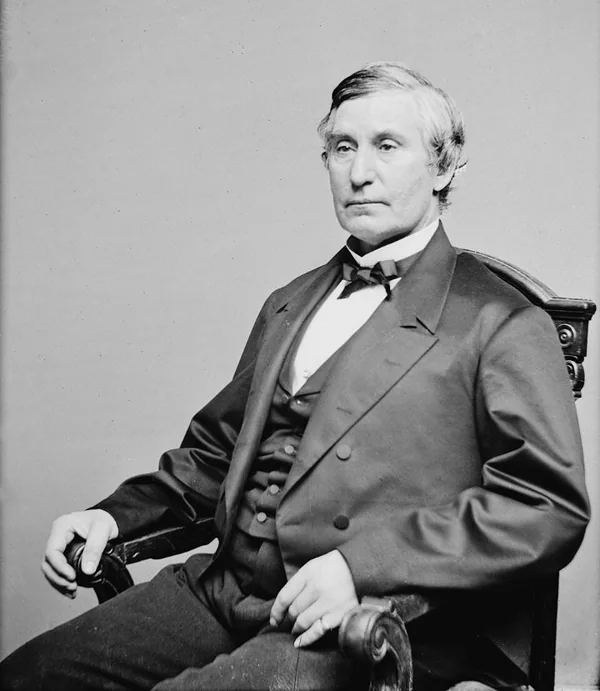
DocumentedThe county histories date the filing to February 1848; the court dockets, as historians have read them (Chardavoyne 2004, p. 8; Wingert 2024), to January 1849. A Cassopolis doctor who had watched the Kentuckians in the village gave a deposition in April 1850: “I don’t know that I saw any of them use violence at all.” The case was tried before Judge Ross Wilkins over the winter of 1850–51, and in January 1851, says the 1882 history, “it was concluded, the jury disagreeing.”
DocumentedOn 3 December 1851, at Cassopolis, David T. Nicholson and Ishmael Lee signed a paper with the slaveholders’ lawyers: the suit had been “this day settled,” it would be discontinued and “not again to be instituted” against them, and “no judgement fo[r] costs” would be entered for either side. The paper names no sum. The suits against Josiah Osborn and Stephen Bogue were dismissed in February 1852.
ReadingThe amount is told several ways, and three different things have run together. Rogers (1875) says Nicholson paid “$2,755.” The 1882 history says he paid “$1,000 to clear himself and Ishmael Lee,” and that “the total costs of the case, which amounted to about $3,000, were borne by the several defendants”: that $3,000 is the whole defense’s costs, not the settlement. The legal historian D. G. Chardavoyne (2004) gives $1,000 plus costs “estimated at $300 to $500,” and says his figure comes from a letter Nicholson wrote to the Covington Journal in February 1852; that is where the “about $1,300” of later accounts comes from. And Rogers adds a figure of his own that may have joined the confusion: the Quakers, he says, refused “all offers of compromise from principle, terming such payments ‘blood money,’” and “their individual expenses in the case were about one thousand dollars apiece.”
DocumentedThe court files themselves, six suits from Graves, Timberlake and Scott, are digitized and free to read in the National Archives catalog: Timberlake v. Osborn alone runs to 67 pages. Among them is a case no history we know of mentions: United States v. Jonathan Crews, for perjury, against a witness in the Timberlake trial.
Where the nine went
DocumentedThe suits name the people the Kentuckians claimed. Thornton Timberlake claimed Jonathan, Nancy, Mary, Robert and Gabriel; John L. Graves claimed Joseph, Cena and Benjamin; Charles Scott claimed Lewis. Milton W. Graves sued Stephen Bogue for a tenth: Perry Sanford, $600. But Perry was never taken. Asked in 1884 “Did they capture you?” he answered, “No. I got away.” He named those who were: “Sandford attempted to run but was captured, as was also his wife and daughter,” and William Casey: “They pounded Casey dreadfully with clubs and overcame him, and handcuffed him, also captured his daughter, Mary.” The suits, then, list the people the slaveholders claimed, not the people they seized.
DocumentedOne of them told his own story. In Canada West in the 1850s, Joseph Sanford gave his narrative to the Boston writer Benjamin Drew: “There were thirteen of us started away in company.” It breaks off in Cincinnati, and the next narrative in the book, by John Hatfield, who hid Sanford and his wife there, finishes it: “they were afterwards all captured in Michigan: but they got off before a judge, and were then sent over the line into Canada.”
ReadingLibrary and family research carries several of them further. Gabriel took the name James Johnson in Canada and farmed at Colchester, Ontario, where he died in 1915; the Amherstburg Freedom Museum tells his family’s story. The Ughbanks family is traced to Colchester as well, where Debian Marty (2026) places their homestead on Erie Road. Benjamin Drew files Joseph Sanford’s narrative under Amherstburg. The family of Lewis Gardner, who became William Casey, is placed by Cooper Wingert in Battle Creek, on the strength of Casey’s obituary in the Detroit Free Press of 24 January 1893. Perry Sanford, who got away through the cornfield, went on to Battle Creek with a party sent there by the Quakers, lived into his eighties, and is buried in Oak Hill Cemetery.
ReadingThe old histories say nine were taken, and the suits name ten claimed; Perry Sanford’s escape accounts for the difference. Which nine stood before McIlvain is still argued. Perry’s list (the Sanfords, Casey and his daughter Mary) and a modern list (three of the Ughbanks men, two Merrimans, Casey and three Sanfords) do not quite agree. Debian Marty (2026) names the three Ughbanks men as Jonathan, Gabriel and Robert, and counts ten captives.
Did it change the law?
DocumentedIn March 1847, before the Cass County raid, Kentucky’s legislature had already asked Congress for stronger laws to reclaim fugitives, after a rescue at Marshall, Michigan. The Senate committee’s report of May 1848 rests on the Marshall case and does not mention Cass County.
DocumentedThe first account we have found to tie the raid to the Fugitive Slave Act of 1850 is Rogers’s county history of 1875, and it goes further than any later one. The nine, it says, “belonged to personal friends of Henry Clay, and the pressure brought to bear by their owners had great influence in shaping his course and action on the Fugitive Slave Bill of 1850,” and “the ‘Michigan riots’ were cited by him in detail in Congress, and proved of great service in securing the passage of the bill.” The 1882 history is more careful: the raid, “with the Van Zant case in Ohio, it had a strong bearing upon the passage of the fugitive slave law of 1850 …”
New findingWe went looking for Clay’s speech. The Congressional Globe, which printed the debates of both houses, can be searched for every week of 1848 to 1851. Clay’s great speeches on the Compromise, of 5 and 6 February and of 13 May 1850, speak of Michigan only as a state carved from the Northwest Territory and as the home of Senator Cass, and nowhere in those four years of the Globe does he speak of the Michigan rescues. The Michigan cases that did reach the Senate floor in 1850 were others. On 22 March William L. Dayton of New Jersey retold the Marshall case, to show that a Michigan jury would give a Kentucky owner his damages, and added that there had been “two other cases in Michigan,” without naming them. On 3 April Kentucky’s own Joseph R. Underwood told of a former neighbor, “now a resident of Missouri,” Mr. Dunn, whose slave a crowd in Michigan had set free while Dunn sat in jail for want of bail. The search runs on printed text read by machine, so a passage could hide in a poor scan; but as far as the Globe shows, the speech Rogers describes was never given.
New findingCass County did speak to Congress that spring, from the other side. Among the petitions presented in the House of Representatives on Thursday, 18 April 1850, the Globe lists one from N. B. Blackman, D. H. Ringer, Luther Humphrey “and 40 other citizens of Cass county, Michigan, praying that persons arrested as fugitive slaves may be entitled to trial by jury, before delivered up to the claimant.” It was the very point the Cassopolis hearing had turned on, and the law passed that September gave no such trial.
ReadingIt is fair to call the raid one of the grievances behind the 1850 law. The record we have read does not show that it caused it.
How the story is told today
DocumentedThe fullest modern retelling is Cindy Yawkey’s The Kentucky Slave Raid of 1847, Cass County Michigan, written and illustrated by the head docent of the Bonine House and published by the Underground Railroad Society of Cass County about 2019. It goes farm by farm, with her own drawings and a hand-drawn map of the prairie, and it is the version most visitors to Vandalia will meet. The society’s narrated presentation Out of Bondage: The Perry Sanford Story, with her illustrations, takes its title from Sanford’s own 1884 interview, and in 2024 she told the raid on camera for a seven-minute film by Adam Miedema with CMU Public Television.
DocumentedMuch of it comes straight from the county histories, and checks out against them: the spy who called himself Carpenter and posed as an abolitionist from Worcester County; the Rev. Mr. Stevens taking a baby from a cabin and making it cry until its mother came out of hiding; Perry Sanford’s knock at the door at four in the morning; the Fugitive Slave Act of 1793 as the law the Kentuckians stood on.
ReadingHer book dates the raid to “Tuesday, August 17, 1847.” The arithmetic of the old histories points elsewhere. Rogers has the writ sworn out “on the third day after the arrests” and the hearing on Monday, and the 1882 history agrees that the commissioner “heard the case on Monday.” A letter dated at Niles on Saturday, 21 August 1847, already reports the nine set free. Unless that letter is misdated, the Monday was 16 August, and the raid most likely Friday the 13th: neither the Tuesday of her book nor the Friday the 20th of several modern accounts.
DocumentedSome of the book’s details come from no record we have read. Its forty freedom seekers on the road north, where Rogers has fifty-two, do have a source: the 1882 history’s “more than forty others.”
DocumentedHer picture book They Have My Shoes, I Have My Freedom, which won the Historical Society of Michigan’s State History Award for children’s and youth books in 2016, carries a fictional freedom seeker named Lucinda from Georgia to the Bonine carriage house. Her work, and the honors it has received from the Historical Society of Michigan, the National Park Service’s Network to Freedom and the Michigan Humanities Council, are told in part 1 of this series, The Bonine House at Vandalia.
DocumentedThe story is kept by volunteers. The Underground Railroad Society of Cass County formed in 2009 to save the Bonine House, which it bought at the end of 2010; its founding member Mary Anne Bonine (1947–2013) began the Wax Museum program that still brings school classes to the raid’s people, and on Underground Railroad Days each July its volunteers open the house and the carriage house to visitors. In August 2023 two of the founders, Mike Moroz and Cathy LaPointe, recorded the society’s beginnings for StoryCorps. Their story, and the names of the volunteers in the record, are in part 1, The Bonine House at Vandalia.
Who’s who
The raid through the years
- 1847 April: a “Grand Stampede” from Kenton County, and a second party from Boone County, Kentucky
- 1847 May: arrivals in Zachariah Shugart’s account book on Young’s Prairie
- 1847 About 1 August: thirteen men turned away at Battle Creek
- 1847 Friday 13 August, by our reading: the raid; Monday 16 August, the hearing, and the nine set free
- 1847 21 August: the Niles letter; 3 and 17 September: the Covington paper’s accounts
- 1848 May: the Senate committee’s report on Kentucky’s request, resting on the Marshall case
- 1848–49 The slaveholders’ suits filed in the federal court at Detroit
- 1850 18 April: Cass County citizens petition Congress for jury trials for people arrested as fugitives
- 1850 18 September: the Fugitive Slave Act becomes law
- 1851 January: the jury disagrees; 3 December: Nicholson and Lee settle
- 1852 February: the suits against Josiah Osborn and Stephen Bogue dismissed
- 1875 Rogers’s county history tells the raid, and ties it to Henry Clay
- 1884 Perry Sanford tells his story to a Battle Creek paper
- 1893 William Casey’s obituary in the Detroit Free Press
- 1915 Gabriel, as James Johnson, dies at Colchester, Ontario
The case file: what we asked, and what we found
The questions this story set out to answer, and what the record showed.
- Answered Did Henry Clay cite the raid in Congress? Not that the record shows. The claim starts with Rogers in 1875; the Congressional Globe of 1848 to 1851 records no such speech.
- Answered Did Cass County speak to Congress? Yes. On 18 April 1850 forty-three citizens of the county asked that people arrested as fugitives be given a trial by jury.
- Answered Where did the raiders come from? Kenton and Boone counties, Kentucky, by their own paper and the freedom seekers’ accounts, not Bourbon County, as the county histories say.
- Answered Who spoke for the Kentuckians at Cassopolis? Charles E. Stuart of Kalamazoo, newly elected to Congress, by the Jackson Patriot of 1847.
- Answered What was the raiders’ bail? “Something over four thousand dollars,” said their own paper; three thousand, said the Niles letter; the county histories say $2,600.
- Answered Was the raiders’ wagon rolled into Birch Lake? No. The Kentucky paper of 17 September 1847 says it “was then delivered up.” The lake story is first told in the 1930s.
To cite this page: Michael Urbanski, “The Kentucky Raid of 1847,” Project Scroll, first published 22 October 2026, revised 30 October 2026, https://projectscroll.com/news/the-kentucky-raid-of-1847/. To cite a single finding, use its own link on our Discoveries page. Part 2 of 2; part 1 is The Bonine House at Vandalia. Corrections are welcome, and any we make are noted on this page.
Sources
- Licking Valley Register (Covington, Ky.), 3 September 1847, “Infamous!” Transcription and scan: House Divided Project, Dickinson College, Slave Stampedes on the Southern Borderlands.
- Licking Valley Register, 17 September 1847, p. 2, the “fuller account.” Same site.
- “Outrage upon Northern Rights! Great Excitement!”, a letter dated Niles, 21 August 1847, closing “Yours for Liberty,” Signal of Liberty (Ann Arbor), 28 August 1847, p. 2. Ann Arbor District Library.
- Benjamin Drew, A North-Side View of Slavery. The Refugee (Boston: John P. Jewett and Company, 1856), pp. 358–364: the narratives of Joseph Sanford and John Hatfield, in the book’s Amherstburg section. Documenting the American South.
- Law case files 2075–2080 (Graves, Timberlake and Scott suits) and United States v. Jonathan Crews, U.S. District Court at Detroit, Record Group 21, National Archives at Chicago; digitized. Timberlake v. Osborn is NAID 12562895.
- Boone County Public Library (Kentucky), Underground Railroad research database: the 1847 Cass County raid and the people in it.
- Amherstburg Freedom Museum, “What’s in a Name: Johnson Family.”
- “Out of Bondage,” Sunday Morning Call (Battle Creek), 3 August 1884, Perry Sanford’s account. Same site.
- Zachariah Shugart’s account book, May 1847 (Huntington Library). Same site.
- Settlement between Thornton Timberlake and the Michigan abolitionists, Cassopolis, 3 December 1851, in Timberlake v. Osborn et al. (NAID 12562895), National Archives at Chicago. Transcription: House Divided Project, Slave Stampedes on the Southern Borderlands.
- Howard S. Rogers, History of Cass County, from 1825 to 1875 (Cassopolis, 1875), pp. 129–141. Internet Archive.
- Alfred Mathews, History of Cass County, Michigan (Chicago: Waterman, Watkins & Co., 1882), pp. 109–115; p. 181 (James Oren’s marriage in 1851 to “Angeline Osborn, daughter of Josiah and Mary Osborn”) and p. 384 (Josiah Osborn’s children, “Angeline, deceased”). Internet Archive.
- L. H. Glover, A Twentieth Century History of Cass County, Michigan (Chicago: Lewis Publishing Co., 1906), pp. 289–290. Internet Archive.
- Levi Coffin, Reminiscences (Cincinnati, 1876), pp. 366–373. Internet Archive.
- Cincinnati Commercial Tribune, 28 April 1847, the “Grand Stampede”; New York Evening Post, 3 May 1847. Same site.
- Charles Scott v. Zachariah Shugart et al., and the related case files of the U.S. District Court at Detroit, National Archives at Chicago (catalog entries via the Digital Public Library of America).
- Wilbur H. Siebert, The Underground Railroad from Slavery to Freedom (New York: Macmillan, 1898), p. 88: Dr. Nathan M. Thomas’s “between 1,000 and 1,500 fugitives,” on a letter of Pamela S. Thomas, 25 March 1896. Internet Archive.
- U.S. Senate, Report No. 143, 30th Congress, 1st Session (3 May 1848).
- Cindy Yawkey, The Kentucky Slave Raid of 1847, Cass County Michigan, written and illustrated (Vandalia: Underground Railroad Society of Cass County, c. 2019).
- Cindy Yawkey, They Have My Shoes, I Have My Freedom: A Story About the Underground Railroad, written and illustrated (Vandalia: Underground Railroad Society of Cass County, n.d.); Historical Society of Michigan State History Award, Books: Children & Youth, 2016.
- Underground Railroad Society of Cass County, Out of Bondage: The Perry Sanford Story (narrated presentation, 17 min.); YouTube, “Out of Bondage narrated,” posted by Bill Beadenkopf, 23 July 2018.
- Cooper Wingert, “The 1847 Kenton and Boone County Stampedes: Part 1: Escape,” Slave Stampedes on the Southern Borderlands (House Divided Project, Dickinson College), 25 February 2024.
- D. G. Chardavoyne, “Michigan and the Fugitive Slave Acts,” The Court Legacy (Historical Society for the United States District Court for the Eastern District of Michigan) 12, no. 3 (November 2004), pp. 5–6 (the Cass County raid; p. 6, “on August 16” and the hearing “on August 20”), 8–9 (the suits of January 1849, the trial and the settlement of $1,000 and costs “estimated at $300 to $500”) and n. 41, p. 11 (Nicholson’s letter in the Covington Journal, 22 February 1852; the dismissals of 10 February 1852). Copy hosted by NKyViews.
- State Bar of Michigan, Michigan Legal Milestone 30, “Freedom Road.”
- “A Stop on the Long Road to Freedom,” Michigan Bar Journal (July 2005).
- Boone County Public Library (Kentucky), Underground Railroad timeline: the two group escapes of 1847.
- Underground Railroad Society of Cass County, “The Kentucky Raid.”
- Michigan historical marker S137, “The Underground Railroad” (Michigan Historical Commission, 1957), Vandalia. Historical Marker Database.
- Michigan Department of Natural Resources, “Two Michigan sites added to National Underground Railroad Network to Freedom,” 28 October 2024.
- The modern accounts we compared: Wikipedia, “Kentucky raid in Cass County (1847).”
- Jacob M. Howard, photograph, Brady-Handy Collection, Library of Congress.
- “Slaveholding Outrages,” Signal of Liberty (Ann Arbor), 4 September 1847, p. 2, quoting a Centreville paper: the messenger on “Sabbath evening last.” Ann Arbor District Library.
- “Charles E. Stuart,” Signal of Liberty (Ann Arbor), 6 November 1847, p. 2, quoting the Jackson Patriot: Stuart at Cassopolis. Ann Arbor District Library.
- J. I. Alexander’s letter of 21 August 1847, reprinted from the Chicago American in the New-York Daily Tribune, 6 October 1847, p. 1. Library of Congress, Chronicling America.
- Jonathan Wuepper, Cass District Library, Local History Branch, “Research guide: Niles Republican, 1839–1857.”
- Visit Battle Creek, “Black History Month stories from Oak Hill Cemetery”: Perry Sanford.
- Alfred Mathews, History of Cass County, Michigan (Chicago: Waterman, Watkins & Co., 1882), ch. XVII, “The Underground Railroad and the Kentucky Raid,” pp. 109–115: “more than forty others.” The same chapter as transcribed on MIGenWeb (the book itself is listed above).
- Cooper Wingert, “The 1847 Kenton and Boone County Stampedes: Part 2: Pursuit,” Slave Stampedes on the Southern Borderlands (House Divided Project, Dickinson College), 26 February 2024: the date of 20 August and its n. 5; Casey in Battle Creek, n. 8; the Birch Lake wagon, n. 10, citing the Unionville Crescent, 5 March 1937.
- Deposition of Dr. Evan J. Bonine, Cassopolis, 25 April 1850, in Timberlake v. Osborn et al. (NAID 12562895), National Archives at Chicago: “I don’t know that I saw any of them use violence at all.” Transcription: House Divided Project, Slave Stampedes on the Southern Borderlands.
- “The Kentucky Raid,” marker erected by the Underground Railroad Society of Cass County, Milo Barnes Park, Vandalia. Historical Marker Database.
- “Freedom Road,” Michigan Legal Milestone marker (State Bar of Michigan and Cass County Bar Association, 2005), Cass County Courthouse, Cassopolis. Historical Marker Database.
- “Sanctuary and Deliverance,” marker by the Friends of Freedom Seekers, 160 S. Broadway, Cassopolis. Historical Marker Database.
- “A Station of the Underground Railway,” the Stephen Bogue boulder (Woman’s Club of Cassopolis, 1931), M-60 at Crooked Creek Road, near Vandalia. Historical Marker Database.
- Wikipedia, “James O’Dell.”
- Carrie Eldridge, “1847 Kentucky Raid: The Underground Railroad and Fugitive Slave Law in Cass County, Michigan,” Clio, entry 85110.
- Adam Miedema and CMU Public Television, The Kentucky Raid of 1847 (2024, 7 min.), with Cindy Yawkey; YouTube, “Kentucky Raid,” posted by Bill Beadenkopf, 4 February 2024. Listed by the Underground Railroad Society of Cass County, “Videos and Podcasts.”
- Debian Marty, “The Ughbanks’ Freedom Journey,” HEIRS Journal, February–March 2026, pp. 11–16: the Ughbanks homestead on Erie Road, Colchester, p. 16.
- Cassopolis Advocate, account of the raid, reprinted in the Licking Valley Register (Covington, Ky.), 15 October 1847; cited by Wingert, Part 2, n. 5. Not seen.
- “Missing depositions from an 1849 lawsuit claiming violations of the 1793 Fugitive Slave Law,” National Archives History Hub, posted by Debian Marty, 10 April 2025, with the reply of the National Archives at Chicago, 15 April 2025.
- “Runaway Slaves,” from the South Bend (Ind.) Register of 27 August 1847, in the New-York Daily Tribune, 11 September 1847, p. 1. Library of Congress, Chronicling America.
- History of St. Joseph County, Michigan (Philadelphia: L. H. Everts, 1877), p. 44: the Centreville papers, the Whig St. Joseph County Advertiser (1845–1851) and the Democratic St. Joseph County Republican (from 1845); the Western Chronicle only from October 1850. Internet Archive.
- Library of Congress catalog, St. Joseph County Advertiser (Centreville, Mich.), sn85038662: weekly, begun February 1845, “Published on Wednesday,” Whig.
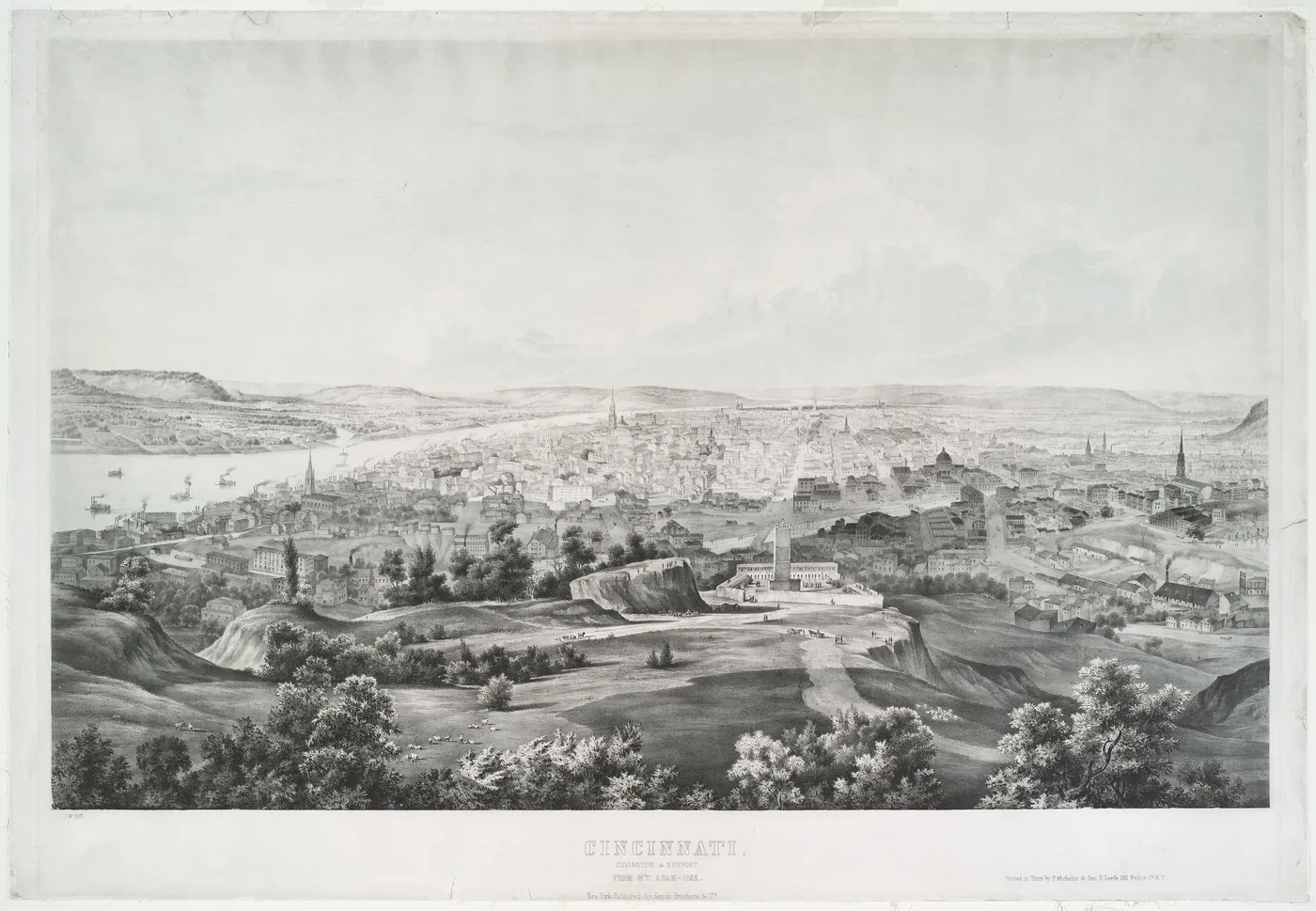
- Smith Brothers & Co., Cincinnati, Covington & Newport, from Mount Adams, lithograph, 1852. New York Public Library, I. N. Phelps Stokes Collection (Stokes 1852-G-36).
- Wilbur H. Siebert, map of “Underground” routes to Canada, in The Underground Railroad from Slavery to Freedom (New York: Macmillan, 1898). Wikimedia Commons.
- StoryCorps, “Mike Moroz and Cathy LaPointe,” recorded at the Kalamazoo Public Library, 4 August 2023 (machine transcript).
- Western Michigan University Archives and Regional History Collections, Underground Railroad Society of Cass County records (finding aid).
- Congressional Globe, 31st Congress, 1st Session, issue of 20 April 1850: petitions presented in the House, 18 April 1850 (Cass County, Michigan). Internet Archive.
- Congressional Globe, Appendix, 31st Congress, 1st Session (4 December 1849 – 10 June 1850): speeches of Henry Clay, 5–6 February and 13 May 1850; William L. Dayton, 22 March 1850; Joseph R. Underwood, 3 April 1850. Internet Archive.
- Congressional Globe, 30th Congress, 1st Session, to 32nd Congress, 1st Session (1848–1852), all issues and appendixes, searched for Clay and the Michigan cases. Internet Archive.
- Howard S. Rogers, History of Cass County, from 1825 to 1875 (Cassopolis, 1875), p. 129: the “Michigan riots” and Henry Clay. Internet Archive.
Numbers in the text point to this list; entries without a number are further sources we consulted. How we research › · The libraries behind all our stories ›
The Bonine House Write to us All the news
Corrections (3)
First published 22 October 2026; last updated 30 October 2026. Like all our pages, it is expanded from time to time with new records, pictures and features. Factual corrections are listed here, with their dates.
- The 20 August date traced to a footnote with no date behind it.
- The $2,600 bail figure is first in the county history of 1875 (p. 140); the dating from the Centreville report softened, since its own date is unknown; the Niles letter’s signature is from the New York reprint; the writ was sworn out “on the third day after the arrests,” and the hearing came on Monday.
- The story that Henry Clay cited the raid in Congress is traced to Rogers (1875); the Congressional Globe of 1848–1851 records no such speech.
About this research
Research and reporting Michael Urbanski Project Scroll
- Sources
- Every fact on this page is drawn from the sources listed above, and each can be checked where it is held.
- Corrections
- Errors are corrected on the page, and each correction is noted there.
- Contact
- To report an error or share a record that adds to the story, write to research@projectscroll.com.
- Method
- How we research ›
© 2026 Michael Urbanski and Project Scroll. All rights reserved. The text, original maps, charts and illustrations may not be reproduced without permission; brief quotations with credit and a link back are welcome. Material from other sources belongs to its holders and is credited where it appears; public-domain material is marked as such.


