Door 2 of 6 News and articles
All the news. Every story sourced.
New cases, new findings, new old pictures.
What’s new on the trail: the stories behind the towns, the corrections we found in the old books, and the open cases still waiting. The newest are on the front page too.
- Stories, every one sourced
- 53
- New findings in the register
- 183
- Story series
- 6
- Newest story
- 2 Nov
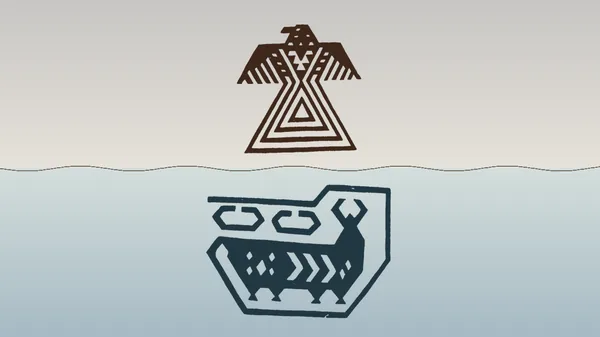
Lore and legend · The Thunderbird of the St. Joseph River Valley: One Spirit, Many PeoplesGiant birds above the sky whose eyes flash lightning, and a horned being under the water. The Miami, the Potawatomi, the Odawa and their neighbors all told of them. We went back to what each people told the record, and who wrote it down.
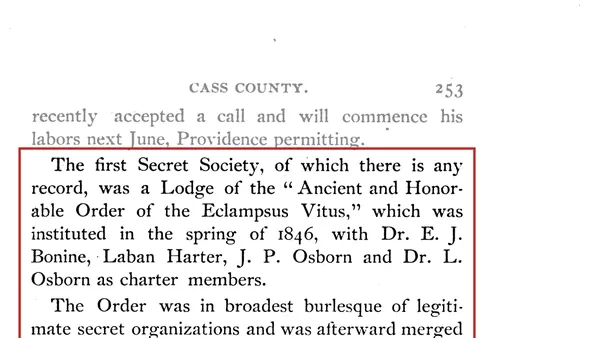
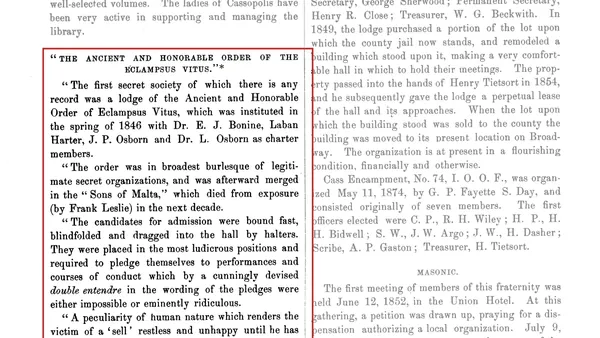
E Clampus Vitus · Part 1 · A lodge of E Clampus Vitus, in Cassopolis, in 1846One account, printed in two county histories, records a lodge of the “Ancient and Honorable Order of Eclampsus Vitus” at Cassopolis, Michigan, in the spring of 1846: four charter members named, a ball of over two hundred badges, and the earliest lodge of the order yet found with its members named. Newspapers of the same year show the order already at work across the state line in Indiana. Here is the whole record, and what it does and does not prove.
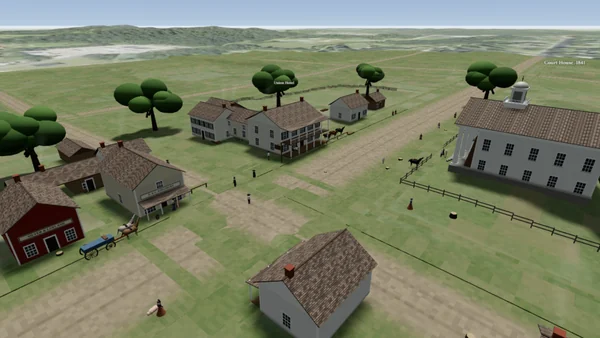
Now in 3D · Cassopolis · Cassopolis in 3D: A Village Through Time, 1846 to TodayPress one button and the modern village fades away: a white court house on a square of grass and stumps, oxen on State Street, and the windows of the Union Hotel lighting up at dusk. Press it again and you are back in today’s Cassopolis, measured from the air. We rebuilt the county seat of 1846 from the county histories and the old maps, and you can walk the village through time in 3D, from 1846 to 1909 to today.
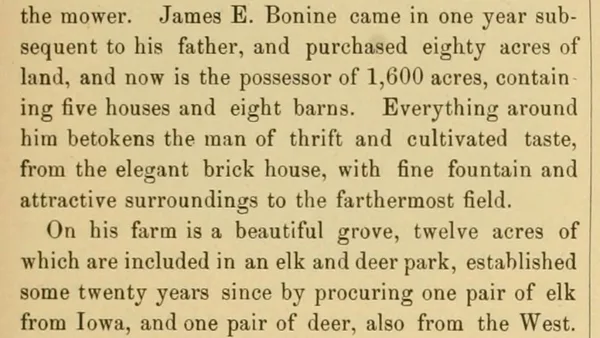
The Underground Railroad · Part 1 · The Bonine House at VandaliaA Quaker family from Indiana, a farm of 1,600 acres, an elk park that answered to its owner’s call and sent elk to the King of Italy, and a house now kept by the Underground Railroad Society of Cass County. What the record says about the James E. Bonine House, and what it has yet to show.
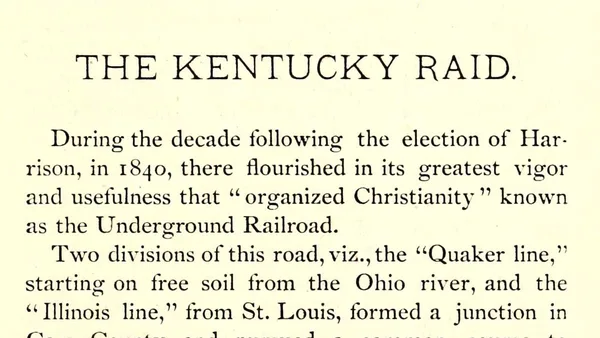
The Underground Railroad · Part 2 · The Kentucky Raid of 1847In the summer of 1847 a party of Kentuckians came to the Quaker farms of Cass County to carry nine people back into slavery. Their neighbors stopped them at O’Dell’s mill, a hearing at Cassopolis set the nine free, and the lawsuits ran on for five years. We went back to the papers of 1847, the court files and the county histories.
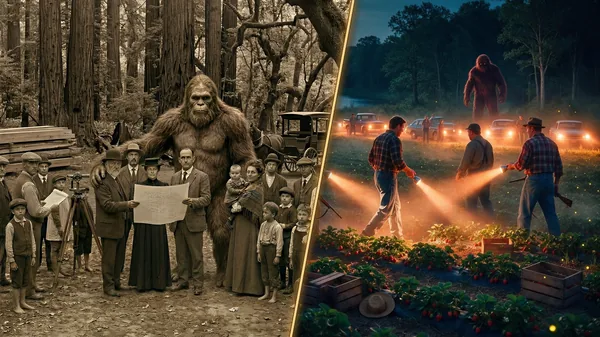
Lore and legend · The True Story of the Dewey Lake Monster: The Week the Valley Went WildEveryone around Sister Lakes knows the story of the 1964 monster. The record tells it differently. It did not begin with berry pickers, and it did not begin in 1964: more than a hundred and twenty-five years earlier, someone peeled the bark from a tree at a fork in the road to Dewey’s Lake and wrote a warning on it in red chalk. This is the real story, and it is stranger than the legend.
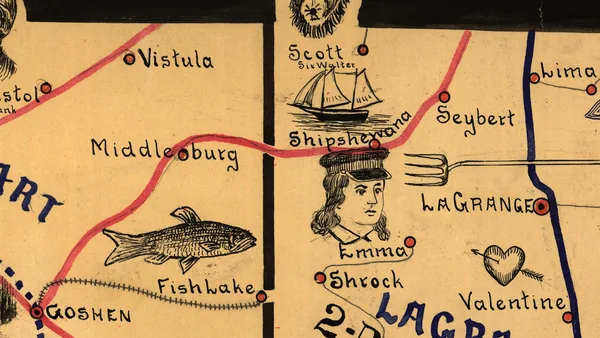
Shipshewana · Part 1 · The Shipshewana Puzzle: One Name, at Least Five PeopleA town, a lake and a monument carry the name of a Potawatomi chief. The old records hold more than one Shipshewana, the best-known story about him was first told in 1931, and the National Archives hold a man of his name alive in Kansas from February to December of the year the plaque says he died, and still there in 1842. Part 1 of a series on Shipshewana, Indiana.
Shipshewana · Part 2 · The railroad that made ShipshewanaIn 1888 a crooked little railroad called the Pumpkin Vine came through the farms of Newbury Township, and a town was laid out beside it. The company went broke within months, bank robbers rode its handcars, and a patent-medicine king built a second line. Part 2 of a series on Shipshewana, Indiana.
Shipshewana · Part 3 · How a farm sale became a flea marketIn 1922 George Curtis, Shipshewana’s bandleader, sold a few animals at his place on the edge of town. A century later his sale is a livestock auction, an antique auction and one of the Midwest’s biggest flea markets, and almost every number told about it is disputed. Part 3 of a series on Shipshewana, Indiana.
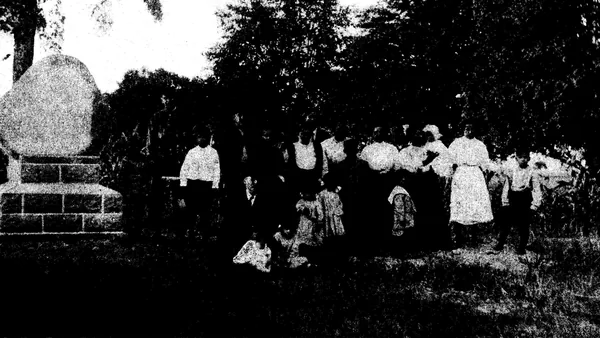
White Pigeon, Mich. · White Pigeon’s runEvery visitor to White Pigeon, Michigan, hears how the chief ran from Detroit to warn the settlers and died of the effort. The oldest accounts of his grave never mention it. The run was first told in 1908, by the people raising money for his monument.
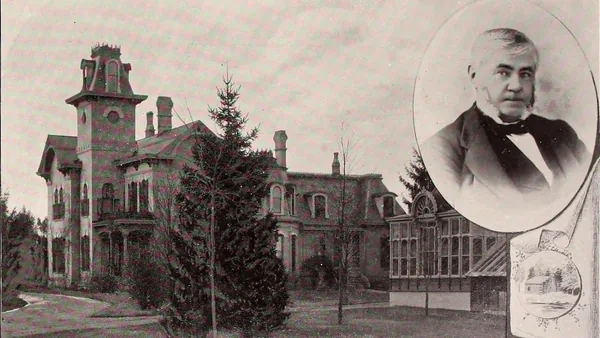
Howe, Ind. · Who was John B. Howe?A town, a military school and a mansion carry his name. The county histories call him the clearest thinker in northern Indiana, and then get his most important stand exactly backwards.
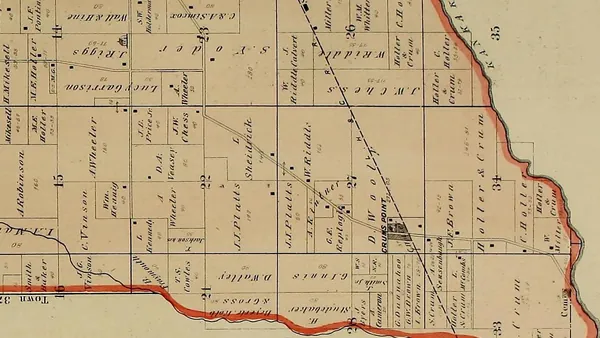
Near South Bend · Crumstown: The Point, the Partners and the MastodonA boy found an Ice Age giant on a ditch bank southwest of South Bend in 1906. The village beside it was laid out by a Holler and named for the Crums, his partners in the marsh, and for fifteen years it answered to three names at once.
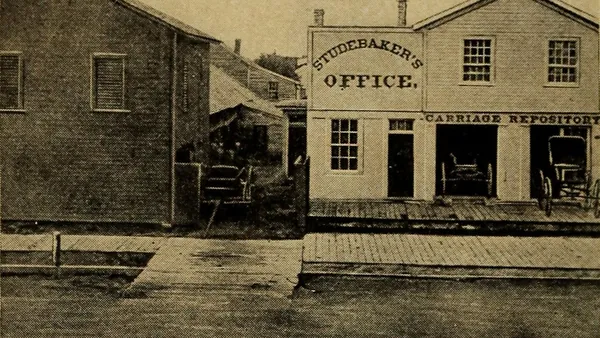
The Studebakers · Part 1 · Five brothers and a blacksmith shopIn February 1852 two brothers opened a blacksmith shop on Michigan Street in South Bend with sixty-eight dollars and two forges. A third made his stake building wheelbarrows in the gold fields. This is the family that made the Studebaker name.
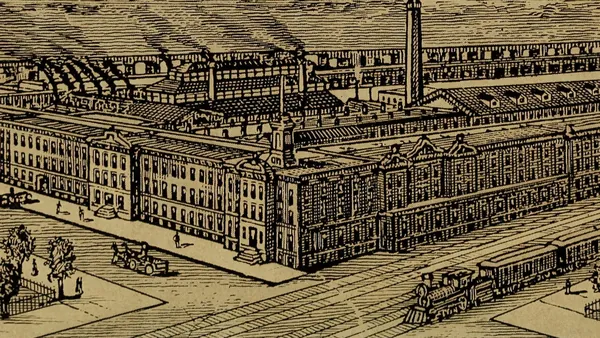
The Studebakers · Part 2 · The biggest wagon works in the worldTwo fires, an Army’s worth of wagons, carriages for presidents, the first electric runabout and then the trucks of the Second World War: how the Studebaker works grew to cover a hundred acres of South Bend.
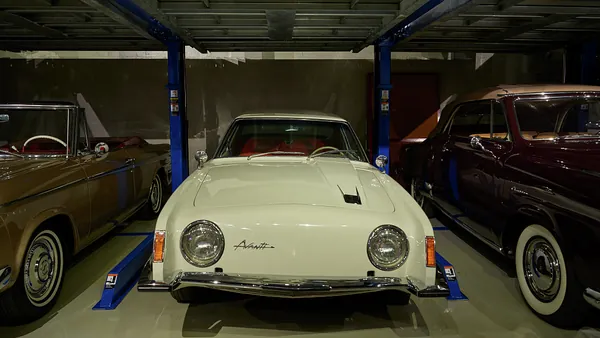
The Studebakers · Part 3 · The day the line stoppedLoewy’s Starlight, the Packard merger, the Avanti, and the December day in 1963 when Studebaker left South Bend. Thousands of workers lost their pensions, and their story helped bring about the law that protects pensions today.
Potato Creek · Part 1 · Before the lake: the farms of Potato CreekA creek with an odd name, German farms and maple sugar camps, and a free Black settlement whose families were buried beside their white neighbors. The land that became Potato Creek State Park, before there was a lake.
Potato Creek · Part 2 · Darcey Worster’s dreamA self-taught naturalist mailed insects made of acorns to politicians for forty years to get a lake built on Potato Creek. The state finally did it, over the protests of the farmers whose land it took, and named the lake for him.
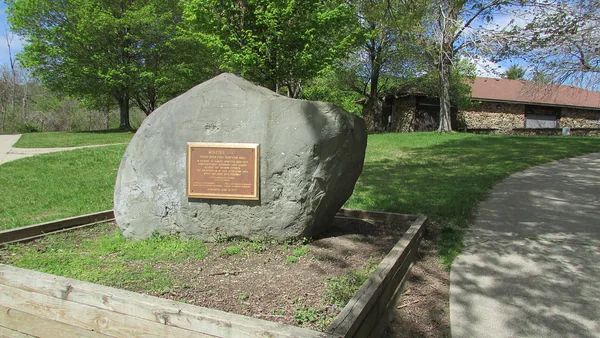
Potato Creek · Part 3 · The park goes back to the wildSwamp Rose, the wetlands that came back, the ospreys on their poles, and a lodge on Worster Lake fifty years after the dam: what Potato Creek State Park has become.
Lore and legend · Princess Mishawaka: the princess who never wasMishawaka calls itself the Princess City, after a Shawnee princess, a scout called Dead Shot and a rival called Gray Wolf. The whole cast first appears in a Michigan judge’s book of tales in 1875, and the story was attached to Mishawaka between 1907 and 1909.
The Pioneer Society · Part 1 · A museum before there was a museumNearly fifty years before the Pioneer Log Cabin, Cass County already had a museum: a by-law, a committee and a room in the court house, kept by a society of pioneers whose June picnics drew crowds reported at ten thousand and more. Part 1 of the story of the Cass County Pioneer Society, 1873–1924.
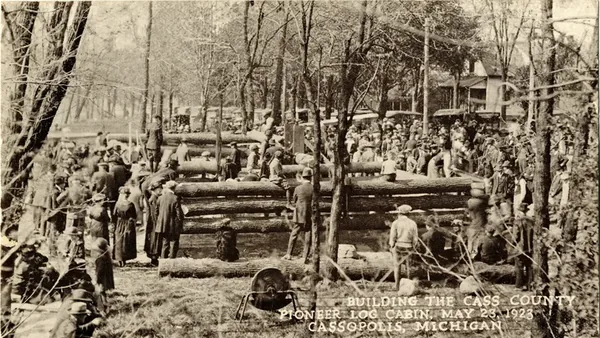
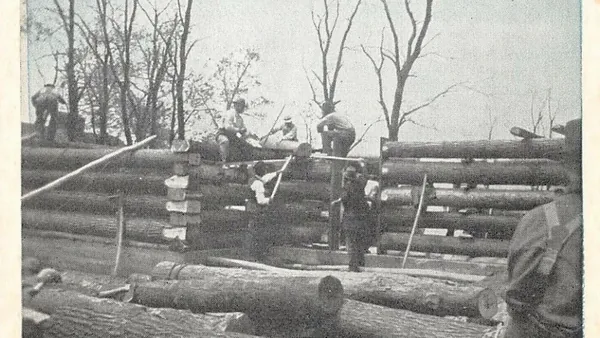
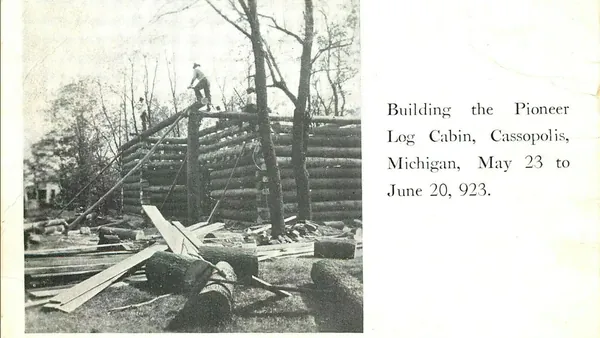
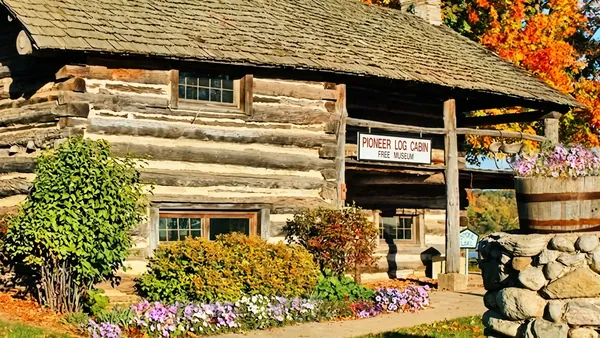
The Pioneer Society · Part 2 · The cabin a county builtIn 1923 the families of Cass County each cut a log from their own woods, and in four weeks a two-story cabin had risen on the shore of Stone Lake. Every log has a number and every number a name. Part 2: the Pioneer Log Cabin, its builders and its keepers.
The Pioneer Society · Part 3 · Keepers of the countyIn September 2026 the two organizations that trace their roots to the 1873 Pioneer Society came to have the same president. Part 3 follows the Cass County Historical Society from Harmon’s revival through George Fox, the 1977 incorporation and the Newton House, and asks whether it is the same society the pioneers founded.
How the towns got their names · How Kalamazoo got its nameEveryone in Kalamazoo knows two stories: a footrace against a boiling pot, and a founder run out of town over a stolen cherry tree. We went back to the record, from French route notes of the 1700s and a Royal Navy log of 1779 to the Senate journal and the act of 1836, to see where each story really starts, where the letter L came from, and what the Potawatomi names for the place and the river say today.
E Clampus Vitus · Part 2 · E Clampus Vitus: the complete recordE Clampus Vitus has been slipping out of the record since 1853, when the California Senate struck its own debate on the order from its journal. Here it is put back: every place the order is on record before 1905, from Indiana in 1846 to Sierraville in 1904, each with its earliest source; the words and customs of the old order; the boosters’ revival of 1915–1920, the revival of 1931 and the chapters today; the myths set beside the record; and the founding documents in full.
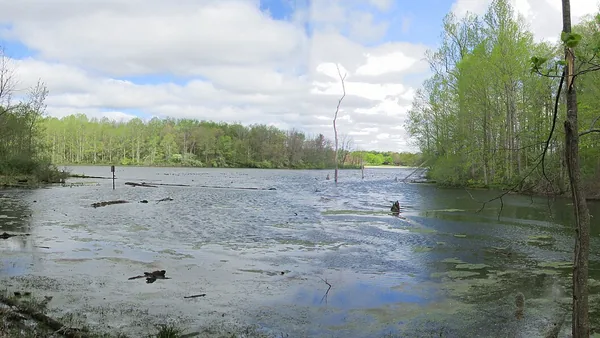
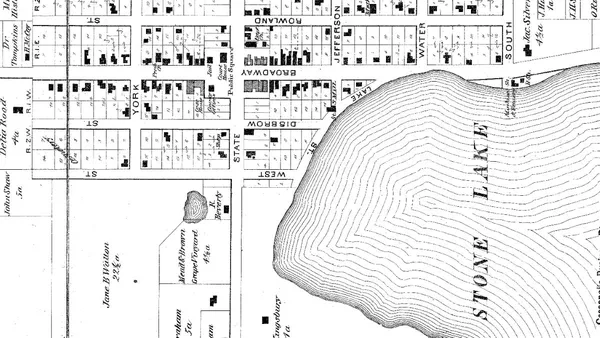
The lakes · Stone Lake, the lake that keeps secretsNo stream runs into Stone Lake, and none runs out. The village of Cassopolis was laid out on its shore in 1831, the county history of 1882 called it the most peculiar lake in the county, and people once believed it rose and fell with Lake Superior. Here is what the record says, and the seven mysteries it still keeps.
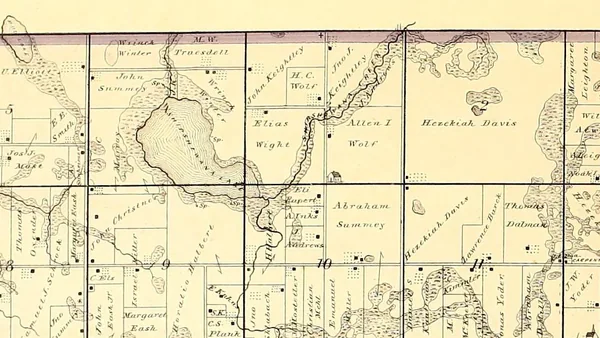
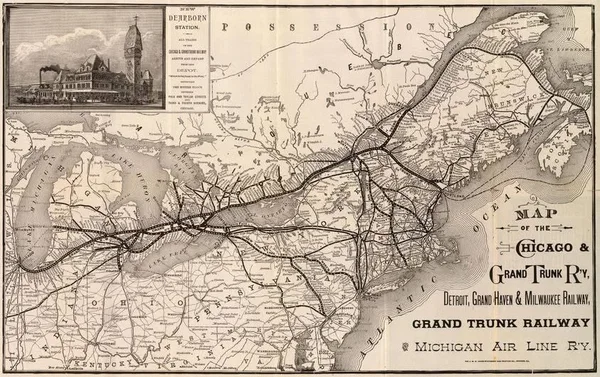
Railroads · Two Tries at the Valley: How the Grand Trunk Came ThroughA railroad map of 1887 names a “Michigan Air Line” that was not the Air Line Cassopolis knew. Behind that puzzle is how the Grand Trunk crossed the St. Joseph valley: two tries, a court ruling, a county’s own money, a bankruptcy and a fight for Chicago, then eighty years of steam to the very last scheduled run.
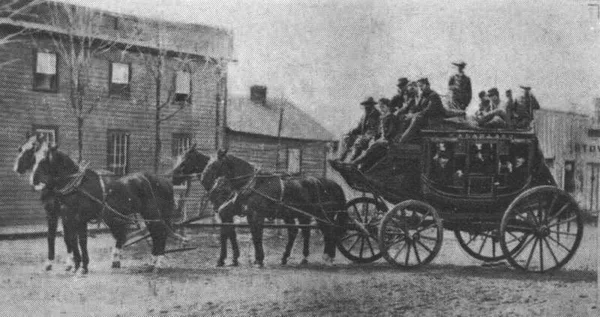
Old Plainwell · The stagecoach at the JunctionA crowded Concord coach stands at Plainwell’s old Junction in a photograph shared as the last stage from Kalamazoo to Grand Rapids, 22 October 1869. We found its negative, its first printing and one of its drivers. The tavern and the stage line are real; the date has no source, and the picture has worn four different years.
Case 1 · Who told Shepard?The only account of the 1846 lodge was written by a man who was a small child when it happened. Somebody told him. Who?
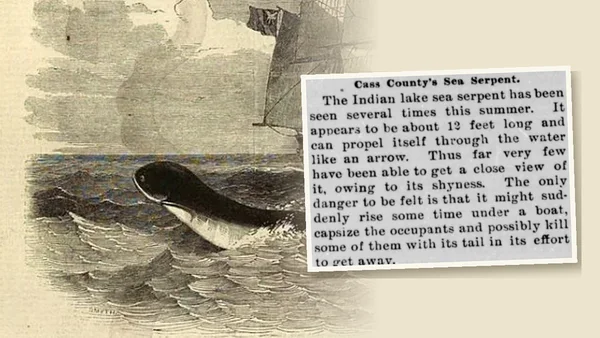
Lore and legend · The Indian Lake Sea Serpent: Twelve Feet Long, and ShyIn October 1898 a “huge sea serpent” terrorized the cottagers on Indian Lake, near Dowagiac, and men went out with guns to hunt it. Two weeks later the papers said it was an otter and a fish. The next summer it was back, twelve feet long. We read every report we could find, on the page.
From 1878 · The miniature log cabin of 1878Forty-five years before Cass County raised its Pioneer Log Cabin, a Dowagiac man trained as a gunsmith gave the Pioneer Society a little one. A single newspaper line is all that is known of it.
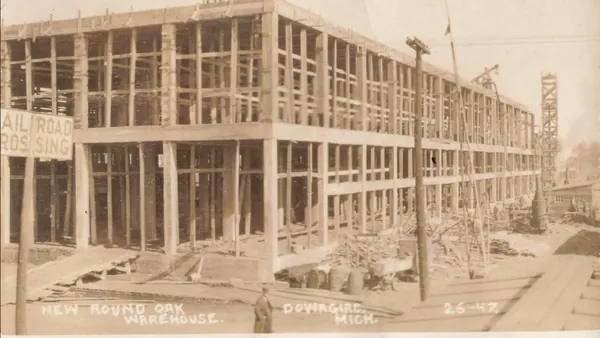
From 1923 · The cabin that opened twiceThe Pioneer Log Cabin was dedicated in June 1923, had a “grand opening” that October, and opened as a museum in June 1924. Here is what was finished when, and how Harmon set out to pay the debt.
From 1890 · Balloons over the pioneer picnicAt the Cass County pioneers’ seventeenth reunion, in June 1890, there were two balloon ascensions and parachute leaps in front of a crowd put at more than ten thousand. No report we have found names the aeronaut.
Near Decatur · The Newton House, a farmhouse museum near DecaturFor almost ninety years one family lived in this Italianate farmhouse in Volinia Township, at the edge of woods they refused to cut. Today the house is a museum, the woods are a National Natural Landmark, and the house may soon belong to the people who keep it open.
Soldiers of the valley · Company D: the 85 men Dowagiac sent in 1861Raised at Dowagiac in the summer of 1861, Company D followed a steamboat captain to the lower Mississippi: Baltimore, New Orleans, Baton Rouge, Port Hudson and Mobile Bay. Here is who they were, where they fought, and the nineteen who did not come home.
Case 2 · The hotel that walked awayIn 1867 the old hotel where the lodge held its ball was hauled across Cassopolis and turned into a mill. Where did it end up?
From 1930 · The caretaker was Harmon’s unclePeter Eby, past eighty, kept the door of the Pioneer Log Cabin and explained the relics to visitors. He was almost certainly the brother of Charles O. Harmon’s mother, and he had grown up in a log cabin himself.
From 1923 · “Old Log Cabin”: the song we can’t findIn October 1923 the new Pioneer Log Cabin had its own song, with words by Jay C. Northrop, a farmer who had given one of its logs. The program survives. The words, so far, do not.
How the towns got their names · How Cassopolis got its nameEveryone knows half of it: Cassopolis is the city of Cass. The other half is stranger. The county seat was first somewhere else, the man who won it for Stone Lake is said to have walked through a night of cold rain, and the village was spelled with an A for nearly forty years.
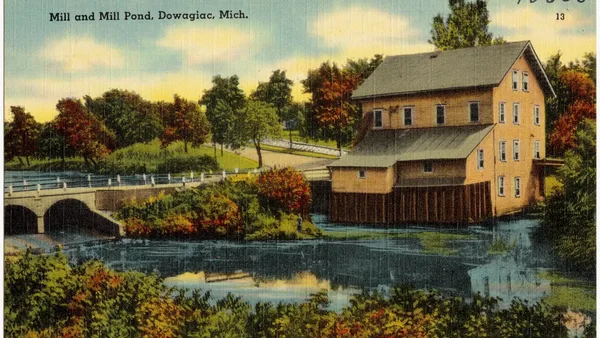
How the towns got their names · How Dowagiac got its nameDowagiac was a river before it was a town. The railroad made the village in 1848 and the village took the creek’s name; the county history of 1875 says the word means “fishing-water,” and a newspaper of 2023 says “foraging ground.” We went back to the record.
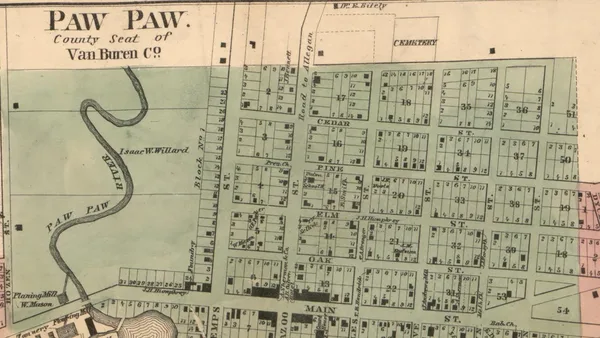
How the towns got their names · How Paw Paw got its namePaw Paw is named for its river, and the river for the pawpaw tree. But “pawpaw” is not a Native word, the village was laid out as Paw Paw, not Lafayette, and the first Paw Paw in local government was in the next county. We went back to the record.
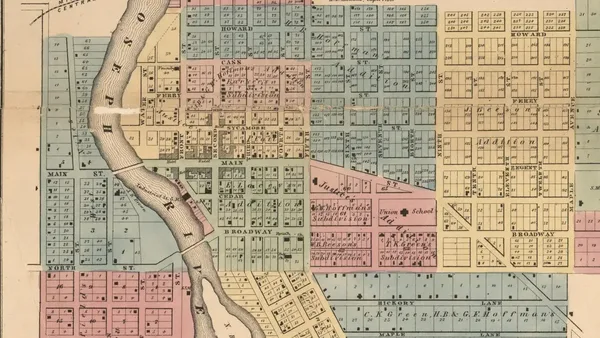
How the towns got their names · How Niles got its nameBefore it was Niles it was Pog-wa-tigue, a trading settlement on the St. Joseph. The village took the name of a Baltimore newspaper editor in 1829, the county history explains why only in 1906, and of the four flags of its nickname, the record shows three, one of them flown for a day or less.
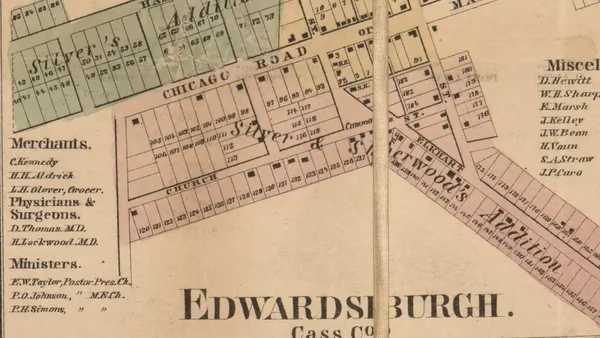
How the towns got their names · How Edwardsburg got its nameIt began as Beardsley’s Prairie, had a post office before it had a plat, and was named for an Edwards. The county histories say which one; an old family memoir says another. We went back to the record.
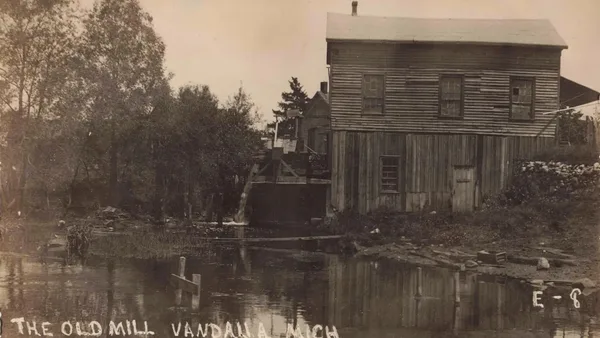
How the towns got their names · How Vandalia got its nameNo source we have read explains why Vandalia is called Vandalia. The record shows a post office in 1850, a grist mill, a plat in 1851, and a creek named in 1822 by a missionary for his wife. Here is what is known, and the guesses that are not.
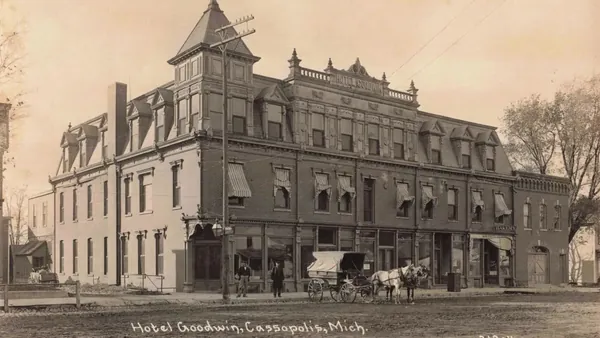
Old Cassopolis · Part 1 · Dr. Goodwin’s hotel on BroadwayHe drew pictures in an artillery camp at Shiloh, led a company of Michigan cavalry, went back to school to become a doctor, and built the brick hotel that carried his name on Broadway. It took guests into the 1950s, and nothing of it is left.
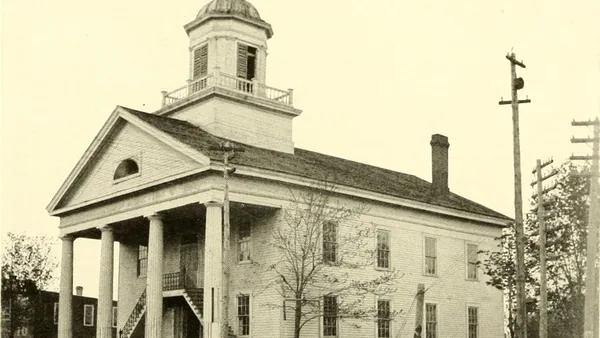
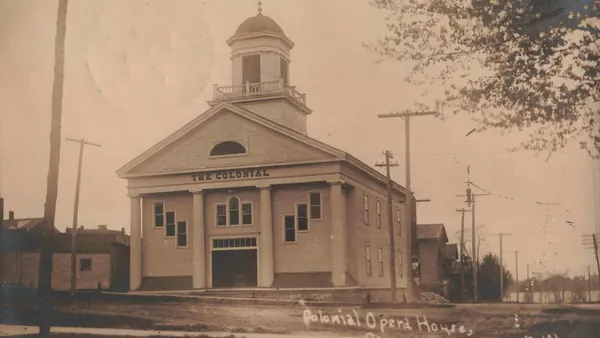
Old Cassopolis · Part 2 · The courthouse that became the ColonialThe white-columned Colonial Opera House on a card of 1913 had been the Cass County courthouse for more than half a century. It held the first county fair, temperance revivals and the courts, then was rolled across the village to become an opera house, a movie theater and finally the Gem.
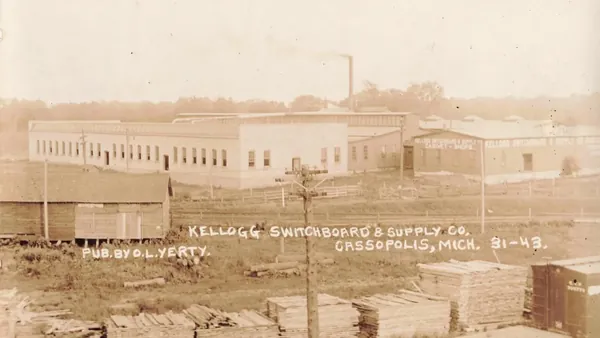
Old Cassopolis · Part 3 · Where Kellogg made its telephone cabinetsFor more than twenty years the oak cases of Kellogg telephones and switchboards were made at Cassopolis, in an old drill works by the railroad. An old postcard shows the plant, the lumber stacked by the siding, and the words “Cabinet Shops” painted on the wall.
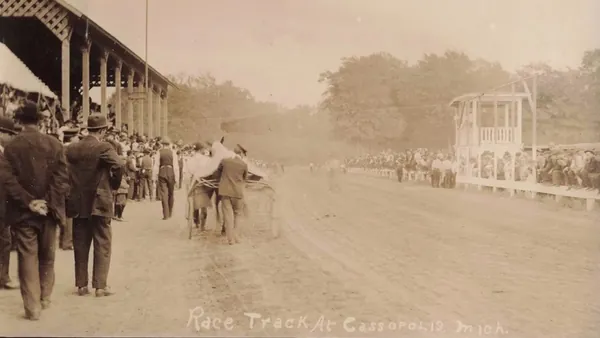
Old Cassopolis · Part 4 · Race day at the Cassopolis fair groundsA horse and sulky, a judges’ stand and a crowd at the rail: the Cass County fair raced at Cassopolis long before this card was made. The grounds moved three times for the railroads, fell silent for twenty years, and were twice brought back to life.
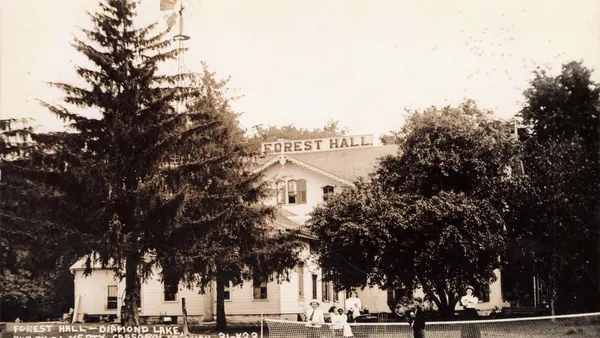
Diamond Lake · Summer on Diamond Lake: Forest Hall and the islandA tennis net on the lawn and the name along the ridge: Forest Hall, 1909. Behind the card lies sixty years of summer on Diamond Lake, from a railroad men’s club house to steamers, five hotels, an island resort and a golf course.
From 1923 · The day 3,000 people came to watch one logTwenty-four men carried the first log of the Pioneer Log Cabin while a band played. Four weeks later it was dedicated.
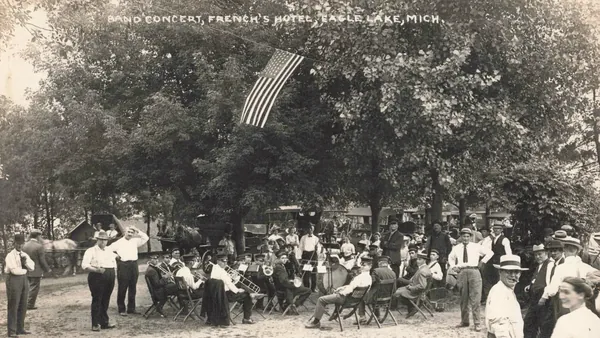
Eagle Lake · Band night at French’s Hotel, Eagle LakeA brass band under the trees, a flag on a line and motor cars parked behind the buggies: a summer evening at French’s Hotel, Eagle Lake, in 1912. Who the Frenches were, how their hotel worked, and what became of it.
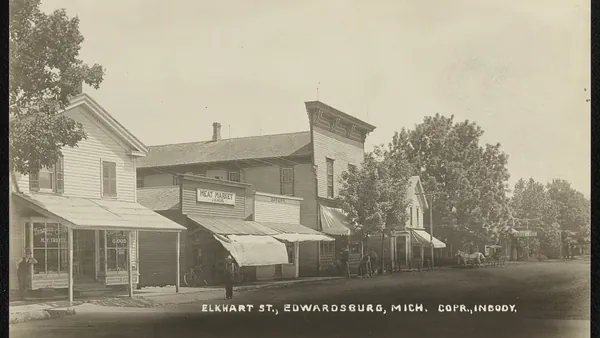
Edwardsburg · Edwardsburg in 1910, through J. Inbody’s cameraA street of shops, a drugstore beside the post office and a frame school with a bell tower: three cards by the Elkhart photographer John Inbody. A second camera, in the village newspaper’s office, puts names to the shops and places the corner.
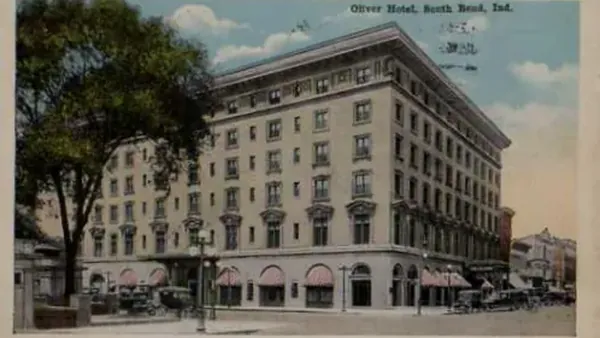
South Bend · The night 3,000 were invited to the Oliver HotelJames Oliver, the plow maker, built South Bend a grand hotel at Main and Washington so his overseas customers would have somewhere fit to sleep. It opened the week before Christmas 1899, made its own electricity, and stood until the wrecking ball came in 1967.
The studio · Project Scroll has a studioThe desk that reads the old records also makes pictures: restoration, imaging, design, photography, film and 3D. Now the studio has its own corner of the site.
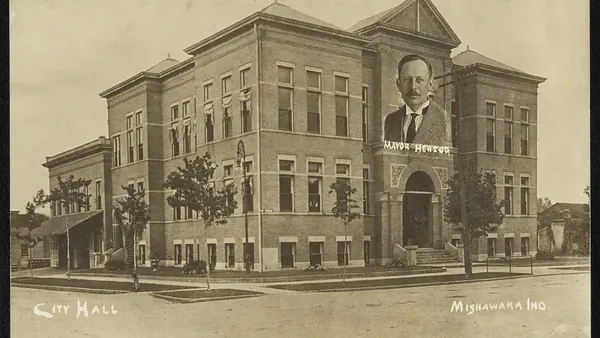
Mishawaka · City Hall, Mishawaka, and the mayor on the cardA real-photo postcard of 1910 names the building and the man in charge of it. Who was Mayor John A. Herzog, what kind of city did he run, and where did his city hall go?
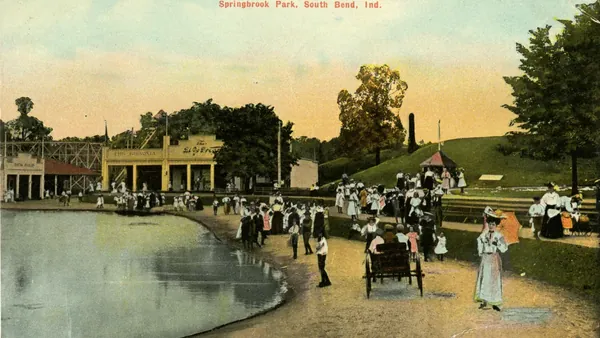
Between two cities · Springbrook Park, halfway between two citiesFor more than sixty years the streetcar company’s park on the river between South Bend and Mishawaka gave the valley baseball, vaudeville, roller coasters, big bands, the Blue Sox and even a NASCAR race. Only the concrete of its grandstand is left.
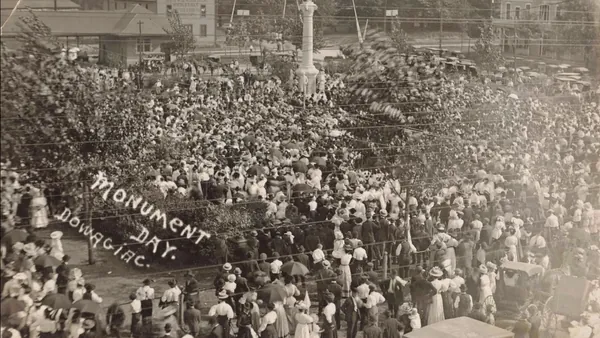
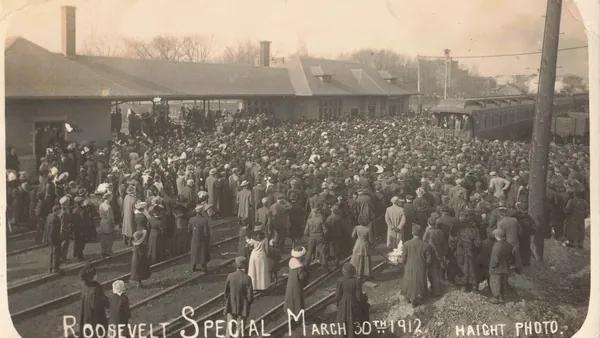
Dowagiac, 1912 · Five minutes with Roosevelt at DowagiacOn Saturday, 30 March 1912, Theodore Roosevelt’s special train stopped at Dowagiac for five minutes. He came to ask Michigan for a primary election; the town came to see a president; and Oscar C. Haight’s camera caught the crowd.
Visit & Plan · Pick a date, and see what’s openTell the Visit & Plan page the day you’re coming. It shows the museums open that day, what’s on, and your own day on the map.
Old postcards · Send someone an old postcardPick any card in the gallery, write on the back, and share it from your phone.
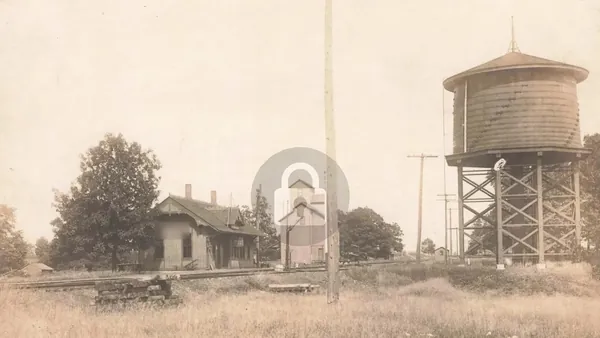
Where is this? · A depot, a water tower and three cluesAn old real-photo postcard of a station somewhere in the valley. Can you name the town?
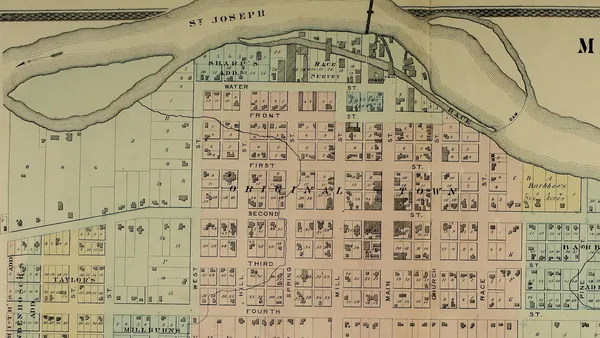
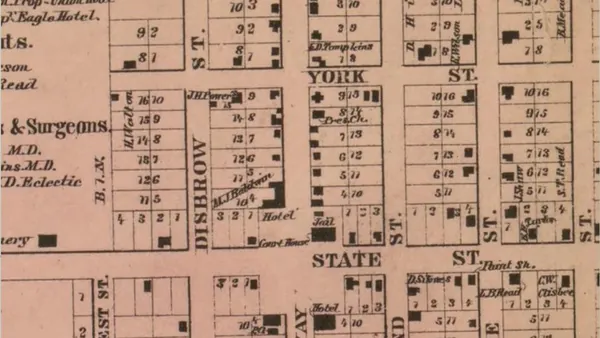
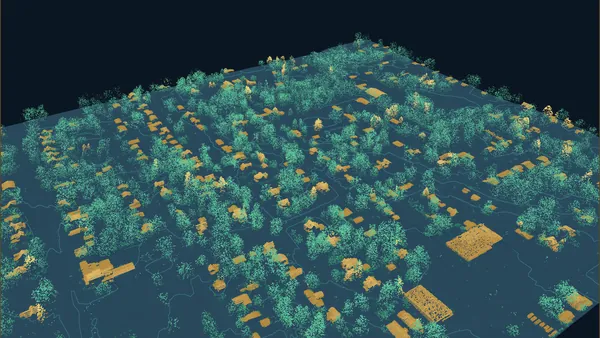
The map room · Fly over Cassopolis, laser point by laser pointEvery laser point of the 2015 survey in the town blocks, the land from Stone Lake to Diamond Lake, story pins, a guided tour, and the sun’s shadows, with the 1860 town plan laid on the ground.
Made in the Valley · Stoves, lures, wagons and guitarsTwenty-three makers from the valley: what they made, how they ended, and where you can still see their work.
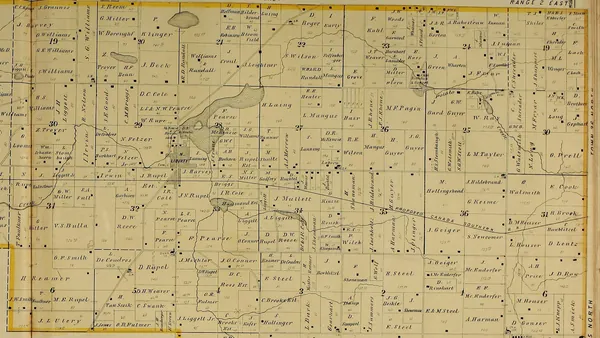
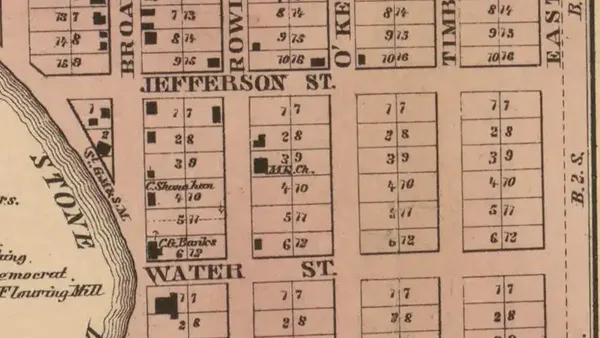
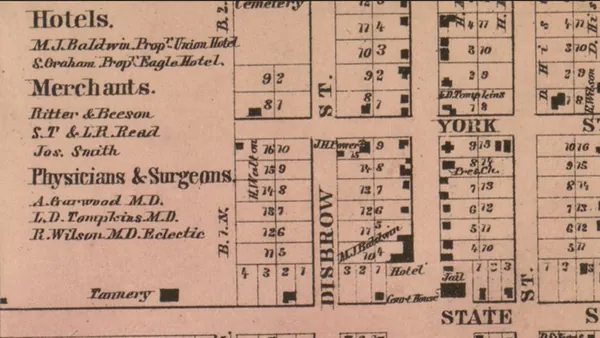
Names on the old maps · Who was in town in 1860?331 names from the business directories printed beside the old town plans, with the men of Company D, in one roll you can search.
Old postcards · Eleven more old postcardsThe Pioneer Log Cabin going up in 1923, the depots at Cassopolis and Vandalia, Chicago Street in Edwardsburg, Main Street in Niles and a steam shovel at White Pigeon.
In season · The harvest trail: a mill, an orchard and the stove townStamp three places in your passport this fall, from September to November, and earn the harvest badge.
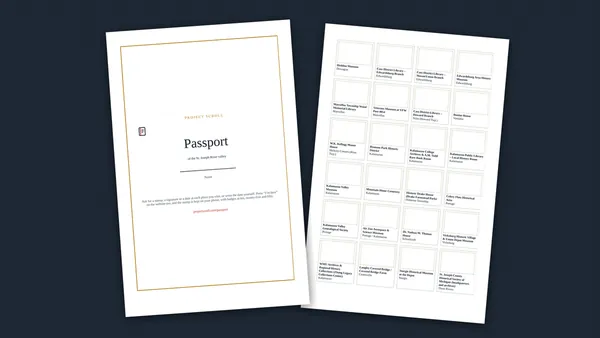
Printables · A paper passport to stamp, and a teachers’ packA passport booklet with a stamp box for every place, a one-day field trip for classes, and the valley kitchen as a little book.
No story matches that yet. Try another word, or tell us what you are looking for.
Explore by place
28 stories, 11 places, one map. Press a town to read its story; where there are several, pick from the list.
Cassopolis 11 stories
- Stone Lake, the lake that keeps secrets
- How Cassopolis got its name
- A lodge of E Clampus Vitus, in Cassopolis, in 1846
- E Clampus Vitus: the complete record
- The day 3,000 people came to watch one log
- Where Kellogg made its telephone cabinets
- The courthouse that became the Colonial
- Race day at the Cassopolis fair grounds
- Dr. Goodwin’s hotel on Broadway
- The hotel that walked away
- Fly over Cassopolis, laser point by laser point
Diamond Lake 1 story
Kalamazoo 1 story
Niles 1 story
Paw Paw 1 story
South Bend 1 story
Volinia Township 1 story
Every story is also in the news feed and on Project Scroll’s Facebook page.