← Project Scroll · All the news · How we research

Discoveries
What we’ve found. New to print.
Most of what Project Scroll publishes was known to someone before us, and we say where. These are the exceptions: facts found in the original records by Michael Urbanski for Project Scroll that we could not find in any modern history, article or website. Each shows the record it came from, the story where it is set out with its source, and what we searched before calling it new. In the stories, each one wears the gold New finding Scrollsign.
- Findings in the register
- 183
- Places and subjects
- 19
- Research notes with a DOI
- 6
- Stories with a finding
- 36
Findings by place and subject
Pick one to see what the records turned up there.
The major findings, as research notes
The most significant findings are set out as short, dated papers, each with its record, its limits, what was searched, a PDF and a permanent DOI issued through Zenodo, so that they can be cited and found for good.
- 2026-15The forgotten revival of E Clampus Vitus, 1915–1920: the Marysville boosters’ lodges, numbered one to eight, and how the war ended themDOI to come
- 2026-13E Clampus Vitus before the California Legislature: the Senate debate at Benicia struck from its journal (March 1853), and the Assembly’s dollar-a-member resolution (April 1855)DOI to come
- 2026-11Older than “about 1839”: the Treats, Henry Dewey and the red-chalk warning on the road to Dewey’s Lake, Silver Creek Township, MichiganDOI to come
- 2026-09Three names at once: Crum’s Point, Crumtown and Crumstown, St. Joseph County, Indiana, 1875–1903DOI to come
- 2026-08Three sawmills on Potato Creek, 1863: the mills on the ground of Potato Creek State Park, IndianaDOI to come
- 2026-07A museum before the museum: the Cass County Pioneer Society’s collection, 1874–1899DOI to come
- 2026-06Seven elk for the King of Italy: James E. Bonine’s own account of 1875doi:10.5281/zenodo.23638846
- 2026-05The Kentucky raiders’ bail and wagon: what the Licking Valley Register reported in September 1847doi:10.5281/zenodo.23631269
- 2026-04The earliest L in Kalamazoo yet found: Schoolcraft’s “Kikalemazo” of 1820, and the likely atlas of 1823doi:10.5281/zenodo.23631264
- 2026-03Ephraim Bee in the newspapers, 1855–1860: the remembered founder of E Clampus Vitus in records of his own daydoi:10.5281/zenodo.23631262
- 2026-02The Cassopolis lodge of 1846: the earliest lodge of E Clampus Vitus yet found with its members nameddoi:10.5281/zenodo.23631260
- 2026-01The earliest dated mention of E Clampus Vitus yet found: Connersville, Indiana, 27 February 1846doi:10.5281/zenodo.23631258
The register
Every finding, newest first. Search it, or narrow it by place, grade or kind.
- A lodge of E Clampus Vitus, in Cassopolis, in 1846
Dr. Evan J. Bonine’s mother and his wife’s mother, both named Sarah Talbot, were aunt and niece: Mrs. Beall was a daughter of Samuel Talbot of Centreville, the elder brother of Sarah (Talbot) Bonine. The founder of the Cassopolis lodge married his first cousin’s daughter, and his two fellow founders who married her sisters married into his own mother’s family. The same genealogy puts the doctor’s uncle John Talbot’s death “about 1846, at Isaac Bonine’s, Cass Co., Mich.”, and the sisters’ uncle Martin Sharpless Talbot’s in California in 1853.
In A lodge of E Clampus Vitus, in Cassopolis, in 1846 · found by Michael Urbanski, Project Scroll
What we searched
Gilbert Cope’s Sharpless genealogy (1887) read entry by entry (Nos. 151, 662, 663, 670, 2312, 2314, 2315, 2351); the Michigan Legislative Biography; Mathews (1882); the Birch Lake Quaker history (1963); the Cass County burial list (1950); web and full-text searches for the two marriages together.
- Gazetteer of MichiganJohn T. Blois1838
The state gazetteer of 1838 places a settlement “on the north side of Deadwood Lake … 2½ miles east of Cassopolis” and Young’s Prairie, in Penn township, “on the north-east of Deadwood lake”; only Diamond Lake fits both, the county history of 1882 puts that settlement on its north shore, and the gazetteer’s list of the county’s lakes names a Deadwood Lake but no Diamond Lake. By our reading, Diamond Lake was still called Deadwood Lake in the late 1830s. We have found no later account that notes the older name.
In Cassopolis in 3D: A Village Through Time, 1846 to Today · found by Michael Urbanski, Project Scroll
What we searched
Blois’s Gazetteer of the State of Michigan (1838); the county histories of 1882 (Mathews) and 1906 (Glover); the Diamond Lake Association’s history timeline; web searches for “Deadwood Lake” with Cass County, Cassopolis and Diamond Lake.
- E Clampus Vitus: the complete record
The first records of the old order in Oregon and New Mexico: the order “conferred” on George H. Williams, later Grant’s Attorney General, on Canyon Creek in the Josephine County mines in June 1858 (remembered in the Seattle Post-Intelligencer, 5 June 1895), and a ball of the order at Rio Mimbres, New Mexico, in October 1871, “By order of the N. G. H. I. Bolivar, Grand Scribe” (The Borderer, Las Cruces, 4 October 1871). Found through Jim Cirner’s album “ECV ® Back in the Day” #3.
In E Clampus Vitus: the complete record · found by Michael Urbanski, Project Scroll
What we searched
Jim Cirner’s albums “ECV ® Back in the Day” #1–3, read photo by photo; the register’s own searches of Chronicling America, Hoosier State Chronicles, the California Digital Newspaper Collection and the Internet Archive for every spelling of the order’s name; Then and Now (1966); Slopes, E Clampus Vitus (2000); the Shumate list of early lodges; Credo quia absurdum (1949).
- A lodge of E Clampus Vitus, in Cassopolis, in 1846
The order meeting in Indiana in February 1848, before news of the gold reached the East: the Lafayette Weekly Courier of 4 February 1848 calls “the members of the Order of E Clampsus Vitus” to “the Tent Room, No. 15, over the Courier Office.” No history of the order lists Lafayette. Found through Jim Cirner’s album “ECV ® Back in the Day” #3; seen as a clipping.
In A lodge of E Clampus Vitus, in Cassopolis, in 1846 · found by Michael Urbanski, Project Scroll
What we searched
Jim Cirner’s albums “ECV ® Back in the Day” #1–3, read photo by photo; the register’s own searches of Chronicling America, Hoosier State Chronicles, the California Digital Newspaper Collection and the Internet Archive for every spelling of the order’s name; Then and Now (1966); Slopes, E Clampus Vitus (2000); the Shumate list of early lodges; Credo quia absurdum (1949).
- Carl I. Wheat to Francis P. FarquharSan Francisco11 December 1931
The planning lunch of the 1931 revival dated: Carl Wheat’s handwritten letter of 11 December 1931 invites Francis P. Farquhar to lunch at 12:15 on Friday, 18 December 1931, at the Clift Hotel, San Francisco, “to ‘discuss’ ways & means for the revival” of the order. The order’s own history (Then and Now, 1966) could give only the year. The Nevada City Nugget of 20 May 1932 confirms that the hotel’s owner, Fred Clift, was among the members chartering the revival. The letter (Marsh Fey Collection) was reproduced with Alan L. Wilson’s history of 1995, whose caption gives no date; shared with us by Jim Cirner.
In E Clampus Vitus: the complete record · found by Michael Urbanski, Project Scroll
What we searched
Then and Now (1966); Shumate (1991) and Wilson (1995) as published by the Julia C. Bulette Chapter; Tom Barry, “The Re-founders” (Hewgag Monitor, 1986); Bob Wyckoff in The Union; the Online Archive of California (E Clampus Vitus archives at the University of the Pacific and Huntington; the Farquhar papers at the Bancroft); Internet Archive full text for “Clift Hotel” with “Clampus”; web searches for the letter’s wording and for “December 18, 1931.”
- A lodge of E Clampus Vitus, in Cassopolis, in 1846
A diary kept by “Dr. Bonine” on the overland trail in 1849 (Independence, Fort Hall, the Truckee) is listed in John M. Townley’s The Trail West (1988) as held by the Fort St. Joseph Museum, Niles; and Bonine’s medical teacher, Dr. John Prichet of Centreville, the husband of his wife’s aunt, Emily Talbot, crossed to California the same year by the Truckee route (Cope, 1887; Indiana State Library L130).
In A lodge of E Clampus Vitus, in Cassopolis, in 1846 · found by Michael Urbanski, Project Scroll
What we searched
Internet Archive full-text searches for “Bonine” with California, Sacramento, Yuba, Truckee, Placerville and diary 1849, and for “Laban Harter” and “Prichet”; Mathews (1882), Cope (1887), the Portrait and Biographical Record (1893) and Glover (1906); the New York Herald list in California Bound; the CAGenWeb list of overland diaries; the Indiana State Library finding aids.
- Red Bluff BeaconRed Bluff, California28 April 1858
The order at Red Bluff by April 1858: the Red Bluff Beacon of 28 April 1858 reports that “the ancient and honorable order of E Clampsus Vitus of this place” had put $20 on the subscription list for the May-Day Festival. Shumate’s keepsake of 1960 began Red Bluff with the Beacon of February 1859, when the lodge had “resuscitated” after “a year or two’s suspension.”
In E Clampus Vitus: the complete record · found by Michael Urbanski, Project Scroll
What we searched
Albert Shumate, ECV News from the Miners (1960), read in full at HathiTrust; the California Digital Newspaper Collection’s Red Bluff Beacon (from 25 March 1857), searched for Clampsus, “E C V” and “ancient and honorable,” 1857–1860, and the 1858 and 1859 pages read on the image; Jim Cirner’s albums “ECV ® Back in the Day” (which have the Beacon of 12 January 1859); web searches.
- E Clampus Vitus: the complete record
The boosters’ revival of E Clampus Vitus, 1915–1917, lodge by lodge: Marysville No. 1 (first meeting 22 October 1915), Oroville No. 2 (27 January 1916), Chico No. 3 (23 March 1916), Willows (20 May 1916; No. 4 or 5, the papers differ), Colusa (29 June 1916; No. 5 or 6), Red Bluff No. 7 (charter 6 November 1916) and Quincy No. 8 (February 1917), each from the newspapers of the day. The order’s histories mention only the Marysville incorporation of 9 November 1915. Found through Jim Cirner’s albums “ECV ® Back in the Day.”
In E Clampus Vitus: the complete record · found by Michael Urbanski, Project Scroll
What we searched
Then and Now (1966); Jim Cirner’s albums “ECV ® Back in the Day” #1–3, which pointed to most of the clippings; the California Digital Newspaper Collection (the Sacramento Union, Marysville Daily Appeal, Chico Record, Colusa Herald, Colusa Daily Sun, Feather River Bulletin and Plumas Independent, 1915–1920), with each article read on its clipped image where so marked; web searches for the lodges by name.
- Colusa Daily SunColusa, California27 January 1920
How the 1915 revival ended: a Grand Lodge of the order was to have met at Oroville in October 1917, “but about that time the men in the towns mentioned were either in France, on their way, or scheming up some plan to be on their way, so the Grand Lodge fell through”; by January 1920 “the American Legion is taking the place of the old order,” and the Colusa Clampers’ funds went to the Legion post (Colusa Daily Sun, 27 and 28 January 1920; Colusa Herald, 29 January 1920). Quincy alone revived its lodge that week.
In E Clampus Vitus: the complete record · found by Michael Urbanski, Project Scroll
What we searched
The California Digital Newspaper Collection, 1916–1921, for Clampers, “Clampus Vitus” and “Grand Lodge” with Oroville; Then and Now (1966); Jim Cirner’s albums “ECV ® Back in the Day” (which have the Quincy revival but not the Colusa items); web searches.
- National Register nominationLansing, Michigan22 January 1982
The Newton House was leased in August 1974 to the Cass County Historical Commission, not the Society, and held in 1982 under a lease dated 8 January 1980 and running to June 1984: so says the National Register nomination of 1982, with a letter from Michigan State University’s Department of Forestry in the same file. Michigan State’s trustees named the Society as tenant in 1976 (for the lease of 1974) and again in a paper of June 2026 that dates the Society’s lease to January 1980; in 1974 one man, Lee Dodd, headed both bodies.
In Keepers of the county · found by Michael Urbanski, Project Scroll
What we searched
Wikipedia; Clio, which gives the Society and 1974 while citing the nomination; WVPE (2026); the Leader (2017–21); MSU’s trustees’ minutes, September 1973 to 1980, searched in full; MSU’s trustees’ paper of June 2026; the state marker; MSU’s list of leased properties.
- Directory, Historical Societies and AgenciesMadison, Wisconsin1963
The directories of historical societies date the Cass County Historical Society to 1952 (AASLH, 1963) or 1953 (Historical Society of Michigan, 1973 and 1974), with its seat at Dowagiac, the address of its secretary Berenice E. Vanderburg, and a 1965 tribute calls Dr. Sherman L. Loupee of Dowagiac a charter member. That explains why a 1976 notice called Mrs. Vanderburg “one of the founders,” and makes the Society the likeliest candidate for the local historical society George R. Fox founded.
In Keepers of the county · found by Michael Urbanski, Project Scroll
What we searched
The Society’s website; Claspy (1970); Michigan History, 1924–61, and its indexes for 1962–89; the Bentley’s finding aid for the Fox papers; the Library of Michigan’s note on Fox; Chronicling America; Internet Archive full text; web searches.
- IRS Form 990-NCassopolis, Michigan2008–2025
The Society’s federal e-Postcards, filed for every tax year since 2008, name its principal officers (all but 2018): Alan Palmer, formerly of Dowagiac (2008–15), Marilyn Fry (2016), Allen Butchbaker (2017, 2019–21), Ron McAdam (2022) and Darren Bettinger (2023–25). Palmer’s name appears in no earlier account of the Society.
In Keepers of the county · found by Michael Urbanski, Project Scroll
What we searched
The Society’s state annual reports, 1994 and 1997–2026; ProPublica’s Nonprofit Explorer; web searches.
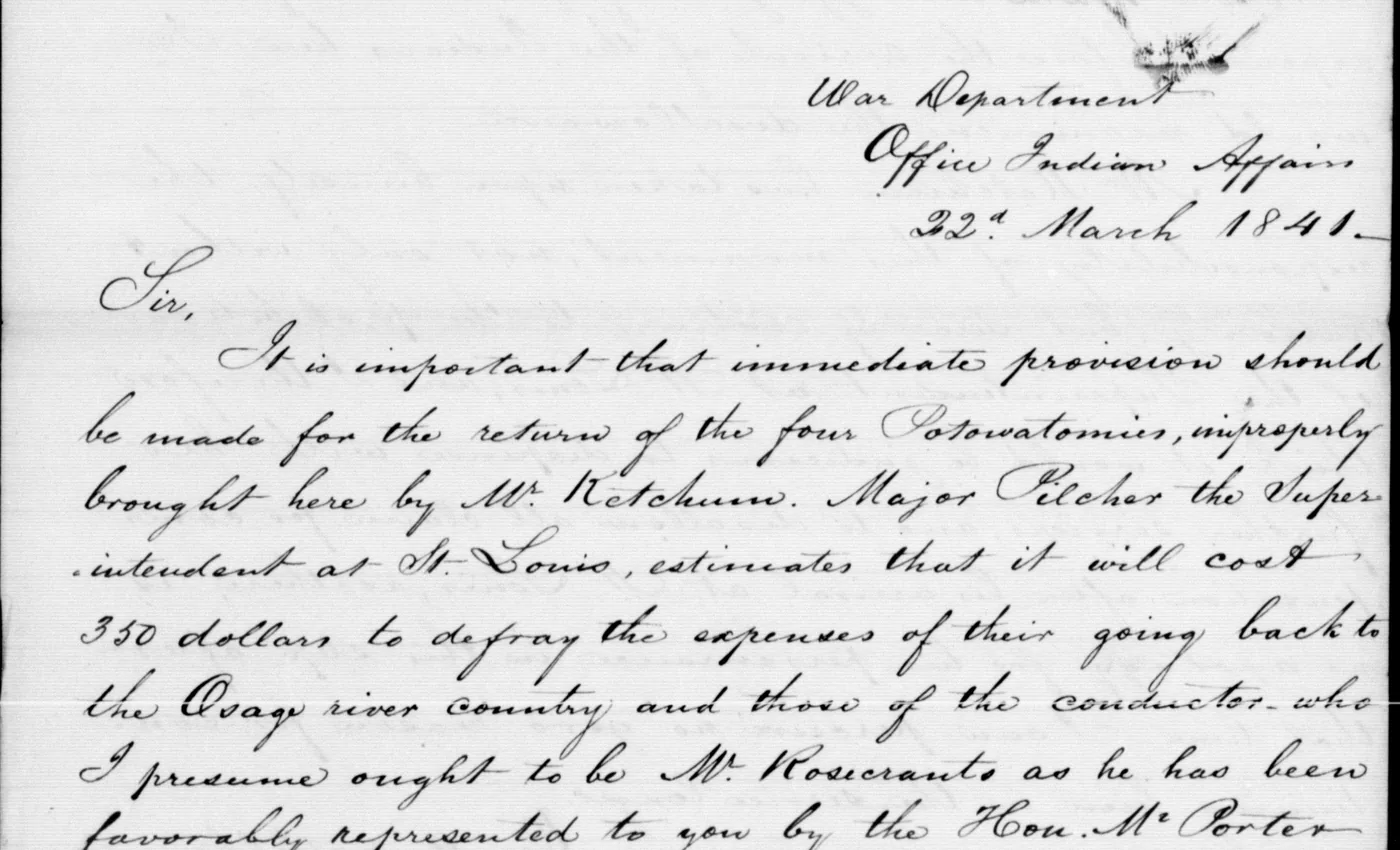
How Mucka moat’s unauthorized trip to Washington ended. On 22 March 1841 the Commissioner of Indian Affairs, T. Hartley Crawford, told the Secretary of War, John Bell, that “immediate provision should be made for the return of the four Potowatomies, improperly brought here by Mr. Ketchum”: $350 for the journey back to the Osage River country, with a Mr. Rosecrants of Michigan, recommended by Senator Porter, to conduct them. Crawford called the Rev. Isaac Ketchum’s journey “directly contrary to the prohibition of the Superintendent at St. Louis” and advised that his further services be dispensed with; Bell wrote “Approved.” A note on the folder adds, in a hand hard to read, that one of the men had a sore and swollen thigh and that the party left on Sunday, 28 March 1841. We found no published account of how the journey ended in the searches we made.
In The Shipshewana Puzzle: One Name, at Least Five People · found by Michael Urbanski, Project Scroll
What we searched
National Archives Catalog, M234 roll 642 (NAID 164251872), images 522–524; web searches for the names Ketchum, Rosecrants, Pilcher and Mucka moat with 1841.
- E Clampus Vitus: the complete record
The order at Monterey, and at San Juan Bautista, by July 1855: the Monterey Sentinel of 14 July 1855 (repeated 21 July) calls a “grand gala festival in full regalia” of “E Clampsus Vitus” for 1 August and invites “our San Juan brethren,” a year earlier than the 1856 that Mayo Hayes O’Donnell’s columns gave it.
In E Clampus Vitus: the complete record · found by Michael Urbanski, Project Scroll
What we searched
The Monterey Public Library’s digital newspaper archive (the Monterey Sentinel, 2 June 1855 to 31 May 1856), searched for Vitus, Clampus, Clampsus, gala, regalia and Bautista, with the find read on the page image (14 July 1855, p. 3); Mayo Hayes O’Donnell, “Peninsula Diary,” 14 Sep and 18 Oct 1951, 25 Sep 1953, 24 Feb 1965 (dated 1856); Seth Slopes, E Clampus Vitus (2000), searched inside at the Internet Archive for Monterey and San Juan (only the modern Monterey Viejo chapter); the Library of Congress’s Chronicling America; web searches. Graded 27 October 2026.
- E Clampus Vitus: the complete record
Stewart Flat, where a lodge of the order met under Sam. McCurdy in May 1859, placed: a Placer County camp on Secret Ravine, about 1.5 miles east of Penryn, near Newcastle, a polling place in 1863.
In E Clampus Vitus: the complete record · found by Michael Urbanski, Project Scroll
What we searched
The California Digital Newspaper Collection for “Stewart Flat” and “Stewart’s Flat,” 1850–1880 (50 hits, nearly all in the Placer Herald); David L. Durham, California’s Geographic Names (1998), p. 537; web searches. Graded 27 October 2026.
- E Clampus Vitus: the complete record
Smith’s Flat, where the order elected officers in June 1856, placed: the Sierra County camp of 1851 that grew into Alleghany. The Sierra Citizen’s Smith’s Flat correspondent names the same men (Chamberlin of the Hook & Bull Co., Winchell) beside the Alleghany Co. and the Keystone tunnel.
In E Clampus Vitus: the complete record · found by Michael Urbanski, Project Scroll
What we searched
The California Digital Newspaper Collection for “Smith’s Flat,” 1854–1858, and for the officers’ names (Jenkins, Hatch, Hathoway, Winchell, Chamberlain); the Sierra Citizen, 28 June 1856 (the officers), and its advertisements to “the citizens of Smith’s Flat” (December 1854 and January 1855); the Sacramento Daily Union, 26 February 1856; the Alleghany historical marker; the CAGenWeb list of Sierra County towns; web searches. Graded 27 October 2026.
- E Clampus Vitus: the complete record
The order before the California Senate at Benicia, 17 March 1853: a resolution, moved by Senator Antonio María de la Guerra, to lend the Senate chamber for the meetings of “the ‘E. Clampsus Vitus’ Society.” Senator M. M. Wombough of Yolo and Colusa opposed it; a senator who was “the head and front of the association in the State” replied that Wombough had been “black-balled”; the senator for Mariposa, James H. Wade, was named as a member (“Mr. Wade, although a member of the order, was opposed to the resolution”), and “the N. G. H. of the State was present and gave the Grand Sign.” The resolution was indefinitely postponed, 9 to 7; the Senate afterwards voted 10 to 7 to strike the proceedings from its journal, and the printed Journal for 1853 has no entry. This is the record behind Slopes’s unsourced “Benicia, March 1853.”
In E Clampus Vitus: the complete record · found by Michael Urbanski, Project Scroll
What we searched
Read on the page images: Sacramento Daily Union, 19 March 1853 (“Our Benicia Correspondence”), and Daily Alta California, 19 March 1853 (“Legislative Report”); San Joaquin Republican, 19 March 1853 (the Benicia letter, read on the page image; “Matters at the Capital,” read in OCR); the Journal of the Senate, 1853 (Internet Archive), checked for 17–18 March and for the senators’ names and districts; California Digital Newspaper Collection searches for “Clampsus” and “Clampus,” 1853. Graded 27 October 2026.
- E Clampus Vitus: the complete record
The order before the California Assembly at Sacramento, 30 April 1855: a resolution “that a tax of one dollar be levied on each member for the benefit of the renowned order of E Clampsus Vitus,” its “charitable acts having exhausted its exchequer,” which the Speaker pro tem. “reluctantly declared … out of order.” The order’s third brush with an American legislature, after Indiana (1846–47) and the California Senate (1853).
In E Clampus Vitus: the complete record · found by Michael Urbanski, Project Scroll
What we searched
Read on the page image: Sacramento Daily Union, 1 May 1855. The California Digital Newspaper Collection searched for “Clampsus,” “Clampus” and “Vitus” with Mariposa and the legislature, 1853–1870. Graded 27 October 2026.
- Niles’ Weekly RegisterBaltimore1829
Hezekiah Niles acknowledged the naming himself: the front page of Niles’ Weekly Register of 7 November 1829 reports a letter “postmarked ‘Niles’” from “a new town laid out on the St. Joseph’s river … so called in compliment to the senior editor of this paper,” thirteen days before the Genius of Universal Emancipation item of 20 November until now cited; the postmark shows letters leaving the town marked “Niles” by early November 1829.
In How Niles got its name · found by Michael Urbanski, Project Scroll
What we searched
Internet Archive full text of the Register for 1829; the Berrien County histories of 1880 and 1906; McCoy (1907); Wikipedia’s articles on Hezekiah Niles, the Weekly Register and Niles, Michigan; web searches for the notice’s wording. Romig’s Michigan Place Names and the Niles city histories could not yet be checked.
- The True Story of the Dewey Lake Monster: The Week the Valley Went Wild
The conservation officer Wikipedia calls “William Rowe” is named in the Associated Press dispatch of 13 June 1964 as “Conservation Officer Bill Roe,” who thought the monster “nothing more than a bear far from its regular haunts, but brought to the area by the lure of swamp huckleberries.”
In The True Story of the Dewey Lake Monster: The Week the Valley Went Wild · found by Michael Urbanski, Project Scroll
What we searched
Escanaba Daily Press, 13 June 1964 (Associated Press, Dowagiac), Internet Archive. Wikipedia cites the South Bend Tribune of 12 June 1964, p. 21, which we have not read. Wikipedia’s Dewey Lake Monster article; Robert Atkinson’s survey of the 1964 papers (2017); Hammond’s Mysterious Michigan (2022); FATE (1964), Steiger (1969), Keel (1970) and Bord (1982) in Internet Archive full-text search; web searches. Web searches for “Bill Roe” with the Dewey Lake Monster find only Wikipedia’s “Rowe.”
- The True Story of the Dewey Lake Monster: The Week the Valley Went Wild
Henry Dewey, Timothy Treat and Sullivan Treat are all on Silver Creek’s 1838 roll of resident taxpayers (Dewey $1,571, the third-largest valuation in the township; Timothy Treat $396; Sullivan Treat $240), and Dewey and Timothy Treat on the poll list of the township’s first election, in 1838. Against Daniel Blish’s “not until 1841” for Dewey, and against the 1882 story’s late arrival for the Treats.
In The True Story of the Dewey Lake Monster: The Week the Valley Went Wild · found by Michael Urbanski, Project Scroll
What we searched
History of Cass County, Michigan (1882), Silver Creek Township, pp. 357–358. Wikipedia’s Dewey Lake Monster article; Robert Atkinson’s survey of the 1964 papers (2017); Hammond’s Mysterious Michigan (2022); FATE (1964), Steiger (1969), Keel (1970) and Bord (1982) in Internet Archive full-text search; web searches. Web searches for Henry Dewey with Silver Creek and 1838.
- The True Story of the Dewey Lake Monster: The Week the Valley Went Wild
The 1882 county history has the Treats leave New York in September 1837 and spend two years in Ontwa before Silver Creek. Its own records put Timothy Treat as supervisor in April 1837 and on the 1838 rolls; The Treat Family (1893) has Timothy in Michigan from the fall of 1834, Sullivan settling in Silver Creek at twenty-one (about 1832), Timothy’s tenth child born in March 1835 outside New York, and Fidelia married to Philander Dunning in July 1835; and Ira Foster of Keeler Township, who began his cabin on 7 April 1837, named “Samuel Treat, at Silver Creek” as his neighbor to the south.
In The True Story of the Dewey Lake Monster: The Week the Valley Went Wild · found by Michael Urbanski, Project Scroll
What we searched
History of Cass County (1882); J. H. Treat, The Treat Family (1893), nos. 191 and 386; History of Berrien and Van Buren Counties (1880), Keeler Township. Wikipedia’s Dewey Lake Monster article; Robert Atkinson’s survey of the 1964 papers (2017); Hammond’s Mysterious Michigan (2022); FATE (1964), Steiger (1969), Keel (1970) and Bord (1982) in Internet Archive full-text search; web searches.
- The True Story of the Dewey Lake Monster: The Week the Valley Went Wild
Mary Brown’s 1964 drawing of the monster, first printed on the front page of Chicago’s American on 12 June 1964, survives in a reprint on p. 4 of Michigan Anomaly Research, Report on Current Research, vol. 1, no. 2 (Winter 1980), captioned “witness drawing, Sister Lakes, Michigan: 1964.” No modern telling we found points to it.
In The True Story of the Dewey Lake Monster: The Week the Valley Went Wild · found by Michael Urbanski, Project Scroll
What we searched
Marcello Truzzi papers, Eastern Michigan University, Internet Archive item emu-truzzi-bwp. Wikipedia’s Dewey Lake Monster article; Robert Atkinson’s survey of the 1964 papers (2017); Hammond’s Mysterious Michigan (2022); FATE (1964), Steiger (1969), Keel (1970) and Bord (1982) in Internet Archive full-text search; web searches. Web searches for Mary Brown’s drawing with Michigan Anomaly Research.
- The True Story of the Dewey Lake Monster: The Week the Valley Went Wild
The later books disagree over whether Gordon Brown met the monster from his car or on foot with a flashlight. The Associated Press of 11 June 1964 tells it as one sequence: his car’s headlights lit the thing standing between Utrup’s barn and a shed; then he got a flashlight and followed it into a field near some woods.
In The True Story of the Dewey Lake Monster: The Week the Valley Went Wild · found by Michael Urbanski, Project Scroll
What we searched
Escanaba Daily Press, 11 June 1964, p. 1 (Associated Press), Internet Archive. Wikipedia’s Dewey Lake Monster article; Robert Atkinson’s survey of the 1964 papers (2017); Hammond’s Mysterious Michigan (2022); FATE (1964), Steiger (1969), Keel (1970) and Bord (1982) in Internet Archive full-text search; web searches.
- The True Story of the Dewey Lake Monster: The Week the Valley Went Wild
By 11 June 1964 the Associated Press gave the nine feet and 500 pounds as a description “pieced together by police from residents’ complaints,” no longer anyone’s own; the National Observer traces the height to farmer Utrup and his five-foot bush (credit to the Observer). A 1980 survey dates a sighting in the same words to 1962.
In The True Story of the Dewey Lake Monster: The Week the Valley Went Wild · found by Michael Urbanski, Project Scroll
What we searched
Escanaba Daily Press, 11 June 1964, p. 1 (Associated Press); The Observer’s World (1965), p. 97; Michigan Anomaly Research (1980). Wikipedia’s Dewey Lake Monster article; Robert Atkinson’s survey of the 1964 papers (2017); Hammond’s Mysterious Michigan (2022); FATE (1964), Steiger (1969), Keel (1970) and Bord (1982) in Internet Archive full-text search; web searches.
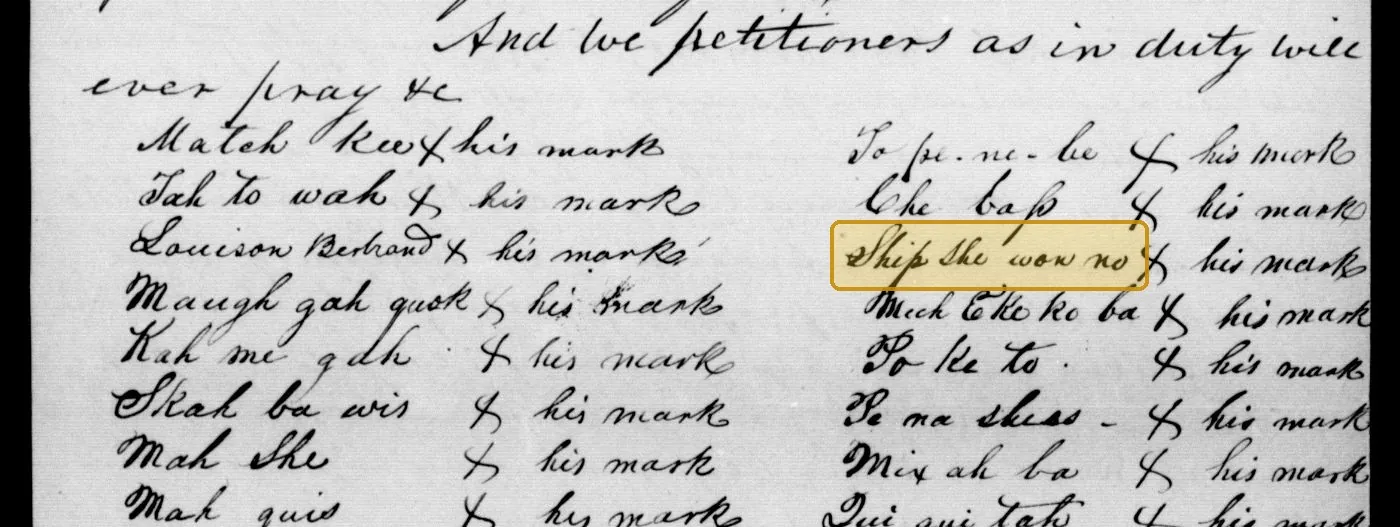
A chief named “Ship she won no,” of the St. Joseph band of the Potawatomi, signed his band’s petition to President John Tyler on the Osage River in Kansas on 16 November 1841, as one of six delegates, and made his mark on the delegates’ letter to the Commissioner of Indian Affairs in Washington on 15 December 1841: the year the 1931 plaque has Chief Shipshewana die by the lake. A 2007 book reported letters of those months without saying where they were; we found them on National Archives microfilm M234, roll 642, images 515–521, and read them on the page images. Whether the delegate is the treaty chief of 1828 is not proved.
In The Shipshewana Puzzle: One Name, at Least Five People · found by Michael Urbanski, Project Scroll
What we searched
National Archives Catalog, M234 roll 642 (NAID 164251872), images 424–543; McPherson (2007); Edmunds (1978); the HowNiKan exchange of 1994–95; the La Grange County histories of 1874–1936; web searches for the petition and its signers.
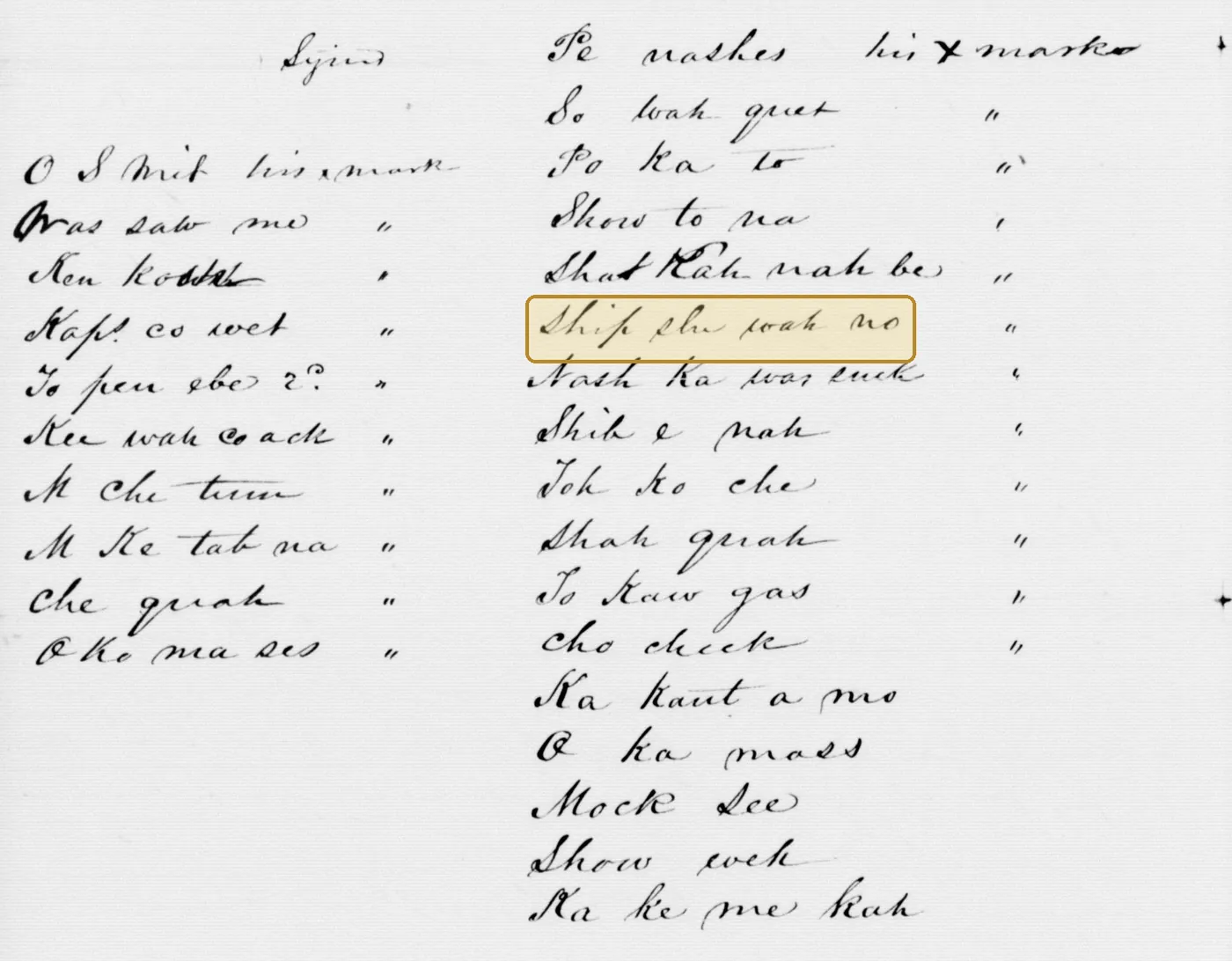
A “Ship she wah no” signed the letter of 3 February 1841 from Potawatamie Creek, on the Osage River in Kansas, in which the chiefs and warriors of the Potawatomi “who lately emigrated from Indiana & Michigan” told the Secretary of War that Mucka moat and three others had gone to Washington without their consent. The sub-agent Anthony L. Davis wrote that the signers were “the principal men of the late Emigrants with whom Meck E moote emigrated,” the party that reached Kansas on 25 November 1840. Louise Barry summarised the letter in 1963 with five of its signers; the name Ship she wah no is not among them, and we found the full list in no publication we searched. It is the earliest record yet found of the name in Kansas, in the year the 1931 plaque has the chief die by the lake.
In The Shipshewana Puzzle: One Name, at Least Five People · found by Michael Urbanski, Project Scroll
What we searched
National Archives Catalog, M234 roll 642 (NAID 164251872), images 424–930; Barry, Kansas Historical Quarterly 29 (1963); Michigan Pioneer and Historical Collections 21 (1892); Annual Reports of the Commissioner of Indian Affairs, 1841–43; McPherson (2007); full-text searches of the Internet Archive for the signers’ names.
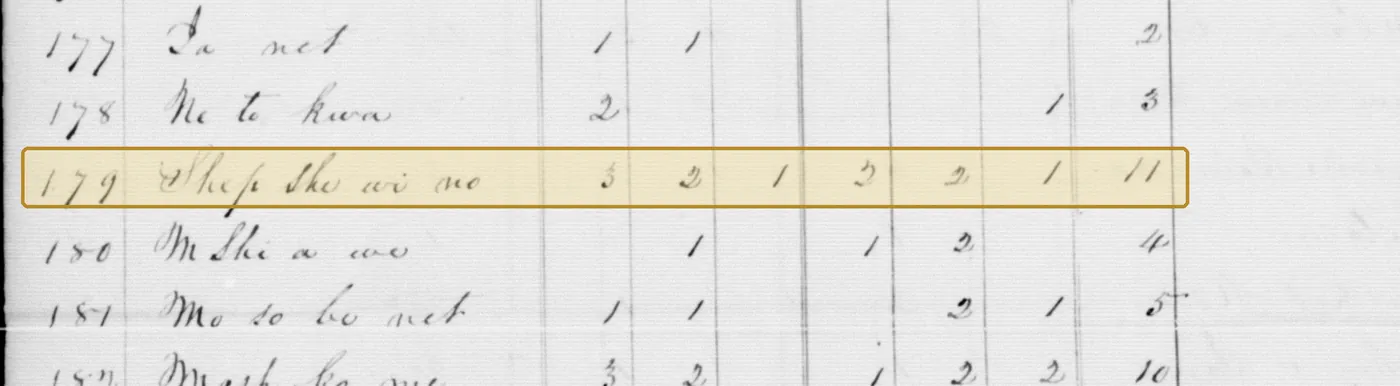
The muster roll of the Potawatomi of the Osage River Sub Agency, taken by Anthony L. Davis on 12 October 1842, lists two heads of family named “Shep she wi no”: no. 179, a man over forty with a household of eleven, and no. 277, a younger man with a household of three. The name was still answering a government count in Kansas a year after the plaque’s date for the chief’s death. Which of them, if either, is the treaty chief is not proved.
In The Shipshewana Puzzle: One Name, at Least Five People · found by Michael Urbanski, Project Scroll
What we searched
National Archives Catalog, M234 roll 642 (NAID 164251872), images 680–699; Barry, Kansas Historical Quarterly 29 (1963); McPherson (2007); Edmunds (1978, 1987); the HowNiKan exchange of 1994–95; the 1887 allotment roll; web and Internet Archive searches for the roll.
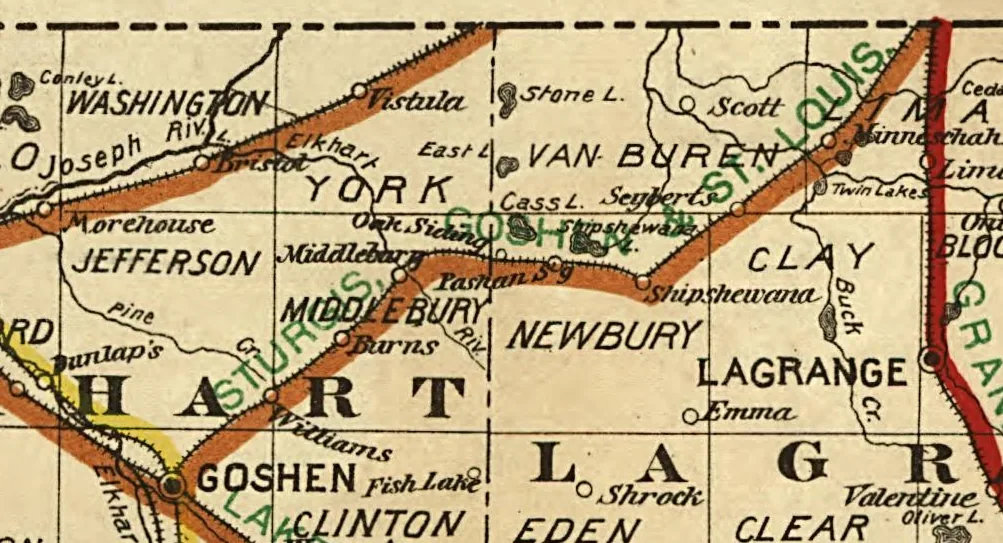
The railroad that made Shipshewana went broke almost at once. Grading began at Sturgis on 21 April 1887, with trains promised by 1 November; the track was finished only in December 1888. On 11 March 1889 the Farmers’ Loan and Trust Company of New York had the road put in federal receivership for unpaid interest on its construction bonds, and on 10 July 1889 the circuit court at Goshen ordered the Canada and St. Louis sold. The Lake Shore and Michigan Southern took it over from 1 December 1889.
In The railroad that made Shipshewana · found by Michael Urbanski, Project Scroll
What we searched
The 1893 county atlas; Ford (1920); the 1982 county history; the Pumpkinvine trail’s history pages; Abandoned Rails; Michigan Railroads; the town’s visitor site; Wikipedia; web searches.
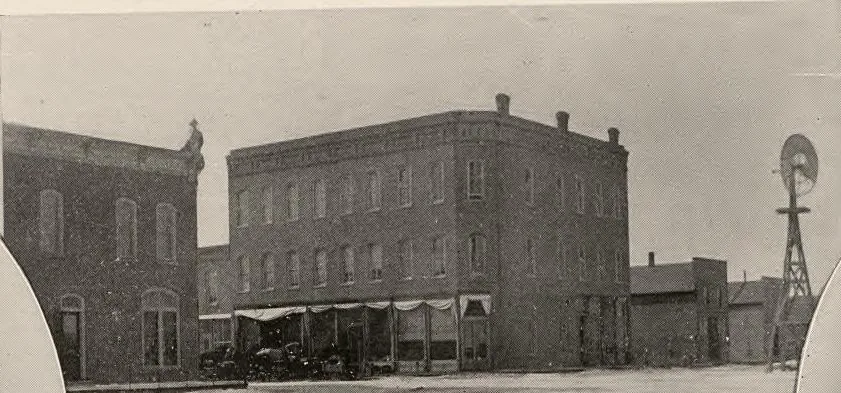
Twice the Shipshewana bank was robbed by men who came and went on the railroad: in November 1897 thieves stole a Lake Shore handcar at Sturgis, rode it to Shipshewana, dynamited the Davis bank’s safe and left the car in the Little Elkhart River near Middlebury; in October 1906 six masked men blew the vault and escaped “on a handcar.” By 1922, when the bank was reported robbed for the ninth time in twenty years, the robbers came by automobile.
In The railroad that made Shipshewana · found by Michael Urbanski, Project Scroll
What we searched
Ford (1920), which lists the robberies of 1897, 1905, 1916 and 1919; the 1982 county history; the town’s visitor site; web searches.
- Documentary Journal of IndianaIndianapolisJune 1889
In June 1889, five months after the town plat was recorded, Indiana’s State Board of Equalization assessed the railroad’s buildings at Shipshewana: a depot at $400, a water tank at $400 and a stock pen at $50. It is the earliest record of the Shipshewana depot that we have found.
In The railroad that made Shipshewana · found by Michael Urbanski, Project Scroll
What we searched
The Documentary Journal of Indiana for 1889, 1890 and 1909 (the state’s railroad assessments); the county histories of 1882, 1893 and 1920; the Pumpkinvine trail histories; web searches.
- Federal RegisterWashington1975–1980
Trains did not run to Shipshewana for four years before the line’s last chapter: the Penn Central stopped running over the branch in April 1975 because the track was unsafe, service still had not resumed in December 1976, and freight came back only in June 1979, when the State of Indiana leased the line to the Indiana Interstate Railway. The usual account has the federal subsidy keeping the line open from 1976.
In The railroad that made Shipshewana · found by Michael Urbanski, Project Scroll
What we searched
The Federal Register of 4 March 1975, 22 February 1977 and 19 June 1979; 7 Score and 10 (1982); the Pumpkinvine trail histories; web searches.
- The U.S. Flea Market Directory2000p. 145
The visitor figures repeated for the Shipshewana flea market, “nearly two million visitors annually” (a flea market directory, 2000) and “a million visitors” a year (a local guide, 2010), rest on no count, survey or study that we could find. What has been counted, about 1,700 cars a market day (2024, 2025), 872 booths on one day in 2006, and one recorded peak of 40,000 people, fits the market’s own estimate of up to 400,000 visitors a year.
In How a farm sale became a flea market · found by Michael Urbanski, Project Scroll
What we searched
The Trading Place’s history and centennial pages; the county visitors’ bureau; KPC News (2022); guidebooks of 1989–2014 in the Internet Archive; web searches. Inside Indiana Business (2024, 2025); Family RVing (2006); Goshen College; ABC57 (2017); the INDOT traffic counts.
- Agriculture DecisionsU.S. Department of AgricultureDecember 1964
In December 1964 a federal order under the Packers and Stockyards Act named “Walter L. Schrock and Levi J. Yoder, partners, d/b/a Shipshewana Auction Company”: a partner in the auction whom no history of the market names. With Fred Lambright’s obituary (he died on 29 January 1966) and Schrock’s (owner 1961 to 1981), it disproves the 1982 county history’s statement that Schrock bought the auction after Lambright’s death in 1966.
In How a farm sale became a flea market · found by Michael Urbanski, Project Scroll
What we searched
7 Score and 10 (1982); the Trading Place’s history and blog; KPC News (2022); the Gospel Herald (1966); Schrock’s obituaries (2010); the Federal Register, 1959–1985; Agriculture Decisions (1964, 1967); school yearbooks of 1950–1964; web searches.
- Crumstown: The Point, the Partners and the Mastodon
The Charles Custer who found the mastodon bones in April 1906 was the son of Olive (Ollie) Crum, daughter of Stephen Crum, and John Custer: Charles Melvin Custer, born 20 November 1889, sixteen at the find, as the English report said, not ten, as the Polish report had it. The census of 1900, his 1917 war-service card (born Crumstown) and his 1938 Michigan death certificate (mother Allie Crum) agree.
In Crumstown: The Point, the Partners and the Mastodon · found by Michael Urbanski, Project Scroll
What we searched
Howard (1907) on the Crum family; the News-Times obituary of Ollie Custer (1923); the mastodon reports of 1906, English and Polish; the census of 1900 and 1910, the 1917 enrollment card and the 1938 death certificate, read in the FamilySearch indexes.
- Crumstown: The Point, the Partners and the Mastodon
The Christian Holler who platted Crum’s Point in 1875 was the son of the German Township settler of 1830: Christian Holler Jr. (born on Portage Prairie, 7 August 1833; died at South Bend, 19 December 1902), Warren Township justice, postmaster and assessor, state representative from 1882 and state senator from 1894, and at his death the largest landowner in the county, with 4,300 acres.
In Crumstown: The Point, the Partners and the Mastodon · found by Michael Urbanski, Project Scroll
What we searched
Chapman (1880), Howard (1907), the 1875 atlas, Wikipedia, the Goshen News, Chronicling America and archive.org full text for Christian Holler.
- Crumstown: The Point, the Partners and the Mastodon
The Indiana State Gazetteer of 1880–81 placed Crum’s Point “9 miles southwest of Crown Point, the county seat,” confusing the village with the seat of Lake County; the 1882–83 and 1884–85 editions correct it to South Bend. It is the first printed instance found of the Crum’s Point–Crown Point confusion said to lie behind the 1888 renaming.
In Crumstown: The Point, the Partners and the Mastodon · found by Michael Urbanski, Project Scroll
What we searched
Jim Forte; the Goshen News; Howard (1907); the Polk gazetteers of 1880–81, 1882–83 and 1884–85; Chronicling America for Crumtown and Crum’s Point.
- Crumstown: The Point, the Partners and the Mastodon
O. P. Hay (1923, p. 100) records “considerable remains of a mastodon, found about 1902” west or southwest of Notre Dame and held in the university’s museum, very probably the Crumstown mastodon of 1906; Engels (1933) still credits the specimens to Notre Dame.
In Crumstown: The Point, the Partners and the Mastodon · found by Michael Urbanski, Project Scroll
What we searched
The Notre Dame Scholastic, 1905–09; the Museum of Biodiversity history; Notre Dame Archives; Hahn (1909); Lyon (1936); web searches.
- United States CensusBertrand Township, Michigan1840
The Crums were not newcomers in 1847, as the county history of 1907 says: the census of 1840 lists Steven, John and William Crum on consecutive lines in Bertrand Township, Berrien County, Michigan, and the census of 1850 shows Stephen and Mahala’s children born in Indiana about 1834–35, in Michigan about 1838–48 and in Indiana again by 1850.
In Crumstown: The Point, the Partners and the Mastodon · found by Michael Urbanski, Project Scroll
What we searched
Howard (1907) and Chapman (1880); The Crum Family in America; the Berrien County histories of 1880 and 1906 and the Cass County histories of 1875, 1882 and 1906; the USGenWeb transcriptions of the 1850 census (which omit birthplaces) and the 1850 Berrien index; web searches for Stephen and Mahala Crum.
- Official Postal GuideWashington1889
For fifteen years the village had three names at once: the railroad station was Crum’s Point until the telegraph changed it to Crumstown in October 1903, the post office of record was Crumtown from 1888, and the Post Office’s own guide already printed “Crumstown” in January 1889; the postmaster, J. H. Pontius, served through both changes, so the renaming of 1893 brought the office into line with local use; the county paper at Walkerton was already printing “Crumstown” in August 1888, six months after the post office became Crumtown.
In Crumstown: The Point, the Partners and the Mastodon · found by Michael Urbanski, Project Scroll
What we searched
Jim Forte’s postal history; Baker and Carmony (1995), which dates the 1888 change; Wikipedia; Howard (1907); the Polk gazetteers; full-text searches of the Internet Archive for Crumtown, Crumstown and “Crum’s Point”; the Board on Geographic Names’ first report.
- The Diocese of Fort WayneFort Wayne1907
The priest who started the collection of the Crumstown mastodon for Notre Dame was the Rev. Alexander A. Buechler (born Ottawa, Illinois, 1877), pastor of St. Stanislaus’, Terre Coupee, from 1901; the 1906 reports call him Buechler and Beecher.
In Crumstown: The Point, the Partners and the Mastodon · found by Michael Urbanski, Project Scroll
What we searched
The 1906 newspaper reports; Howard (1907); Alerding (1907); the Official Catholic Directory; web searches.
- United States CensusWarren Township, Indiana1860
Christian Holler, who platted Crum’s Point in 1875 and named it for the Crums, was William Crum’s son-in-law and lived with him: the 1860 census lists Holler, his wife Mary E. and their son in William Crum’s household, while Stephen Crum’s daughter Mary, born in Michigan, was still single at home; William and Anna Crum lived in Holler’s household in 1870 and next door in 1880, when Mary E. Holler’s parents are both given as born in Ohio. William is the likeliest partner in the “Crum & Hollar” tracts of 1863.
In Crumstown: The Point, the Partners and the Mastodon · found by Michael Urbanski, Project Scroll
What we searched
Howard (1907); Chapman (1880); the 1875 atlas; Find a Grave (which gives the parentage without the census evidence); full-text searches for Holler and Crum together.
- United States CensusOlive Township, Indiana1900
The farmer on whose land the dredge turned up the Crumstown mastodon, called “George Larkowski” in the English reports of 1906, was very probably George (Wojciech) Laskowski, a Polish-born farmer of Olive Township, the township Hay gives for the find, in the censuses of 1900 and 1910; the Polish report’s spelling Laskowski was right.
In Crumstown: The Point, the Partners and the Mastodon · found by Michael Urbanski, Project Scroll
What we searched
The 1906 reports, English and Polish; Hay (1923); the census indexes of 1900 and 1910 for Larkowski, Laskowski and Barkowski in St. Joseph County.
- The biggest wagon works in the world
The Studebaker Corporation’s reorganization was approved by Judge Thomas W. Slick at Fort Wayne on 28 January 1935, with $5,500,000 of new money (AP and UP reports of 29 January 1935), against the undated “1935” and the $6.8 million of modern accounts.
In The biggest wagon works in the world · found by Michael Urbanski, Project Scroll
What we searched
Erskine (1924), Wikipedia, Bonsall (2000), Chronicling America for 1934–35.
- Before the lake: the farms of Potato Creek
The earliest printed description of Potato Creek we have found is Chamberlain’s Indiana Gazetteer (1849), p. 366: “a mill stream in the southern part of St. Joseph, runs west into the Kankakee”; Scott’s gazetteer of 1833 has no entry, and the same 1849 page lists a different Potato Creek in Montgomery County.
In Before the lake: the farms of Potato Creek · found by Michael Urbanski, Project Scroll
What we searched
The Indiana gazetteers of 1833, 1849 and 1858; Chapman (1880); Howard (1907); the 1875 atlas; Baker and Carmony, Indiana Place Names; DNR brochures; Wikipedia.
- Before the lake: the farms of Potato Creek
The “wild potato” explanation of the creek’s name is not found in any nineteenth-century gazetteer, county history or place-name book, or in the guidebooks of 1984–2000, that we searched; its earliest form found is a student newspaper of 2005 (The Chronicle, Purdue University Calumet), then the Indiana DNR brochure of 2007. The earliest Indiana story of a creek named for wild potatoes (1881) belongs to the other Potato Creek, in Montgomery County.
In Before the lake: the farms of Potato Creek · found by Michael Urbanski, Project Scroll
What we searched
Archive.org full text (about thirty queries); the 1833, 1849 and 1858 gazetteers; Chapman (1880); Howard (1907); Baker and Carmony (1975); Dunn on Indiana geographical names; Bright (2004); McCaig (1988) and five later guidebooks; Chronicling America.
- Before the lake: the farms of Potato Creek
In June 1927 the North Liberty Izaak Walton League put 10,000 rainbow trout minnows into Potato Creek (South Bend News-Times, 11 June 1927), the earliest record we have found of the creek as a trout stream.
In Before the lake: the farms of Potato Creek · found by Michael Urbanski, Project Scroll
What we searched
Modern park histories and brochures, Wikipedia, Shenneman (2015), the USDA Kankakee Basin report (1976).
- Before the lake: the farms of Potato Creek
Potato Creek State Park is exactly six sections of the federal land survey, 23–26 of T36N R1E and 19 and 30 of T36N R2E, all in Liberty Township; laid over the 1875 atlas they hold some forty named farms, a schoolhouse and the cemetery.
In Before the lake: the farms of Potato Creek · found by Michael Urbanski, Project Scroll
What we searched
DNR brochures and markers; Shenneman (2015); Wikipedia; the OpenStreetMap park boundary checked against the BLM survey grid.
- Map of St. Joseph Co., Indiana1863M. W. Stokes
In 1863 three sawmills, each with a mill pond, stood on Potato Creek on what is now the park: Green and Redduck’s in section 23, Samuel Gard’s beside the cemetery in section 25, and P. Walsmith’s in section 30 (Stokes, Map of St. Joseph Co., 1863); two are still marked in 1875.
In Before the lake: the farms of Potato Creek · found by Michael Urbanski, Project Scroll
What we searched
DNR brochures (“mills dotted the area,” unnamed); Chapman (1880); Howard (1907); Shenneman (2015); Wikipedia; the IHB and HMdb markers.
- Before the lake: the farms of Potato Creek
Potato Creek as it was before dredging: the federal mussel survey of summer 1909 (Wilson and Clark, Bureau of Fisheries Document 758, 1912, pp. 18–19) found it near Walkerton “8 or 10 feet wide,” no more than a foot and a half deep, with a bed of “hard sand or gravel,” still “undredged,” and holding nine species of mussels.
In Before the lake: the farms of Potato Creek · found by Michael Urbanski, Project Scroll
What we searched
The DNR park histories and brochures; Shenneman (2015); the 1917 ditch-cleaning reports; archive.org full text for Potato Creek with dredging, mussels and Walkerton.
- Before the lake: the farms of Potato Creek
The “1855” on the state’s photograph of the Porter Cemetery Articles of Association is the date of the enabling law (“an act of the Legislature of the State of Indiana approved Feb 12th 1855 and the amendments thereto”), not of the association, which the marker dates to 9 May 1884; the articles place the cemetery in section 25, T36N R1E, on land “heretofore known as the Porter Grave Yard.”
In Before the lake: the farms of Potato Creek · found by Michael Urbanski, Project Scroll
What we searched
The Indiana Historical Bureau marker text and dedication page; HMdb; the 2003 marker file; archive.org full text for Porter Cemetery and 1855.
- Before the lake: the farms of Potato Creek
The Indiana Historic Sites and Structures Inventory of 2000 records a barn in Potato Creek State Park, probably the Naragon barn: an English bank barn built into a hillside facing the lake, rated Contributing and dated “c. 1900” (survey no. 141-339-90001).
In Before the lake: the farms of Potato Creek · found by Michael Urbanski, Project Scroll
What we searched
The DNR marker of 2026; Shenneman (2015); the Friends of Potato Creek letter; WSBT and InkFreeNews reports of 2025; archive.org full text.
- Before the lake: the farms of Potato Creek
The 1875 county atlas’s history of Greene Township records the “first saw-mill on Potato Creek by John Green, Jr.” and the Rudduck family among the township’s first settlers (Isaac Rudduck, died 1833; John Rudduck, first marriage), names that match the “Green & Redduck” sawmill in section 23 of today’s park on the 1863 map.
In Before the lake: the farms of Potato Creek · found by Michael Urbanski, Project Scroll
What we searched
Chapman (1880); Howard (1907); the DNR park histories; Shenneman (2015); the 1863 and 1875 maps; archive.org full text for Green, Rudduck and Potato Creek.
- Before the lake: the farms of Potato Creek
The Waldsmith mill of the 1927 story of “the first saw-mill in St. Joseph county” stood on today’s park ground: the 1863 map shows P. Walsmith’s sawmill and mill pond in section 30 of Range 2 East, the section where Chapman says Waldsmith settled, with his larger tract just south of the park in section 31; Peter Waldsmith (died 1873) is buried in Porter Rea Cemetery nearby.
In Before the lake: the farms of Potato Creek · found by Michael Urbanski, Project Scroll
What we searched
South Bend News-Times, 3 April 1927; Chapman (1880); the 1863 and 1875 maps; Find a Grave and Commons photographs of the cemetery; DNR and park histories.
- Before the lake: the farms of Potato Creek
The records of 1840 place the gathering and departure of Alexis Coquillard’s Potawatomi emigrating party at South Bend (Gen. Hugh Brady’s letters of June and August 1840; the South Bend Free Press via the Daily National Intelligencer, 8 September 1840); none names Potato Creek, so the “rendezvous at Potato creek” rests on Chapman (1880) alone.
In Before the lake: the farms of Potato Creek · found by Michael Urbanski, Project Scroll
What we searched
The Commissioner of Indian Affairs reports for 1840 and 1841; Chronicling America 1838–42; Howard (1907); Edmunds (1978); Clifton (1977); archive.org full text.
- Princess Mishawaka: the princess who never was
In Littlejohn’s 1875 original the heroine is “Mishawaha,” “Mishawakee” is a separate village that already exists, the action is mostly in Michigan, and Littlejohn never says the Indiana town was named for her: the naming claim was added later.
In Princess Mishawaka: the princess who never was · found by Michael Urbanski, Project Scroll
What we searched
Littlejohn (1875) read in full; Wikipedia; McPherson (1993); James (2013); The History Museum; De Kever.
- Princess Mishawaka: the princess who never was
The earliest local tie of a woman named Mishawaka to the town’s name found is the South Bend Tribune of 26 January 1907 (quoted in Howard, 1907), where she is Chief Elkhart’s bride, not his daughter.
In Princess Mishawaka: the princess who never was · found by Michael Urbanski, Project Scroll
What we searched
Chapman (1880), Howard (1907), the 1875 atlas, Chronicling America (“princess mishawaka,” earliest 1914), archive.org full text.
- Princess Mishawaka: the princess who never was
By 1909 Littlejohn’s plot had been transplanted to Mishawaka with the new claim that the falls and town were named for the princess: in the Witwer Genealogy of America (1909), crediting “Mr. E. A. Journegan,” and in the pamphlet of the 4 July 1909 Hotel Mishawaka pageant.
In Princess Mishawaka: the princess who never was · found by Michael Urbanski, Project Scroll
What we searched
Archive.org full text, Chronicling America, De Kever’s city history, McPherson (1993), Wikipedia.
- Princess Mishawaka: the princess who never was
The legend’s promotion traced year by year in the South Bend News-Times: the 1914 “Princess Mishawaka” singer, Steele’s 1920 story (death in 1814) and poem, the 1925 Booster Week contest, the 1926 seal, the 1931 Lions Club drive with its “grave” claim and lone objecting letter, and the 1932 tablet (death in 1818).
In Princess Mishawaka: the princess who never was · found by Michael Urbanski, Project Scroll
What we searched
Chronicling America (News-Times 1913–1931), Billboard 1932, the Indianapolis Times 1932, HMdb.
- Princess Mishawaka: the princess who never was
The Mishawaka post office was applied for by that name on 9 May 1833, two months before St. Joseph Iron Works was platted, and established on 11 December 1833 with Henry Yerrington as postmaster (his letter to Senator Tipton of 4 September 1833 and the editors’ note in the Tipton Papers), not in the spring of 1834 as Chapman (1880) and later histories give.
In Princess Mishawaka: the princess who never was · found by Michael Urbanski, Project Scroll
What we searched
Chapman (1880), Howard (1907), De Kever’s city history, the 1875 atlas chronology, Wikipedia, the article’s earlier sources, the 1835 federal register.
- Princess Mishawaka: the princess who never was
The “Mr. E. A. Journegan” credited with the 1909 legend was Edward A. Jernegan (1846–1922), editor of the Mishawaka Enterprise from 1872 and father of Ralph H. Jernegan, who chaired the Lions Club memorial committee of 1931–32 (Howard, 1907, pp. 505–506, 525–526).
In Princess Mishawaka: the princess who never was · found by Michael Urbanski, Project Scroll
What we searched
Archive.org full text for Journegan, Jernegan and Princess Mishawaka; Chapman (1880); Goodspeed (1893); Howard (1907); Chronicling America 1900–1931; web searches.
- Princess Mishawaka: the princess who never was
The St. Joseph County centennial pageant of 3–5 October 1916, whose Mishawaka scenes were staged by Mishawaka High School, has no princess, Chief Elkhart, Dead Shot or Gray Wolf; its program glosses the name, on Alexis Coquillard’s word, as “rapid water between wooded banks.”
In Princess Mishawaka: the princess who never was · found by Michael Urbanski, Project Scroll
What we searched
The 1916 program read in full; Chronicling America; archive.org full text; De Kever.
- Princess Mishawaka: the princess who never was
Michigan History Magazine (October 1919) already judged Littlejohn’s tales “strongly tinctured with the author’s imagination” and “not written originally for publication,” printing an unpublished one lent by his nephew’s family.
In Princess Mishawaka: the princess who never was · found by Michael Urbanski, Project Scroll
What we searched
McPherson (1993), The History Museum, De Kever, Wikipedia, archive.org full text.
- Five brothers and a blacksmith shop
The earliest sources we have found for the founding day of H. & C. Studebaker are two of 1875: the county atlas’s history of the company, which says the shop opened on 12 February 1852 and the first entry in its books, a debit against A. R. & J. H. Harper, was made on 16 February; and Goodrich and Tuttle’s state history, which gives 16 February as the opening day. The date was otherwise known only from the Smithsonian Libraries’ online timeline.
In Five brothers and a blacksmith shop · found by Michael Urbanski, Project Scroll
What we searched
Chapman (1880), Anderson (1901), Howard (1907), Erskine (1918, 1924), the 1927 reunion booklet, the Smithsonian Libraries timeline, the Studebaker National Museum.
- Five brothers and a blacksmith shop
The 1850 census of St. Joseph County, Indiana, lists no Henry or Clem and no household of John and Rebecca, which counts against the histories’ “about 1850” for Henry and Clem and supports 1851; apart from a young Studybaker family, the only Studebakers in the county were Susannah, 20, very probably Henry’s future wife, and Catherine, 15, with Winger families in Portage Township.
In Five brothers and a blacksmith shop · found by Michael Urbanski, Project Scroll
What we searched
Anderson (1901), Erskine (1918, 1924), Goodrich and Tuttle (1875), Howard (1907), the Studebaker National Museum.
- Five brothers and a blacksmith shop
John (d. 1877) and Rebecca Mohler Studebaker (d. 1887), the brothers’ parents, have their monument in the South Bend City Cemetery (photographed November 2022), not at Riverview, where the rest of the family was moved in the 1930s.
In Five brothers and a blacksmith shop · found by Michael Urbanski, Project Scroll
What we searched
The Studebaker National Museum; the City Cemetery National Register nomination; Wikipedia; Find a Grave was not reachable.
- Five brothers and a blacksmith shop
The early Studebaker firm had two outside partners: Henry Smyser in 1853–54 (Studebakers & Smyser) and Israel Hoge in 1854–55 (Studebakers & Hoge), recorded only in the 1875 county atlas, p. 28.
In Five brothers and a blacksmith shop · found by Michael Urbanski, Project Scroll
What we searched
Chapman (1880), Anderson (1901), Howard (1907), Erskine (1918, 1924), the 1927 booklet, the Studebaker National Museum, Wikipedia, web searches.
- Five brothers and a blacksmith shop
Henry Studebaker died at South Bend on Saturday, 2 March 1895 (Indianapolis Journal, 3 March 1895), settling the conflict between Anderson (2 March) and Howard (12 March).
In Five brothers and a blacksmith shop · found by Michael Urbanski, Project Scroll
What we searched
Anderson (1901), Howard (1907), Erskine (1918), the Studebaker National Museum, Chronicling America for March 1895.
- Five brothers and a blacksmith shop
Henry and Susan Studebaker were not members of the Brethren church when their daughter was baptized in 1869, eleven years after Henry left the firm, and joined only later (Winger, 1917): a difficulty for the story that his faith made him leave.
In Five brothers and a blacksmith shop · found by Michael Urbanski, Project Scroll
What we searched
The Brethren Historical Library (Miller, 2017), the Studebaker National Museum, Bonsall (2000), Chapman (1880), Howard (1907), web searches.
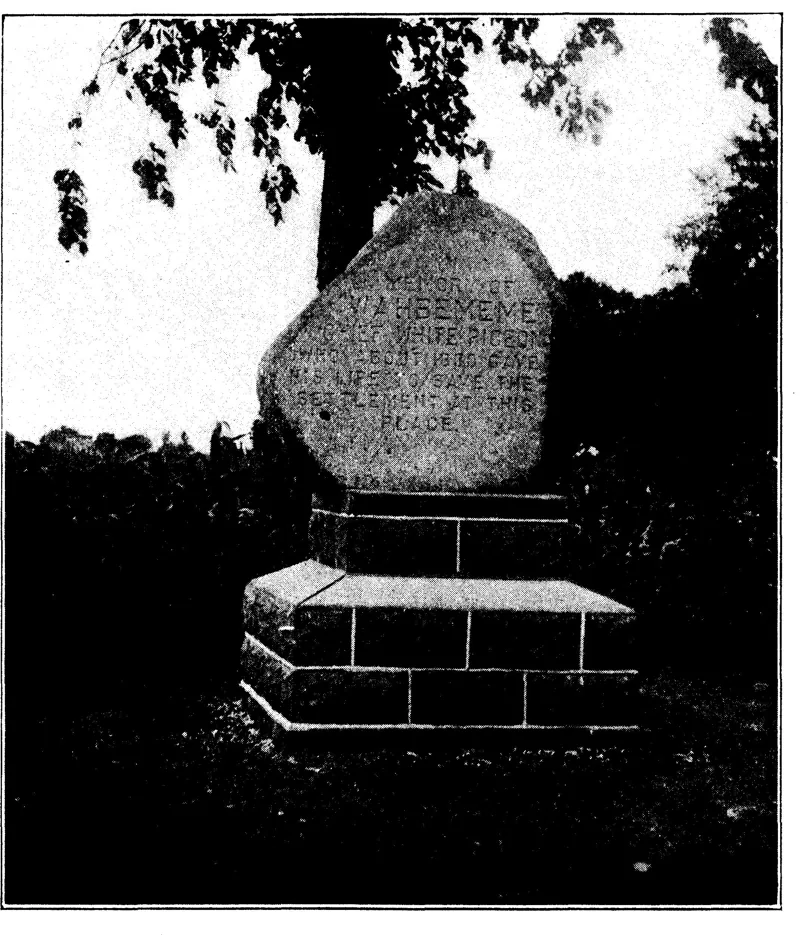
The story that Chief White Pigeon ran from Detroit to warn the settlers and died of it, carved on his monument in 1909, is missing from every account of his grave before 1908: the White Pigeon Republican (1839), the county history (1877), the county album (1889) and a rival tradition printed in Kansas (1890). It first appears in the Pioneer Society’s monument committee of 1908; the 1877 history says the chief “died before any white man ever lived on the prairie.”
In White Pigeon’s run · found by Michael Urbanski, Project Scroll
What we searched
The Michigan Pioneer and Historical Collections, vols. 1–40; the county histories of 1877 and 1911; the 1889 album; Chronicling America; Wikipedia; the state marker; the county historical society’s pages; the township’s site; web searches.
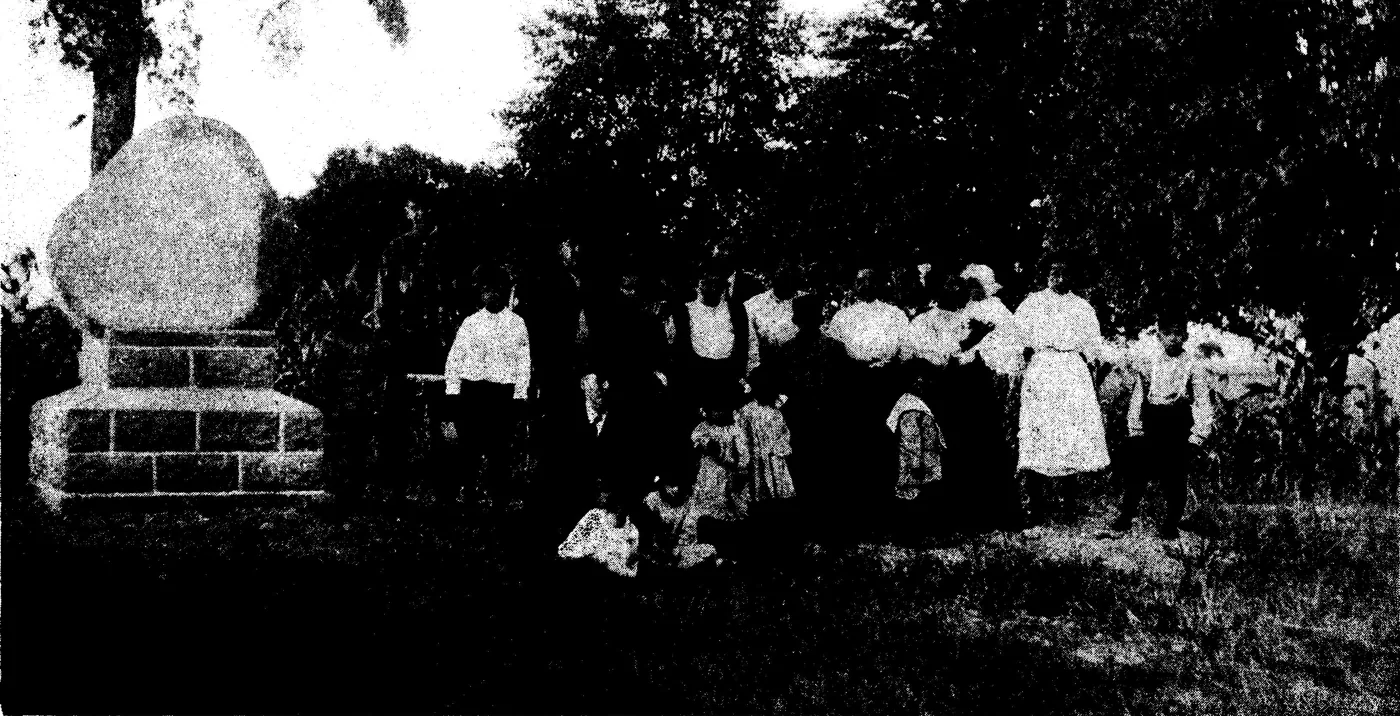
The White Pigeon monument was unveiled on Wednesday, 11 August 1909, as the village paper, the wire stories and the 1911 county history say, not on 10 August as on state marker L1521 and in most published accounts; it was raised by the Alba Columba Club, a White Pigeon women’s club, not the Daughters of the American Revolution, and the village paper put the crowd at about seven thousand, not four.
In White Pigeon’s run · found by Michael Urbanski, Project Scroll
What we searched
State marker L1521; Wikipedia; the county historical society’s pages; tourism listings; web searches.
- U.S. Statutes at Largevol. 43 March 1825
The act of 3 March 1825 for the road from Detroit to Chicago, the Chicago Road through White Pigeon, appropriated three thousand dollars for surveying it, not the ten thousand dollars the county history of 1877 gives; the ten thousand belongs to the act printed just above it in the Statutes at Large, for a road from Little Rock to Cantonment Gibson in Arkansas.
In White Pigeon’s run · found by Michael Urbanski, Project Scroll
What we searched
The county histories of 1877 and 1911; Wikipedia on the Chicago Road; web searches for the appropriation.
- Darcey Worster’s dream
The park’s namesake was Darcey Worster (1893–1974), the spelling on the state’s 1977 dedication plaque and in the South Bend News-Times of 1916–1925, which also records him as a Navy engineer on the Vermont in 1917–18; family items point to him as a grandson of the North Liberty wagon maker Anson Worster.
In Darcey Worster’s dream · found by Michael Urbanski, Project Scroll
What we searched
DNR brochures and events; McCaig (1988); Shenneman (2015); Howard (1907); Find a Grave and web searches; archive.org full text.
- Darcey Worster’s dream
A school newscast script of early 1978 (IUSB, Cable TV: Guide to Public Access, 1979) asked the park’s assistant manager when the park would be “officially opened to the public” and when gate fees would start, showing that the recreation area dedicated on 6 June 1977 had not yet opened.
In Darcey Worster’s dream · found by Michael Urbanski, Project Scroll
What we searched
DNR brochures; Shenneman (2015); McCaig (1988); guidebooks of 1984–2005; archive.org full text.
- Darcey Worster’s dream
Potato Creek became a state park in 1983 when Indiana dropped its “State Recreation Area” classification statewide (McCaig, 1988; the DNR’s Ouabache brochure); DNR publications still used “Potato Creek State Recreation Area” in 1979, 1981 and 1982. Wikipedia gives 1983 from a 2006 newspaper, without the reason.
In Darcey Worster’s dream · found by Michael Urbanski, Project Scroll
What we searched
Wikipedia; DNR history pages; archive.org full text; Library of Congress subject headings.
- The park goes back to the wild
Swamp Rose Nature Preserve (dedicated between May and October 1974) is the “New-Oak-Road Bog” of Lindsey, Schmelz and Nichols (1969); the old-growth Inez Clingenspell Woods they asked the state to save with it was listed as “severely degraded or destroyed” by the DNR’s nature-preserves staff in 1987 (Bacone and Martin, Tables 1 and 5).
In The park goes back to the wild · found by Michael Urbanski, Project Scroll
What we searched
DNR park and nature-preserve pages; the 1981 Directory of Dedicated Nature Preserves; Preserving Our Natural Heritage (1977); Proceedings of the Indiana Academy of Science; guidebooks.
- The park goes back to the wild
The Potato Creek nature centre was built as a “nature center/warming hut,” a cross-country ski rental in winter, due to open in summer 1982 with four picnic areas and the first cabins (DNR, Wander Indiana: 1982 Recreation Guide, p. 17).
In The park goes back to the wild · found by Michael Urbanski, Project Scroll
What we searched
DNR nature-centre and park pages; the Mangus markers; guidebooks of 1983–2000; archive.org full text.
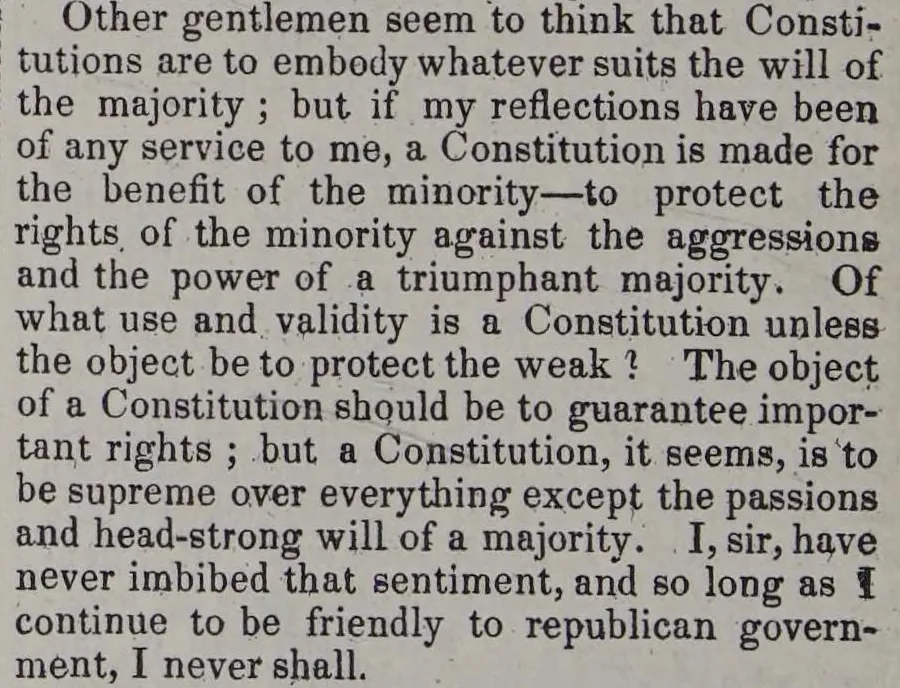
The 1920 History of Northeast Indiana, reprinting the 1882 biography of John B. Howe almost word for word, changed “minority” to “majority,” so that Howe is said to have advocated in 1850 the measures of the Dred Scott majority. The 1882 text and the convention record show the opposite: on 18 November 1850 Howe argued that free Black citizens of New York and Massachusetts “cannot be debarred” from any other state, and on 23 January 1851 he was among the 36 delegates who voted against the section barring Black people from Indiana.
In Who was John B. Howe? · found by Michael Urbanski, Project Scroll
What we searched
The 1882 and 1920 county histories; Waddell (1936); the 1850–51 Debates; Wikipedia; web searches for Howe and the Dred Scott comparison.
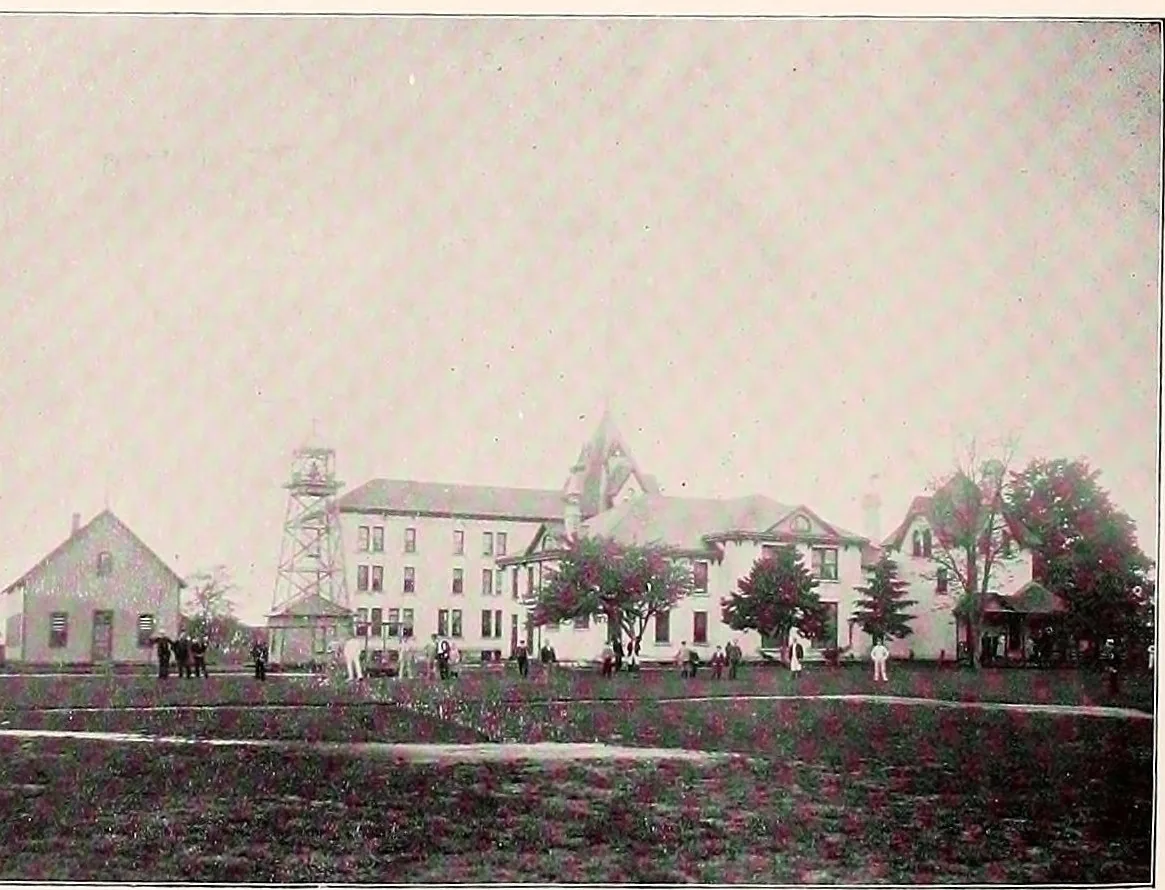
Howe Grammar School, later Howe Military School, opened on 2 September 1884 with two schoolboys and two young men studying for the ministry, as its rector reported to the diocese in 1886; the bishop’s report of 1885 counted the four as “four pupils, two of whom were candidates for the ministry,” and nine enrolled in the first year. Later accounts give either “four boys” or “two boys.”
In Who was John B. Howe? · found by Michael Urbanski, Project Scroll
What we searched
Waddell (1936); Wikipedia and its 2008 newspaper source; the diocesan archive’s history; the community association’s history; web searches.
The renaming of Lima, Indiana, to Howe in 1909 followed months of “red hot” dispute: a post office inspector recommended it in March, Senator Albert J. Beveridge declined to approve it in April on the advice of the town’s businessmen, and the post office became Howe on 23 June 1909. Its supporters argued for the change in honor of the Howe school, not directly in honor of John B. Howe, as later histories say.
In Who was John B. Howe? · found by Michael Urbanski, Project Scroll
What we searched
The 1920 and 1936 county histories; Baker (1995); Wikipedia; the community association’s history; web searches.
- Transactions of the State Agricultural SocietyLansing1852
The date of Cass County’s first fair, which the county history of 1882 could not give: the society resolved to hold it at Cassopolis “on Thursday, the 18th day of September” 1851, and the National Democrat, quoted in the state society’s Transactions, put the crowd at “not less than two thousand.”
In Race day at the Cassopolis fair grounds · found by Michael Urbanski, Project Scroll
What we searched
The Cass County histories of 1875, 1882 and 1906; the county fair’s own history page; Cass County’s fair page; web searches for the first fair with “1851,” “18th” and “September”; Wikipedia. The 1851 Transactions (Lansing, 1852), pp. 314 and 324, are the record.
- Blois’s Gazetteer of the State of MichiganDetroit1838
In 1838 the lake at Edwardsburg carried the first settler’s name too: Blois’s Gazetteer places the village “at the north-eastern corner of Beardsley’s prairie, and on Beardsley’s lake.” Later accounts call it Pleasant Lake.
In How Edwardsburg got its name · found by Michael Urbanski, Project Scroll
What we searched
Rogers (1875), the 1882 history and Glover (1906); Wikipedia’s Edwardsburg article; web searches for “Beardsley’s lake” with Edwardsburg and Pleasant Lake; the village and township history pages.
- The day the line stopped
The commonly repeated figures for the lost Studebaker pensions go back at least to the Senate hearing in South Bend of 4 June 1971: Senator Hartke’s 2,900 who received nothing and “more than 4,000” aged 40 to 59 who got 15 percent, and the UAW’s count of 11,000 active workers, 2,900 and 4,500.
In The day the line stopped · found by Michael Urbanski, Project Scroll
What we searched
Wooten (2001), PBGC, Wikipedia, the Department of Labor timeline, ASPPA (2021), web searches.
- The day the line stopped
J. M. Studebaker’s move from the City Cemetery was planned in November 1922, when his executors contracted for a $75,000–$100,000 Tudor Gothic chapel at Riverview Cemetery to hold his and his wife’s remains (South Bend News-Times, 30 November 1922); the rest of the family followed in 1932 and Clem’s remains in 1936 (the cemetery’s National Register nomination).
In The day the line stopped · found by Michael Urbanski, Project Scroll
What we searched
The Studebaker National Museum; Wikipedia; the City Cemetery nomination; Chronicling America 1917–1931.
- The day the line stopped
J. M. Studebaker was entombed in the family mausoleum in South Bend City Cemetery on 20 March 1917 (South Bend News-Times); the museum places him at Riverview; a later move, if there was one, is not yet documented.
In The day the line stopped · found by Michael Urbanski, Project Scroll
What we searched
The Studebaker National Museum, Wikipedia, Chronicling America for March 1917.
- Memphis Daily AppealMemphis, Tennessee12 June 1875
The Pioneer Society’s old drum came from the Civil War: its giver, A. S. Russey of Vandalia, wrote on 1 June 1875 that a squad of the Eleventh Michigan captured it while foraging on the Nashville pike in 1862, that he traded his band drum for it, and that the maker’s name inside read “Richard Bicknell, Dundee, March 23, 1640” (Cassopolis National Democrat, 3 June 1875, copied in the Memphis Daily Appeal, 12 June 1875).
In A museum before there was a museum · found by Michael Urbanski, Project Scroll
What we searched
Mathews (1882); Glover (1906); Gaskin (2012); the museum’s pages; the Ypsilantian (1887); web searches for the drum, Russey, Bicknell and Dundee.
- Michigan Pioneer and Historical CollectionsLansing1877–1882
The Cass County Pioneer Society kept a museum long before the log cabin. Its by-laws of 21 January 1874 had the secretary receipt relics “deposited in the museum of the society” and publish a catalogue twice a year; in 1876 a committee was named to “take proper care of the specimens in the museum”; in 1879–80 it was kept at I. V. Sherman’s store; and on 17 May 1882 the relics moved into a Court House room set apart by the supervisors. The courthouse collection moved into the cabin in 1924 was probably the same museum.
In A museum before there was a museum · found by Michael Urbanski, Project Scroll
What we searched
Gaskin’s 1923 donor-list booklet (2012); the Cass County Historical Society’s cabin page; Wikipedia; Leader articles of 2003, 2007 and 2012; the Village of Cassopolis parks page; web searches for the Society’s museum, “pioneer museum” and Sherman. Each mentions only an undated collection in the courthouse lobby. The facts of 1874–82 are in Mathews (1882) and the Michigan Pioneer and Historical Collections, vols. 1, 4 and 29.
- Detroit TimesDetroit1908–1910
The Cass County pioneer picnics went on after 1906: the 34th annual reunion and picnic was announced for 19 June 1907 and the 35th for 17 June 1908, both with Lieutenant Governor Patrick H. Kelley, a native of the county, to speak, and on 15 June 1910 United States Senator Julius C. Burrows was “the central figure” at the annual pioneer picnic.
In A museum before there was a museum · found by Michael Urbanski, Project Scroll
What we searched
Mathews (1882), Glover (1906), the Michigan Pioneer and Historical Collections, Michigan History (1917), Gaskin’s booklet (2012) and the Cass County Historical Society’s pages. None reports a picnic after 1906.
- History of Cass CountyChicago1882
The Pioneer Society’s first treasurer, Joseph Smith (elected in 1873), was almost certainly Major Joseph Smith (1809–1880), from whose homestead the Pioneer Log Cabin’s first log was cut in 1923 and given by his granddaughter, Mrs. A. N. Armstrong. Its first assistant secretary, John Tietsort, was the son of Abram Tietsort Jr., builder of the 1830 cabin on Stone Lake’s east bank, and his widow, Addie Tietsort, attended Cabin Building Day in May 1923.
In A museum before there was a museum · found by Michael Urbanski, Project Scroll
What we searched
Mathews (1882), Glover (1906), Gaskin’s 1923 donor-list booklet (2012), the Cass County Historical Society’s and the cabin museum’s pages, and Leader articles of 2003–2013. None connects the Society’s first officers of 1873 with the givers or guests of 1923.
- Postcards, Burton Historical CollectionDetroit Public Library1923–24
The notes signed “C.O.H.” on the backs of two 1923–24 cabin postcards in the Burton Historical Collection (“The first fore-noon’s work, done by 52 volunteers” and “Lacks the old time roof which will be put on before the annual meeting next June”) are almost certainly by Charles O. Harmon, the Society’s secretary and the cabin’s organizer. The library’s catalogue gives only the initials.
In The cabin a county built · found by Michael Urbanski, Project Scroll
What we searched
The Detroit Public Library’s catalogue records (bh012199, bh012201), which name no writer; Gaskin (2012); Wikipedia; the Society’s pages; Leader articles of 2003–2012; web searches for the inscriptions.
- St. Joseph Herald-PressSt. Joseph, Michigan14 June 1972
In June 1972 the Cass County commissioners took a 99-year lease on the Pioneer Log Cabin grounds from the Village of Cassopolis at $1 a year, “rectifying an apparent oversight of many years”: a check made for the county’s liability insurance showed the village still held title; the 1924 souvenir-lot certificates had spoken of a “Lease Deed” from the village to the Society (St. Joseph Herald-Press, 14 June 1972).
In The cabin a county built · found by Michael Urbanski, Project Scroll
What we searched
Gaskin (2012), which prints the 1924 certificate; Wikipedia; the Cass County Historical Society’s pages; the Village of Cassopolis parks page; Leader articles of 2003–2013; web searches for the lease.
- South Bend News-TimesSouth Bend, Indiana7 June 1930
The cabin’s caretaker in its first years was Peter Eby, still “on duty” past eighty in June 1930 (South Bend News-Times, 7 June 1930). He was almost certainly the Peter Eby (1848–1935) whom Glover’s 1906 county history names as brother of “Catherine, the widow of John B. Harmon,” Charles O. Harmon’s mother, which made the caretaker Harmon’s uncle.
In The cabin a county built · found by Michael Urbanski, Project Scroll
What we searched
Gaskin (2012); Wikipedia; the Cass County Historical Society’s pages; Leader articles of 2003–2013; the Village parks page; web searches for Peter Eby with the cabin. None names a caretaker.
- Glover, Twentieth Century History of Cass CountyChicago1906
The cabin’s case of mounted Michigan birds and animals probably began as Elias Pardee’s gift to the Dowagiac library: Glover (1906, p. 288) records his “museum” of stuffed birds, small animals, deer and elk heads, nests, eggs and shells, and Everett Claspy (1970) writes that a Dowagiac library collection, whose donor had died in 1908, was moved to the log cabin. Claspy does not name the donor.
In The cabin a county built · found by Michael Urbanski, Project Scroll
What we searched
Wikipedia; Leader articles of 2003, 2007 and 2012, which describe the birds without their origin; Gaskin (2012); the Society’s pages; web searches for Pardee with the cabin.
- Glover, Twentieth Century History of Cass CountyChicago1906
The cabin’s first log, cut “from the Major Smith Homestead” and given by Mr. and Mrs. A. N. Armstrong, came from Mrs. Armstrong’s own family: Glover (1906, pp. 454–455) says she was May S. Smith, daughter of John and Adelia (Tietsort) Smith, and that her father “was a son of Major Joseph Smith,” the Cass County pioneer whom Mathews (1882) calls “Maj. Smith,” major of the county militia regiment of 1841.
In The cabin a county built · found by Michael Urbanski, Project Scroll
What we searched
Gaskin’s 1923 donor-list booklet (2012), which gives only “Major Smith Homestead”; Wikipedia; the Cass County Historical Society’s pages; Leader articles of 2003–2013; web searches for the Major Smith homestead and the Armstrongs.
- South Bend News-TimesSouth Bend, Indiana7 April 1923
A report from Cassopolis dated 6 April 1923 describes Log Hauling Day: some eighty farmers came to town “with auto trucks, teams and tractors,” paraded behind two bands and took logs of ash, maple, oak, sycamore, whitewood and birch to the fair grounds. It puts the day on “Thursday,” 5 April, not the Wednesday announced (South Bend News-Times, 7 April 1923).
In The cabin a county built · found by Michael Urbanski, Project Scroll
What we searched
Gaskin (2012), which gives 4 April and no numbers; Glover (1906); Claspy; the museum’s and the Historical Society’s pages; web searches.
- Atlas of Cass CountyPhiladelphia1872
The county atlas of 1872 places Major Joseph Smith’s land around Cassopolis: 131½ acres just north of the village line, across the road from the county fair grounds; 38 acres inside the village; and, marked “Jos. Smith,” 154 acres with a house in Jefferson Township just south of the village, beside land of “J. Smith” and “L. Graham” (very probably his son-in-law Lester Graham). One of the two farms was very probably the “Major Smith Homestead” that gave the Pioneer Log Cabin its first log in 1923; the farm with the house is the likelier.
In The cabin a county built · found by Michael Urbanski, Project Scroll
What we searched
Gaskin (2012), which names the homestead without placing it; Mathews (1882) and Glover (1906); the Society’s and museum’s pages; web searches for the Major Smith homestead.
- South Bend News-TimesSouth Bend1917–1930
The two men Harmon introduced at Cabin Building Day, 23 May 1923, were sons of the old Pioneer Society: the village president, Asa K. Hayden, was a son of James G. Hayden, an officer of the Society in 1917, and Charles H. Kimmerle was a son of Henry Kimmerle, almost certainly the Henry Kimmerle who was the Society’s president in 1888. Joseph K. Ritter, who later helped reopen the cabin, was the son of the Society’s 1924 treasurer, Charles A. Ritter.
In The cabin a county built · found by Michael Urbanski, Project Scroll
What we searched
Gaskin’s booklet (2012), the cabin museum’s and the Historical Society’s pages, Leader articles of 2003–2013; none identifies the families of the 1923 speakers or of Joseph K. Ritter. Family links from Glover (1906), pp. 432–433, 604–606, 625–626, 778–779, and the South Bend News-Times of 17 July 1917 and 1 June 1930.
- Michigan death recordsLansing1901–1951
The last numbered log of the 1923 Pioneer Log Cabin, No. 144, given by “Art Nixon for Nixon Estate,” came from Arthur K. Nixon, a grandson of John Nixon of Penn Township, whom the county history of 1882 called “the father of the Cass County Pioneer Society.” Arthur’s 1951 death index names his father Phineas, and Phineas’s 1901 death certificate names his parents as John and Esther Nixon.
In The cabin a county built · found by Michael Urbanski, Project Scroll
What we searched
Gaskin’s 1923 donor-list booklet (2012), the cabin museum’s and the Historical Society’s pages, Leader articles of 2003–2013, Mathews (1882) and Glover (1906). None connects the giver of log No. 144 with John Nixon.
- South Bend TribuneSouth Bend, Indianac. 1973–74
An undated South Bend Tribune article, “Offered as Cass Museum,” kept in a Decatur scrapbook, reports that Michigan State University offered the Newton House “to the Cass County Pioneer Historical Society for a museum,” on what its forester expected would be “a five-year lease” to test whether the society could manage it, and that the university planned to raze the house if no one took it. From the forester it names, it probably dates from 1973 or 1974; the house was in fact leased to the county’s Historical Commission in August 1974, with a new lease dated January 1980.
In Keepers of the county · found by Michael Urbanski, Project Scroll
What we searched
Wikipedia’s George Newton House; the Clio entry (a lease of 1974); WVPE (12 June 2026; a county lease since 1980); MSU’s trustees’ papers of June 2026; Leader articles; the Society’s Newton House page; web searches. MSU’s board minutes, September 1973 to 1980 (those of 15 October 1976 name the Society as the 1974 tenant; those of 1979–80 do not mention the lease).
- South Bend News-TimesSouth Bend, Indiana7 April 1923
The name “Cass County Historical society” is as old as the Pioneer Log Cabin: on 7 April 1923 the South Bend News-Times report of Log Hauling Day said the logs were for “the cabin to be erected by the Cass County Historical society.” The earliest use found before was in 1927.
In Keepers of the county · found by Michael Urbanski, Project Scroll
What we searched
The Historical Society’s and the museum’s pages; Gaskin (2012); Claspy; Michigan History magazine, 1923–1961; Chronicling America for the name, 1923–1931; web searches.
- Cassopolis High School AnnualCassopolis1915
In 1915 Hotel Goodwin advertised “F. Goodwin, Proprietor,” steam heat, baths, electric lights, a bus to all trains, and “No Bar” (Cassopolis High School annual, 1915), filling the years between T. S. Morrison (1899) and Carrie Ellis (1920).
In Dr. Goodwin’s hotel on Broadway · found by Michael Urbanski, Project Scroll
What we searched
Glover (1906); Norton’s directory (1899); the Cassopolis walking tour; the South Bend News-Times (1920); web searches for Hotel Goodwin and its proprietors.
- Cassopolis High School AnnualCassopolis1915
O. L. Yerty, publisher of Cassopolis postcards, was a merchant: in 1915 he advertised “O. L. Yerty’s Cash Bargain Store, Cassopolis,” “Quality Up and Prices Down” (Cassopolis High School annual, 1915).
In Summer on Diamond Lake: Forest Hall and the island · found by Michael Urbanski, Project Scroll
What we searched
The Burton Historical Collection’s and Clements Library’s card records; postcard dealers’ listings; web searches for Yerty.
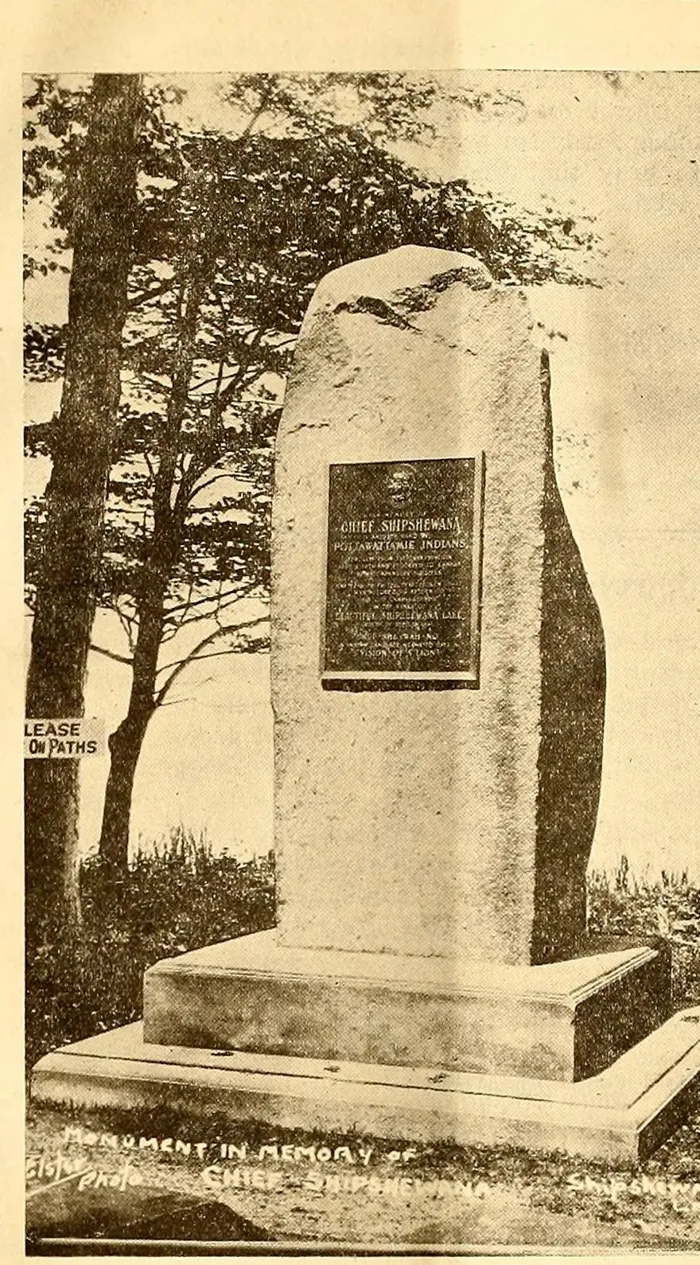
The story that Chief Shipshewana was removed in 1838, came home in 1839 and died by the lake in 1841 is found in no source before the monument plaque of 1931. The county history of 1882 says instead that “the old chief died some time prior to the settlement”; the 1931 committee’s own account says its history came from the remembered stories of Johnny Thorp, who had died about 1896.
In The Shipshewana Puzzle: One Name, at Least Five People · found by Michael Urbanski, Project Scroll
What we searched
The La Grange County histories of 1874, 1882, 1893 and 1920; Dunn (1908); the county commissioners’ dockets, 1832–49; the Tipton papers; the Edmonds report; the 1838 removal rolls; Waddell (1936); McPherson (1993, 2007); the town’s and county’s tourism pages; the Historical Marker Database; Wikipedia; web searches.
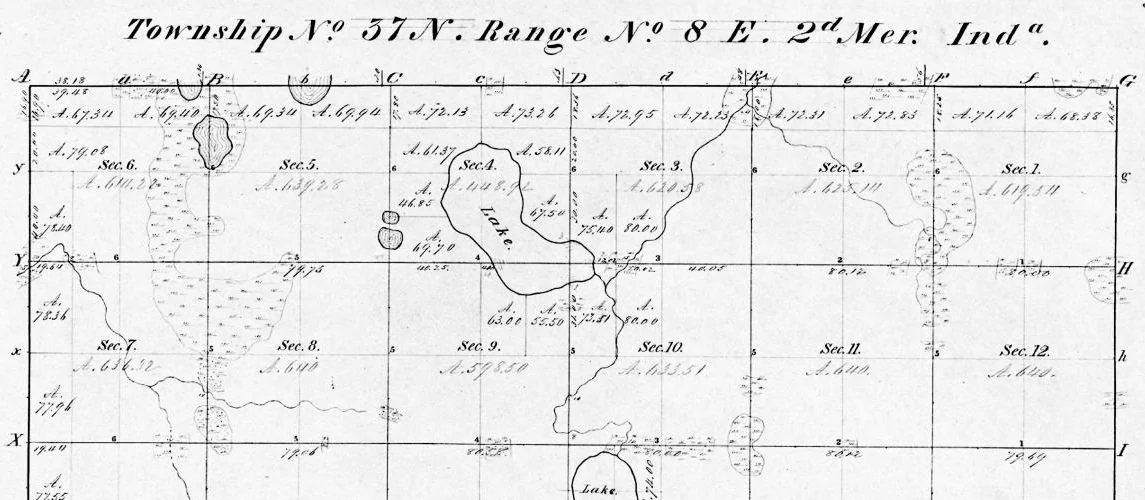
The lake now called Shipshewana was only “Lake” on the government survey of 1830, but by 1839 the La Grange County commissioners were laying out a road “to the Shipshewana Saw-mill in Sec. 3”: the earliest dated use of the name for a place in the county that we have found, 35 years before it was printed on a map.
In The Shipshewana Puzzle: One Name, at Least Five People · found by Michael Urbanski, Project Scroll
What we searched
The 1830 plat of T37N R8E; the gazetteers of 1833, 1849 and 1858; the 1874 atlas; the 1882 county history; Wikipedia; the town’s history pages; web searches.
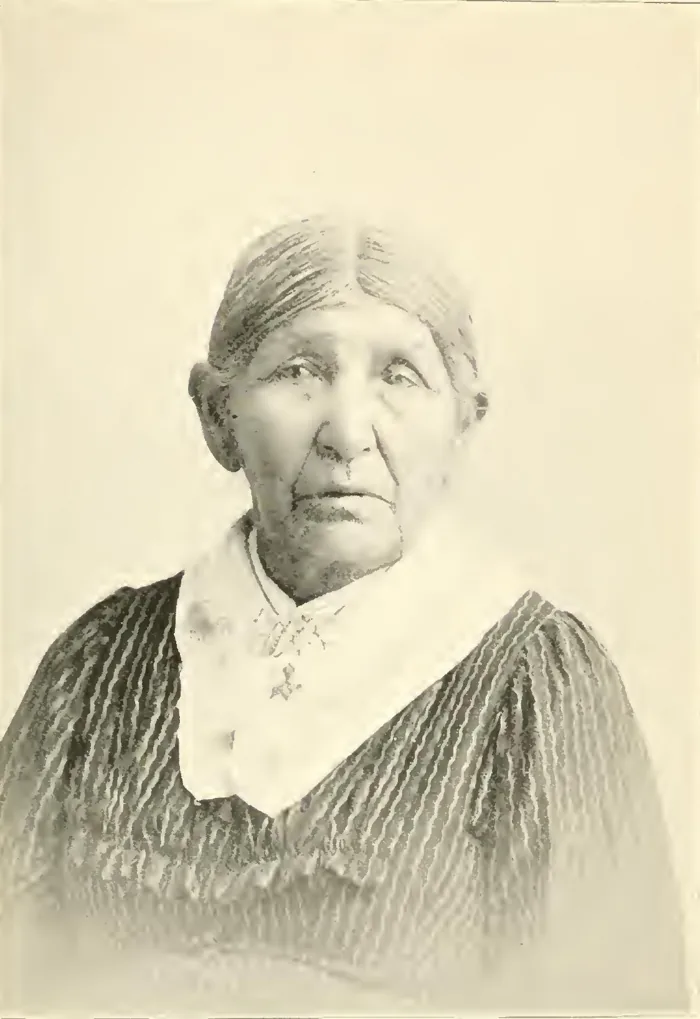
At least four people have carried the name Shipshewana: the chief of the treaties of 1828–33; Mrs. Angelina Shipshewana, a Potawatomi woman born in 1821 near Crumstown, Indiana, whose photograph Daniel McDonald printed in 1899; Edward Shipshewana, whose son Peter (born 1860) was on the Citizen Potawatomi allotment roll of 1887; and a 20th-century writer, Howard L. LaHurreau, who took the name. No account of the town’s namesake that we found sets them side by side.
In The Shipshewana Puzzle: One Name, at Least Five People · found by Michael Urbanski, Project Scroll
What we searched
The town’s and county’s tourism pages; the Historical Marker Database; Wikipedia; McPherson (1993, 2007); the Citizen Potawatomi Nation’s family pages; McDonald (1899); Edmunds (1987); web searches.
- Map of St. Joseph CountySouth Bend1863
A partnership the county histories never mention: the county map of 1863 marks five tracts along the Kankakee in Warren Township “Crum & Hollar” or “Crums & Hollar,” beside Stephen Crum’s land, twelve years before Christian Holler platted Crum’s Point and named it for the family; the 1875 atlas shows the same partners as “Holler & Crum.”. The partners were family: the county marriage register records Christian Holler’s marriage to Mary E. Crum on 1 October 1857.
In Crumstown: The Point, the Partners and the Mastodon · found by Michael Urbanski, Project Scroll
What we searched
Howard (1907), Chapman (1880), the 1875 atlas text, the Polk gazetteers; full-text searches of the Internet Archive, Hoosier State Chronicles and Chronicling America for “Holler & Crum,” “Crum & Holler” and variants; Wikipedia; Baker and Carmony (1995); the Goshen News article.
- Crumstown: The Point, the Partners and the Mastodon
South Bend’s postmaster, Col. Alfred B. Wade of the 73rd Indiana, drowned on 27 February 1877 while hunting ducks from Crum’s Point, having left his horse and wagon with Christian Holler, the town’s founder (Chapman, 1880, spells it Haller).
In Crumstown: The Point, the Partners and the Mastodon · found by Michael Urbanski, Project Scroll
What we searched
Modern accounts of Crumstown (Wikipedia, the Goshen News), web searches for Wade and Crum’s Point, and Chronicling America for 1877.
- Crumstown: The Point, the Partners and the Mastodon
Latter-day Saint missionaries of the Northern States Mission held a conference at Crumstown on 17–18 October 1896, according to an elder’s letter printed in the Deseret Evening News, 12 December 1896.
In Crumstown: The Point, the Partners and the Mastodon · found by Michael Urbanski, Project Scroll
What we searched
Web searches for Crumstown with Mormon, Latter-day Saints and conference; Wikipedia on the Church in Indiana; the county histories.
- Crumstown: The Point, the Partners and the Mastodon
Mastodon bones turned up by a dredge about 1903 on a farm three miles southwest of Crumstown, and found there by Charles Custer (sixteen in April 1906 by the English report, ten by the Polish), were collected in 1906 for Notre Dame by Prof. A. B. Reynolds, at the urging of the priest of Terre Coupee (Buechler or Beecher), to be set up in Science Hall (wire reports and Dziennik Chicagoski, 1906).
In Crumstown: The Point, the Partners and the Mastodon · found by Michael Urbanski, Project Scroll
What we searched
Web searches for Crumstown mastodon and Notre Dame mastodon; the Notre Dame Museum of Biodiversity history; the Scholastic of September 1906; Indiana Academy of Science mastodon papers.
- The biggest wagon works in the world
Contemporary reports date the two Studebaker fires to 17 June 1872 (a little before 6 p.m.; loss $70,000, cause the friction of dust-fan journals) and 24 August 1874 (about 4:45 a.m., in the paint shop; loss $300,000 itemized, more than 2,000 finished wagons), against the $80,000 and the $350,000 with 2,400 wagons repeated from Carlisle (1907), the latter already given by the county atlas in 1875; and the “fire of 1872” in Anderson (1901) and Howard (1907) is Mishawaka’s, not Studebaker’s.
In The biggest wagon works in the world · found by Michael Urbanski, Project Scroll
What we searched
Chapman (1880), Anderson (1901), Howard (1907), Erskine (1918, 1924), the Smithsonian Libraries timeline, Wikipedia, and Chronicling America for June 1872 and August 1874.
- The biggest wagon works in the world
Albert R. Erskine died on the morning of 1 July 1933, by the United Press report from South Bend that day (Indianapolis Times, 1 July 1933), not on 30 June as some modern accounts give.
In The biggest wagon works in the world · found by Michael Urbanski, Project Scroll
What we searched
Wikipedia’s article on Erskine (text and infobox disagree), Chronicling America for June and July 1933.
- The Kentucky Raid of 1847
An Indiana report of the raid, written within two weeks of it: the South Bend Register of 27 August 1847, reprinted in the New-York Daily Tribune of 11 September 1847, p. 1, says that “at Cassopolis another lot of these hunters were stopped in their efforts to take back some runaways, and were obliged, to save themselves from trouble, to back out and call it a drawn game, leaving their slaves to the liberty they had achieved.” It gives no day. No modern account we have read cites it.
In The Kentucky Raid of 1847 · found by Michael Urbanski, Project Scroll
What we searched
The 1875, 1882 and 1906 county histories; the House Divided Project’s stampede pages (Wingert, Parts 1 and 2); Chardavoyne (2004); Marty (2022, 2026); the Underground Railroad Society of Cass County’s pages; Wikipedia; the Berrien County library’s history site; Chronicling America; web searches. Found 25 October 2026.
- The Bonine House at Vandalia
The earliest record of the Bonine elk sold to the King of Italy, in the seller’s own words: James E. Bonine’s letter from Vandalia of 1 April 1875, printed in The Rod and the Gun of 17 April 1875, p. 43: “I have a park containing two elk, a very fine pair; I sold seven which went to the King of Italy.” It dates the sale before April 1875, and so to Victor Emmanuel II, and it supports the 1882 history’s seven against the 1885 visitor’s two.
In The Bonine House at Vandalia · found by Michael Urbanski, Project Scroll
What we searched
The Internet Archive’s full text (including the Harvard copy of The Rod and the Gun, vol. 6), Google Books and HathiTrust for “King of Italy” with Bonine, elk and Vandalia; Chronicling America, 1863–1900; the county histories of 1875, 1882 and 1906; the Underground Railroad Society of Cass County’s pages; Wikipedia; Italian sources on La Mandria (L’Opinione, the Gazzetta Ufficiale, Comba 1872–73); web searches. Found 25 October 2026.
- E Clampus Vitus: the complete record
The earliest record of Ephraim Bee in E Clampus Vitus that we can read: Cooper’s Clarksburg Register of 25 April 1855 reports “Ephraim Bee, the Gwand Iwiseutis of the Eclampus Vitus,” declaring Know-Nothingism “a branch of his ‘ancient and honorable order.’” In August 1856 the same paper has him “the Grand Hote Tote of Eclampus, Vitus,” with “despatches from the Emperor of China”; and in March 1860 the Alexandria Gazette has the order “introduced into the United States on the return of the Hon. Caleb Cushing.” Bee’s part in the order was known from accounts of 1863 and later, and from a notice of 1853 quoted in 1931.
In E Clampus Vitus: the complete record · found by Michael Urbanski, Project Scroll
What we searched
Chronicling America for “Ephraim Bee,” “Eclampus,” “Iwiseutis,” “Hote Tote,” “Syrus Cutus” and “Grand Lama,” 1845–1870; the Internet Archive’s full text, including the anthology E Clampus Vitus (2000); Wikipedia; West Virginia Archives and History; the Doddridge County Heritage Guild; Shumate; Then and Now (1966); web searches.
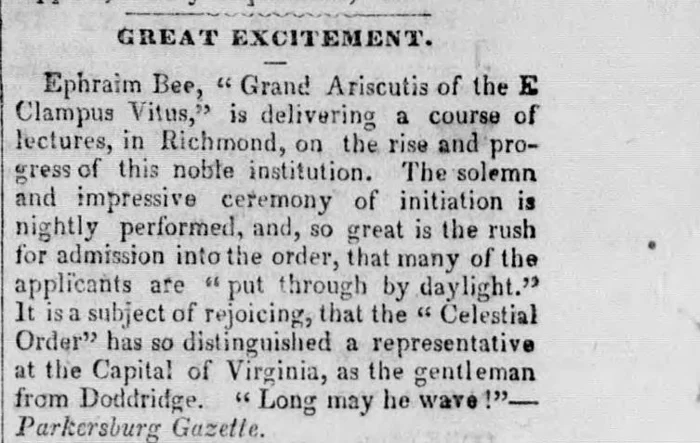 Winchester Republican, 26 Feb 1858
Ephraim Bee at Richmond in February 1858, in a record of the time: the Parkersburg Gazette, copied in the Winchester Republican of 26 February 1858, reports “Ephraim Bee, ‘Grand Ariscutis of the E Clampus Vitus,’” lecturing at Richmond, where “the solemn and impressive ceremony of initiation is nightly performed.” Bee’s winter of initiations at the capital was known only from accounts of 1863 and 1896.
In E Clampus Vitus: the complete record · found by Michael Urbanski, Project Scroll
What we searched
The Library of Congress’s Chronicling America newspapers and the Internet Archive’s full text, for “Clampus Vitus,” “Ariscutis,” “Gyascutis” and Bee; Wikipedia’s articles on Ephraim Bee and E Clampus Vitus; the Doddridge County Heritage Guild’s account; West Virginia Archives and History’s 1863 profile; Then and Now (1966); ECV chapter websites; web searches for Bee at Richmond in 1858.
- E Clampus Vitus: the complete record
A lodge of the order in Mississippi in 1853: the Southern Standard of Columbus, in its issues of 10 and 17 September 1853, prints a mock charter of 8 August 1853 by which “the Supreme Grand High Council of the Ancient and Independent Order of Old Eclampsus Vitus of the United States of America” authorizes “BALAAM, Lodge No. 1” “in the town of Columbus and State of Mississippi,” under the seal of “the Grand Giasticutis.” It is the earliest lodge of the order named Balaam that we have found; no history of the order lists Mississippi.
In E Clampus Vitus: the complete record · found by Michael Urbanski, Project Scroll
What we searched
The Library of Congress’s Chronicling America newspapers, 1845–1904, searched through loc.gov for every spelling of the order’s name and its titles (Clampsus, Eclampsus, Clampus, Giasticutis, Gyastacutus, “E Clampsus”, “Ephraim Bee”, “Noble Grand Humbug” and others), with every hit read in its OCR and the find read on the page image; Seth Slopes, E Clampus Vitus (2000), in the Internet Archive’s full-text search for each place name, including the Shumate list of towns it reprints; Then and Now (1966); the Shumate list as given by the Julia C. Bulette chapter; Wikipedia’s articles on E Clampus Vitus and Ephraim Bee; web searches. The Southern Standard searched for Clampsus, E Clampus, Gyascutis, Balaam and Vitus; Slopes (2000) for “Columbus”, “Mississippi” and “Balaam” (its only Balaam is Sierra City’s); the research repositories Zenodo, OpenAlex and Crossref, with Google Scholar, JSTOR, Academia.edu and ResearchGate through web searches (none had it).
- E Clampus Vitus: the complete record
The order in Maryland and at Fredericksburg, Virginia, by 1855: the Fredericksburg Herald, copied in the Alexandria Gazette of 19 February 1855, finds E Clampsus Vitus “flourishing in Baltimore from the number of meetings that are held,” quotes a call from the Baltimore Clipper signed “B. W. Vick, N. G. H.” for a lecture by “the Grand Master of Georgia” and the report on a “Second Grand Banquet,” and says of its own town: “It had its day here.”
In E Clampus Vitus: the complete record · found by Michael Urbanski, Project Scroll
What we searched
The Library of Congress’s Chronicling America newspapers, 1845–1904, searched through loc.gov for every spelling of the order’s name and its titles (Clampsus, Eclampsus, Clampus, Giasticutis, Gyastacutus, “E Clampsus”, “Ephraim Bee”, “Noble Grand Humbug” and others), with every hit read in its OCR and the find read on the page image; Seth Slopes, E Clampus Vitus (2000), in the Internet Archive’s full-text search for each place name, including the Shumate list of towns it reprints; Then and Now (1966); the Shumate list as given by the Julia C. Bulette chapter; Wikipedia’s articles on E Clampus Vitus and Ephraim Bee; web searches. Slopes (2000) for “Baltimore” and “Maryland”; loc.gov for any Baltimore or Fredericksburg paper of the 1850s (the Clipper and the Herald are not digitized), “Second Grand Banquet” and “B. W. Vick”; the research repositories Zenodo, OpenAlex and Crossref, with Google Scholar, JSTOR, Academia.edu and ResearchGate through web searches (none had it).
- E Clampus Vitus: the complete record
The order at Knoxville, Tennessee, before the Civil War, remembered in 1874: a letter in the Morristown Gazette of 10 June 1874 recalls “the rollicking fellows who introduced it in Knoxville” in “ante bellum days”: “The first initiations took place in an office on Main street but the applications for membership became so numerous … that it was found necessary to remove to the Court House.” No history of the order lists Tennessee.
In E Clampus Vitus: the complete record · found by Michael Urbanski, Project Scroll
What we searched
The Library of Congress’s Chronicling America newspapers, 1845–1904, searched through loc.gov for every spelling of the order’s name and its titles (Clampsus, Eclampsus, Clampus, Giasticutis, Gyastacutus, “E Clampsus”, “Ephraim Bee”, “Noble Grand Humbug” and others), with every hit read in its OCR and the find read on the page image; Seth Slopes, E Clampus Vitus (2000), in the Internet Archive’s full-text search for each place name, including the Shumate list of towns it reprints; Then and Now (1966); the Shumate list as given by the Julia C. Bulette chapter; Wikipedia’s articles on E Clampus Vitus and Ephraim Bee; web searches. Slopes (2000) for “Knoxville” and “Tennessee”; the research repositories Zenodo, OpenAlex and Crossref, with Google Scholar, JSTOR, Academia.edu and ResearchGate through web searches (none had it).
- E Clampus Vitus: the complete record
Ephraim Bee founded a branch of the order at Wheeling about 1864: the Wheeling Daily Intelligencer of 17 January 1866 welcomes “our old friend Ephraim Bee,” “the American Head Centre” of the order: “When he was here two years ago he founded a branch order in this city.” A Parkersburg paper of 1870 remembers “the glorious revival … at Wheeling, in 1866.” Our register had Wheeling from February 1867.
In E Clampus Vitus: the complete record · found by Michael Urbanski, Project Scroll
What we searched
The Library of Congress’s Chronicling America newspapers, 1845–1904, searched through loc.gov for every spelling of the order’s name and its titles (Clampsus, Eclampsus, Clampus, Giasticutis, Gyastacutus, “E Clampsus”, “Ephraim Bee”, “Noble Grand Humbug” and others), with every hit read in its OCR and the find read on the page image; Seth Slopes, E Clampus Vitus (2000), in the Internet Archive’s full-text search for each place name, including the Shumate list of towns it reprints; Then and Now (1966); the Shumate list as given by the Julia C. Bulette chapter; Wikipedia’s articles on E Clampus Vitus and Ephraim Bee; web searches. The searches for the 1867 Wheeling notice; the research repositories Zenodo, OpenAlex and Crossref, with Google Scholar, JSTOR, Academia.edu and ResearchGate through web searches (none had it).
- E Clampus Vitus: the complete record
Lodges of the order in West Virginia after the war, in records of the time: the Parkersburg Times, reprinted in the Wheeling Daily Intelligencer of 15 July 1870, reports a “Great Revival at Parkersburg” and “the day fixed for the reopening of the Parkersburg lodge”; and the Intelligencer of 31 January 1874 notes, from the Grafton Sentinel, that the order “has been revived” at Grafton. Bee’s initiations at Parkersburg were known only from a county history of 1899.
In E Clampus Vitus: the complete record · found by Michael Urbanski, Project Scroll
What we searched
The Library of Congress’s Chronicling America newspapers, 1845–1904, searched through loc.gov for every spelling of the order’s name and its titles (Clampsus, Eclampsus, Clampus, Giasticutis, Gyastacutus, “E Clampsus”, “Ephraim Bee”, “Noble Grand Humbug” and others), with every hit read in its OCR and the find read on the page image; Seth Slopes, E Clampus Vitus (2000), in the Internet Archive’s full-text search for each place name, including the Shumate list of towns it reprints; Then and Now (1966); the Shumate list as given by the Julia C. Bulette chapter; Wikipedia’s articles on E Clampus Vitus and Ephraim Bee; web searches. Slopes (2000) for “Parkersburg” (only the 1896 State Journal) and “Grafton” (absent); Gibbens, Wood County Formation (1899); the research repositories Zenodo, OpenAlex and Crossref, with Google Scholar, JSTOR, Academia.edu and ResearchGate through web searches (none had it).
- E Clampus Vitus: the complete record
The order at Newport, Indiana, in a record of the time: the Chicago Daily Tribune of 13 May 1875 reports that “the Society of Old Eclampsus put a ticket in the field at Newport, Vermillion County, and elected it. Now will somebody tell us what the Old Eclampsus is?” Newport was known only from the county history of 1888.
In E Clampus Vitus: the complete record · found by Michael Urbanski, Project Scroll
What we searched
The Library of Congress’s Chronicling America newspapers, 1845–1904, searched through loc.gov for every spelling of the order’s name and its titles (Clampsus, Eclampsus, Clampus, Giasticutis, Gyastacutus, “E Clampsus”, “Ephraim Bee”, “Noble Grand Humbug” and others), with every hit read in its OCR and the find read on the page image; Seth Slopes, E Clampus Vitus (2000), in the Internet Archive’s full-text search for each place name, including the Shumate list of towns it reprints; Then and Now (1966); the Shumate list as given by the Julia C. Bulette chapter; Wikipedia’s articles on E Clampus Vitus and Ephraim Bee; web searches. The Biographical and Historical Record of Vermillion County (1888); the research repositories Zenodo, OpenAlex and Crossref, with Google Scholar, JSTOR, Academia.edu and ResearchGate through web searches (none had it).
- E Clampus Vitus: the complete record
A revival of the order at Idaho City in 1880: the Idaho Semi-Weekly World of 14 September 1880 reports “a revival of the ancient order of Eclampsus Vitus, known here as the T. T.’s,” which “has been having a successful run for the last two or three months.” The only Idaho lodge known before was Boise City’s, of 1868.
In E Clampus Vitus: the complete record · found by Michael Urbanski, Project Scroll
What we searched
The Library of Congress’s Chronicling America newspapers, 1845–1904, searched through loc.gov for every spelling of the order’s name and its titles (Clampsus, Eclampsus, Clampus, Giasticutis, Gyastacutus, “E Clampsus”, “Ephraim Bee”, “Noble Grand Humbug” and others), with every hit read in its OCR and the find read on the page image; Seth Slopes, E Clampus Vitus (2000), in the Internet Archive’s full-text search for each place name, including the Shumate list of towns it reprints; Then and Now (1966); the Shumate list as given by the Julia C. Bulette chapter; Wikipedia’s articles on E Clampus Vitus and Ephraim Bee; web searches. Slopes (2000) for “Idaho City”; the research repositories Zenodo, OpenAlex and Crossref, with Google Scholar, JSTOR, Academia.edu and ResearchGate through web searches (none had it).
- E Clampus Vitus: the complete record
A lodge proposed at Horsetown, Shasta County, in 1860: the Shasta Courier of 15 December 1860, quoting the Horsetown Argus, reports that the order “is about to be established in that town.”
In E Clampus Vitus: the complete record · found by Michael Urbanski, Project Scroll
What we searched
The Library of Congress’s Chronicling America newspapers, 1845–1904, searched through loc.gov for every spelling of the order’s name and its titles (Clampsus, Eclampsus, Clampus, Giasticutis, Gyastacutus, “E Clampsus”, “Ephraim Bee”, “Noble Grand Humbug” and others), with every hit read in its OCR and the find read on the page image; Seth Slopes, E Clampus Vitus (2000), in the Internet Archive’s full-text search for each place name, including the Shumate list of towns it reprints; Then and Now (1966); the Shumate list as given by the Julia C. Bulette chapter; Wikipedia’s articles on E Clampus Vitus and Ephraim Bee; web searches. Slopes (2000) for “Horsetown”; the research repositories Zenodo, OpenAlex and Crossref, with Google Scholar, JSTOR, Academia.edu and ResearchGate through web searches (none had it).
- E Clampus Vitus: the complete record
Dated records for two towns the order’s histories name without a source: Georgetown, El Dorado County, whose “Knights” helped organize the Sanhedrim at Spanish Flat in May 1856 (Georgetown News, 22 May 1856), and Petaluma, where in October 1859 the order was “about to establish a Lodge” (Shasta Courier, 8 October 1859, from the Marysville Express).
In E Clampus Vitus: the complete record · found by Michael Urbanski, Project Scroll
What we searched
The Library of Congress’s Chronicling America newspapers, 1845–1904, searched through loc.gov for every spelling of the order’s name and its titles (Clampsus, Eclampsus, Clampus, Giasticutis, Gyastacutus, “E Clampsus”, “Ephraim Bee”, “Noble Grand Humbug” and others), with every hit read in its OCR and the find read on the page image; Seth Slopes, E Clampus Vitus (2000), in the Internet Archive’s full-text search for each place name, including the Shumate list of towns it reprints; Then and Now (1966); the Shumate list as given by the Julia C. Bulette chapter; Wikipedia’s articles on E Clampus Vitus and Ephraim Bee; web searches. Slopes (2000), whose chronology lists “1856 ~ Coloma; El Dorado; Georgetown” without a source, and Shumate’s list of towns, which names Petaluma undated; the research repositories Zenodo, OpenAlex and Crossref, with Google Scholar, JSTOR, Academia.edu and ResearchGate through web searches (none had it).
- E Clampus Vitus: the complete record
The lodge at Oroville meeting by July 1856: the Weekly Butte Record of 19 July 1856 calls “the ancient and honorable order of E Clampsus Vitus” to “their regular meeting … at the Hall of the Temple of Honor,” five months before the Chico paper found it “about being revived.”
In E Clampus Vitus: the complete record · found by Michael Urbanski, Project Scroll
What we searched
The Library of Congress’s Chronicling America newspapers, 1845–1904, searched through loc.gov for every spelling of the order’s name and its titles (Clampsus, Eclampsus, Clampus, Giasticutis, Gyastacutus, “E Clampsus”, “Ephraim Bee”, “Noble Grand Humbug” and others), with every hit read in its OCR and the find read on the page image; Seth Slopes, E Clampus Vitus (2000), in the Internet Archive’s full-text search for each place name, including the Shumate list of towns it reprints; Then and Now (1966); the Shumate list as given by the Julia C. Bulette chapter; Wikipedia’s articles on E Clampus Vitus and Ephraim Bee; web searches. Slopes (2000), which has an undated “Oroville Lodge No. 2” parade; the research repositories Zenodo, OpenAlex and Crossref, with Google Scholar, JSTOR, Academia.edu and ResearchGate through web searches (none had it).
- Episcopal RecorderPhiladelphia23 February 1833
The spelling “Cassopolis,” with an O, was in print by 23 February 1833, when the Episcopal Recorder reprinted from the St. Joseph’s Beacon Bishop Chase’s appointments, “at Cassopolis on the 2nd and 3rd” of February: five years before Blois’s gazetteer of 1838, and in the year the federal register still spelled the post office “Cassapolis.”
In How Cassopolis got its name · found by Michael Urbanski, Project Scroll
What we searched
Internet Archive full text for “Cassopolis” and “Cassapolis” to 1838 (pre-1833 hits checked and found misdated), and for “Bishop Chase” with Cassopolis; Rogers (1875), Mathews (1882) and Glover (1906); Wikipedia; the Library of Congress’s newspapers; web searches. HathiTrust and Google Books full text could not be reached from our tools.
- Laws of MichiganAct No. 1121859
Paw Paw was first incorporated as a village by Act No. 112 of 1859 (Laws of Michigan, p. 292); the charter was repealed by Act No. 55 of 1863, and the village was incorporated again by Act No. 519 of 1867. The dates usually given, 1837 and 1867, are not the first charter. A power agency’s website says the village “was established in 1859,” without a source.
In How Paw Paw got its name · found by Michael Urbanski, Project Scroll
What we searched
Internet Archive full text for “incorporate the village of Paw Paw” and for the repealing act; the 1880 history of Berrien and Van Buren counties; Wikipedia; the Michigan Public Power Agency’s page; web searches.
- Fergusson, Practical NotesEdinburgh1833
“The Dowagiake” is in print by 1833, in Adam Fergusson’s Practical Notes (Edinburgh), pp. 320 and 330, which reprint an American account of Michigan Territory: five years before Blois’s gazetteer of 1838, until now the earliest form cited.
In How Dowagiac got its name · found by Michael Urbanski, Project Scroll
What we searched
Internet Archive full text for Dowagiake, Dowagiac, Dowagiack and Dowagiag to 1838; Rogers (1875), the 1882 history and Glover (1906); Vogel, Indian Names in Michigan (1986), which gives no early form; web searches. Romig’s Michigan Place Names and the lettering of the territorial maps could not yet be checked.
- The YpsilantianYpsilanti, Michigan2 June 1887
The Society’s earliest dated gift, a bass drum given by Sidney Russey (in 1874, the paper said, though his own letter shows it still in his hands on 1 June 1875), was said to carry inscriptions showing it “more than two centuries” old, “with a record in Scotch regiments” back to Culloden; by 1887 “all trace of it has been lost, and the society is anxiously looking for it” (Ypsilantian, 2 June 1887).
In A museum before there was a museum · found by Michael Urbanski, Project Scroll
What we searched
Mathews (1882); Glover (1906); Gaskin (2012); Claspy; the museum’s pages; web searches for the drum.
- Catalog of Copyright EntriesLibrary of Congress1923
Charles O. Harmon, who built the Pioneer Log Cabin, also wrote songs: he registered copyrights in 1921 and 1923, one of them for “On the Winding Christianna” (Catalog of Copyright Entries, 1923).
In A museum before there was a museum · found by Michael Urbanski, Project Scroll
What we searched
Harmon’s obituary (1928); Gaskin (2012); Glover (1906); Claspy; web searches for Harmon.
- Cass County RepublicanDowagiac, Michigan26 June 1878
At the Pioneer Society’s picnic of 19 June 1878, “Henry Michael presented to the society a miniature log cabin all complete, which attracted much attention” (Cass County Republican, 26 June 1878): a log cabin in the Society’s collection forty-five years before the Pioneer Log Cabin was built.
In The miniature log cabin of 1878 · found by Michael Urbanski, Project Scroll
What we searched
Mathews (1882); Glover (1906); Gaskin (2012); Claspy; the museum’s and the Historical Society’s pages; web searches for the miniature cabin and for Henry Michael.
- Detroit PlaindealerDetroit, Michigan27 June 1890
The Pioneer Society’s seventeenth picnic, on 18 June 1890, had “two successful balloon ascensions and parachute leaps,” at ten in the morning and half past four, before a crowd “estimated over 10,000” (Detroit Plaindealer, 27 June 1890).
In Balloons over the pioneer picnic · found by Michael Urbanski, Project Scroll
What we searched
Mathews (1882, before the event); Glover (1906); Gaskin (2012); Claspy; histories of ballooning in Michigan; web searches.
- South Bend News-TimesSouth Bend, IndianaSeptember 1923
Between its dedication on 20 June 1923 and its opening as a museum in June 1924, the Pioneer Log Cabin had another opening: “Wednesday, October 17, is the grand opening day for the completed log cabin in Cassopolis, and all the pioneer relics” (South Bend News-Times, 21 September 1923).
In The cabin that opened twice · found by Michael Urbanski, Project Scroll
What we searched
Gaskin (2012), which gives only the 1923 dedication and the 1924 opening; Glover; Claspy; the museum’s pages; web searches.
- South Bend News-TimesSouth Bend, Indiana24 October 1923
The Pioneer Log Cabin had its own song: the program of the commemoration at the cabin on Sunday, 28 October 1923 includes “Song. ‘Old Log Cabin,’ words by Jay C. Northrup” (South Bend News-Times, 24 October 1923). Jay C. Northrop had given log No. 6.
In “Old Log Cabin”: the song we can’t find · found by Michael Urbanski, Project Scroll
What we searched
Gaskin (2012), which lists Northrop only as a donor; Michigan History issues of the 1920s; the Catalog of Copyright Entries; web searches for the song.
- The Kentucky Raid of 1847
A Centreville report, reprinted in the Signal of Liberty of 4 September 1847, says a messenger came “on Sabbath evening last” to hire a lawyer while “the Kentuckians were still brandishing their bowie-knives”: the case was still undecided on a Sunday. By itself the report could mean 15 or 22 August; read with the Niles letter of 21 August, which already reports the nine set free, it points to Friday, 13 August for the raid and Monday, 16 August for the hearing, against the 20 and 23 August of the House Divided Project. The Centreville paper’s own date is not yet known. No modern account we have read uses it.
In The Kentucky Raid of 1847 · found by Michael Urbanski, Project Scroll
What we searched
The 1875, 1882 and 1906 county histories; the House Divided Project’s stampede pages; Chardavoyne (2004); Marty (2022, 2026); the Underground Railroad Society of Cass County’s pages and Yawkey’s book; Wikipedia; the Clio; full-text searches of the Signal of Liberty at the Ann Arbor District Library and of Chronicling America.
- The Kentucky Raid of 1847
The Kentuckians’ friend from Kalamazoo: the Jackson Patriot, quoted in the Signal of Liberty of 6 November 1847, says Charles E. Stuart, newly elected to Congress and later a United States senator, drove to Cassopolis, consulted the prosecuting attorney, and “the complaint of kidnapping was dismissed.” The 1882 county history names him (as “Charles E. Stewart”) only as the Kalamazoo lawyer in whose office the Kentuckians’ spy Carpenter read law; no history we have read records his part at Cassopolis.
In The Kentucky Raid of 1847 · found by Michael Urbanski, Project Scroll
What we searched
The 1875, 1882 and 1906 county histories; the House Divided Project’s stampede pages; Chardavoyne (2004); Marty (2022, 2026); the Underground Railroad Society of Cass County’s pages and Yawkey’s book; Wikipedia; the Clio; full-text searches of the Signal of Liberty at the Ann Arbor District Library and of Chronicling America. The 1882 history’s chapter on the raid, read in full.
- The Bonine House at VandaliaTravels of Robert and Sarah Lindsey (1886), pp. 42–43. Internet Archive.
The earliest visitor’s account of the Bonine household: on 2 January 1850 the English Quaker minister Robert Lindsey, crossing Michigan in deep snow, wrote that “it was eight o’clock in the evening when we arrived at our friend Isaac Bonine’s, of Prairie Grove,” and described Young’s Prairie, “only from two to three miles across,” with its “rich black earth.”
In The Bonine House at Vandalia · found by Michael Urbanski, Project Scroll
What we searched
The Underground Railroad Society of Cass County’s pages and timelines; the Leader and Niles Daily Star articles of 2009–2025; the Clio entries; the Cass County driving tour; Wikipedia; Internet Archive full-text searches for “Isaac Bonine.”
- E Clampus Vitus: the complete record
A Kentucky lodge with a standing notice: the Bardstown Herald of 14 October and 18 November 1852 lists “E Clampsus Vitus. Wapsipinico Lodge,” meeting “on the first Monday in each month,” among the town’s Masonic and Odd Fellows lodges. No history of the order lists Kentucky.
In E Clampus Vitus: the complete record · found by Michael Urbanski, Project Scroll
What we searched
Full-text searches of the Internet Archive (books and newspapers) for “Eclampsus”, “Eclampses”, “Clampses”, “Clampsus”, “Eclampsus Vitas” and “Clampus Vitus”, with in-item searches of the Indiana House Journal of 1846–47 and Mathews (1882); Hoosier State Chronicles and the California Digital Newspaper Collection (searched in later rounds); the Huntington Library’s and the Online Archive of California’s finding aids; WVU’s archives catalogue; Rumsey Auctions; web searches.
- E Clampus Vitus: the complete record
The lodge at Port Douglas, B.C., dated: the Weekly British Colonist of 11 February 1862 reports a lodge “organised at Port Douglas, B. C.,” where “members are initiated nightly.” Ramsey’s Ghost Towns of British Columbia (1963) mentioned the lodge without a date, and the order’s historians (Shumate, 1991; Slopes, 2000) put it in 1858; this is the first dated record, and it points to 1862.
In E Clampus Vitus: the complete record · found by Michael Urbanski, Project Scroll
What we searched
Full-text searches of the Internet Archive (books and newspapers) for “Eclampsus”, “Eclampses”, “Clampses”, “Clampsus”, “Eclampsus Vitas” and “Clampus Vitus”, with in-item searches of the Indiana House Journal of 1846–47 and Mathews (1882); Hoosier State Chronicles and the California Digital Newspaper Collection (searched in later rounds); the Huntington Library’s and the Online Archive of California’s finding aids; WVU’s archives catalogue; Rumsey Auctions; web searches. Ramsey (1963) in full-text search; Shumate (1991); Slopes (2000).
- E Clampus Vitus: the complete record
E Clampus Vitus at Honolulu from April 1858: the Pacific Commercial Advertiser of 22 April 1858 announces that the order’s “Mystic Emblem” had come “per bark Yankee” and that E. J. Smith had been appointed to form a branch at Honolulu. Notices followed for weeks, and by 1 January 1859 the lodge, under L. F. Beatty, N. G. H. (Noble Grand Humbug), met “over Dr. McKibbin’s Drug store” on Queen Street (The Friend). The order’s historians (Shumate, 1991; Slopes, 2000) give 1858 without a source; this is the first record cited.
In E Clampus Vitus: the complete record · found by Michael Urbanski, Project Scroll
What we searched
Full-text searches of the Internet Archive (books and newspapers) for “Eclampsus”, “Eclampses”, “Clampses”, “Clampsus”, “Eclampsus Vitas” and “Clampus Vitus”, with in-item searches of the Indiana House Journal of 1846–47 and Mathews (1882); Hoosier State Chronicles and the California Digital Newspaper Collection (searched in later rounds); the Huntington Library’s and the Online Archive of California’s finding aids; WVU’s archives catalogue; Rumsey Auctions; web searches. The Pacific Commercial Advertiser on the page for April 1858 (the notice is absent on 15 April); Shumate’s history as printed by the Julia C. Bulette chapter; Slopes (2000) in full-text search.
- E Clampus Vitus: the complete record
The earliest printed uses of the spelling “Clampus” we can document: the Alexandria Gazette of 13 March 1852 (“E. Clampus Vitas”), the Spirit of the Times of 14 January 1854 (a San Francisco report: “an ‘E Clampus vitus’ grip”), Massett in 1856, papers of 1857–60 and 1864. The order’s historian Albert Shumate wrote in 1991 that Carl Wheat “selected” the spelling in 1931 and that it was used “in Illinois in 1847,” without giving a source.
In E Clampus Vitus: the complete record · found by Michael Urbanski, Project Scroll
What we searched
Full-text searches of the Internet Archive (books and newspapers) for “Eclampsus”, “Eclampses”, “Clampses”, “Clampsus”, “Eclampsus Vitas” and “Clampus Vitus”, with in-item searches of the Indiana House Journal of 1846–47 and Mathews (1882); Hoosier State Chronicles and the California Digital Newspaper Collection (searched in later rounds); the Huntington Library’s and the Online Archive of California’s finding aids; WVU’s archives catalogue; Rumsey Auctions; web searches.
- How Kalamazoo got its name
A French memoir of the Lake Michigan shore, printed in the Bulletin des recherches historiques (1920), names the river “Kikanamaso,” fifteen leagues beyond the Ouichitanon (the Grand River), “plus considérable et qui est navigable vers le sud l’espace de quarante lieues.” Its editor dated it to 1763 or a little after; it calls L’Arbre Croche “le nouveau village,” which places it after about 1741.
In How Kalamazoo got its name · found by Michael Urbanski, Project Scroll
What we searched
Full-text searches of the Internet Archive (all spellings: Kekalamazoo, Kikalemazo, Kikanamaso, Kikalamazoo, “boiling pot,” “reflecting river”); Vogel (1986), Romig (1973), Gannett (1905), Durant (1880), the Compendium (1906), the Kalamazoo Public Library’s pages, Wikipedia’s “Etymology of Kalamazoo,” and the city’s history page.
- How Kalamazoo got its name
The first L we can find is Henry Schoolcraft’s: on 4 September 1820, a year before the treaty of 1821 that is usually cited, he “passed the river Kikalemazo,” in the entry printed in his Narrative Journal (Albany, 1821). His spelling is the one Carey & Lea’s map of 1822 uses, letter for letter.
In How Kalamazoo got its name · found by Michael Urbanski, Project Scroll
What we searched
Full-text searches of the Internet Archive (all spellings: Kekalamazoo, Kikalemazo, Kikanamaso, Kikalamazoo, “boiling pot,” “reflecting river”); Vogel (1986), Romig (1973), Gannett (1905), Durant (1880), the Compendium (1906), the Kalamazoo Public Library’s pages, Wikipedia’s “Etymology of Kalamazoo,” and the city’s history page.
- How Kalamazoo got its name
The “boiling pot” meaning is in print by 1838, in Blois’s Gazetteer of the State of Michigan (“Kekalamazoo, [Indian,] signifying a boiling pot”), and was toasted at the quarter-centennial dinner of 21 June 1854: older in print than the race story (1867) and than Schoolcraft’s otters (1855).
In How Kalamazoo got its name · found by Michael Urbanski, Project Scroll
What we searched
Full-text searches of the Internet Archive (all spellings: Kekalamazoo, Kikalemazo, Kikanamaso, Kikalamazoo, “boiling pot,” “reflecting river”); Vogel (1986), Romig (1973), Gannett (1905), Durant (1880), the Compendium (1906), the Kalamazoo Public Library’s pages, Wikipedia’s “Etymology of Kalamazoo,” and the city’s history page. Vogel (1986), whose Kalamazoo entry gives the boiling pot as an alleged meaning and cites no date for it.
- How Kalamazoo got its name
The “mirage or reflecting river” meaning is not modern: Charles R. Brown printed it at Kalamazoo in 1874, and the Michigan Historical Collections of 1912 attribute it to W. S. George.
In How Kalamazoo got its name · found by Michael Urbanski, Project Scroll
What we searched
Full-text searches of the Internet Archive (all spellings: Kekalamazoo, Kikalemazo, Kikanamaso, Kikalamazoo, “boiling pot,” “reflecting river”); Vogel (1986), Romig (1973), Gannett (1905), Durant (1880), the Compendium (1906), the Kalamazoo Public Library’s pages, Wikipedia’s “Etymology of Kalamazoo,” and the city’s history page.
- How Kalamazoo got its name
George Torrey’s county history of 1869 gives a reason for the renaming that Durant (1880) would not: Burdick, Sheldon and Lyon were “disgusted with the eccentricities, obstinacy, and want of enterprise in their co-partner, Bronson.” The same history tells the race with “the fleetest runners in the tribe,” fifty-three years before “Fleet Foot.” Kekic (1984) names the three proprietors and credits Lyon’s influence, but not Torrey’s reason.
In How Kalamazoo got its name · found by Michael Urbanski, Project Scroll
What we searched
Full-text searches of the Internet Archive (all spellings: Kekalamazoo, Kikalemazo, Kikanamaso, Kikalamazoo, “boiling pot,” “reflecting river”); Vogel (1986), Romig (1973), Gannett (1905), Durant (1880), the Compendium (1906), the Kalamazoo Public Library’s pages, Wikipedia’s “Etymology of Kalamazoo,” and the city’s history page.
- How Kalamazoo got its name
The Senate journal of 1836 shows that the bill as reported renamed only Arcadia township; the village of Bronson was added at the third reading “on motion of Mr. Comstock.” A Mr. Burdick of Kalamazoo sat in the House that passed it.
In How Kalamazoo got its name · found by Michael Urbanski, Project Scroll
What we searched
Full-text searches of the Internet Archive (all spellings: Kekalamazoo, Kikalemazo, Kikanamaso, Kikalamazoo, “boiling pot,” “reflecting river”); Vogel (1986), Romig (1973), Gannett (1905), Durant (1880), the Compendium (1906), the Kalamazoo Public Library’s pages, Wikipedia’s “Etymology of Kalamazoo,” and the city’s history page.
- The True Story of the Dewey Lake Monster: The Week the Valley Went Wild
The famous nine feet may have come from a farmer with a tape measure. The National Observer of June 1964 says the “accepted set of dimensions was established by farmer Utrup,” who saw the thing standing behind a bush in his yard, measured the bush the next day at five feet, and “estimated that whatever he had seen stood four feet above that.” The United Press gave the height to his wife.
In The True Story of the Dewey Lake Monster: The Week the Valley Went Wild · found by Michael Urbanski, Project Scroll
What we searched
The 1882 History of Cass County; The Treat Family (1893); Robert Atkinson’s survey of the 1964 papers (2017); Wikipedia’s Dewey Lake Monster article; Hammond’s Mysterious Michigan (2022); FATE (1964), Steiger (1969), Keel (1970) and Bord (1982) in Internet Archive full-text search; the Indiana History Blog; web searches.
- The True Story of the Dewey Lake Monster: The Week the Valley Went Wild
The red-chalk warning is older than “about 1839.” The 1882 county history dates the Treats’ arrival that way in its story, but its own township record makes Timothy Treat supervisor of Silver Creek in April 1837; the family genealogy of 1893 has him in Michigan from 1834 and in Silver Creek in the fall of 1837; and the history’s table of first land entries shows Sullivan Treat entering his Silver Creek land on 17 May 1836, three years before the patent of 1839.
In The True Story of the Dewey Lake Monster: The Week the Valley Went Wild · found by Michael Urbanski, Project Scroll
What we searched
The 1882 History of Cass County; The Treat Family (1893); Robert Atkinson’s survey of the 1964 papers (2017); Wikipedia’s Dewey Lake Monster article; Hammond’s Mysterious Michigan (2022); FATE (1964), Steiger (1969), Keel (1970) and Bord (1982) in Internet Archive full-text search; the Indiana History Blog; web searches.
- The True Story of the Dewey Lake Monster: The Week the Valley Went Wild
Henry Dewey, who gave Dewey Lake its name, was of Union County, Indiana, when he entered his land: the 1882 history lists his Pokagon land entry of 16 October 1830, and his entry on Section 8 of Silver Creek in 1835. It also says his settlement at the lake may not have come until 1841, so “Dewey’s Lake” on the road to the Devil may be a later name.
In The True Story of the Dewey Lake Monster: The Week the Valley Went Wild · found by Michael Urbanski, Project Scroll
What we searched
The 1882 History of Cass County; The Treat Family (1893); Robert Atkinson’s survey of the 1964 papers (2017); Wikipedia’s Dewey Lake Monster article; Hammond’s Mysterious Michigan (2022); FATE (1964), Steiger (1969), Keel (1970) and Bord (1982) in Internet Archive full-text search; the Indiana History Blog; web searches.
- The True Story of the Dewey Lake Monster: The Week the Valley Went Wild
The hairy wild thing of Michigan City in 1839, known to cryptozoology as a “wild child,” was reported in a dispatch dated 4 December and credited to the Michigan City Gazette. The earliest printing we have found is in the Farmers’ Gazette, and Cheraw Advertiser of South Carolina, 27 December 1839, three days before the Gettysburg reprint cited by the Indiana History Blog (2017); and the plea to capture it as “an act of humanity” was the Michigan City paper’s own.
In The True Story of the Dewey Lake Monster: The Week the Valley Went Wild · found by Michael Urbanski, Project Scroll
What we searched
The 1882 History of Cass County; The Treat Family (1893); Robert Atkinson’s survey of the 1964 papers (2017); Wikipedia’s Dewey Lake Monster article; Hammond’s Mysterious Michigan (2022); FATE (1964), Steiger (1969), Keel (1970) and Bord (1982) in Internet Archive full-text search; the Indiana History Blog; web searches. The Indiana History Blog (Beckley, 29 May 2017); “A Chronology of Michigan Creatures” in the Marcello Truzzi papers, which dates it to summer.
- A lodge of E Clampus Vitus, in Cassopolis, in 1846
The Indiana House disposed of the Jackson Lodge in one week: the House Journal’s day headings put the bill’s first reading on 30 December 1846, its second reading on 31 December, and the committee’s joke on Wednesday, 6 January 1847. The 14 January sometimes given is only the Sentinel’s date.
In A lodge of E Clampus Vitus, in Cassopolis, in 1846 · found by Michael Urbanski, Project Scroll
What we searched
Full-text searches of the Internet Archive (books and newspapers) for “Eclampsus”, “Eclampses”, “Clampses”, “Clampsus”, “Eclampsus Vitas” and “Clampus Vitus”, with in-item searches of the Indiana House Journal of 1846–47 and Mathews (1882); Hoosier State Chronicles and the California Digital Newspaper Collection (searched in later rounds); the Huntington Library’s and the Online Archive of California’s finding aids; WVU’s archives catalogue; Rumsey Auctions; web searches.
- A lodge of E Clampus Vitus, in Cassopolis, in 1846
Charter member Jordan P. Osborn was the son-in-law of Eber Root, the innkeeper whose Union Hotel was, by our reading of the 1882 history, the scene of the lodge’s ball: Mathews (1882) lists Root’s children as “Isabella (Mrs. J. P. Osborn), Mary (Worthington) and Jane (wife of L. D. Smith).” Osborn kept a harness business in the village from 1844 and was President of the Village in 1875, the year Rogers printed the story, and in 1876: the likeliest source for Shepard’s account.
In A lodge of E Clampus Vitus, in Cassopolis, in 1846 · found by Michael Urbanski, Project Scroll
What we searched
Alfred Mathews, History of Cass County (1882), pp. 170, 174 and 178, for Root, the Union Hotel and the Osborns; Rogers (1875); Cope’s Sharpless genealogy (1887); full-text searches of the Internet Archive for “Jordan P. Osborn,” “J. P. Osborn” and “Eber Root”; no modern account we have read connects Osborn to Root or to the lodge.
- A lodge of E Clampus Vitus, in Cassopolis, in 1846
The Union Hotel survived its corner: Mathews (1882, p. 170) says Root’s hotel “is at present the planing-mill of Matthew Lindsey, and still bears in faded letters the name, ‘Union Hotel.’ It was moved away from its original site in 1867, when the Cass House was built.”
In A lodge of E Clampus Vitus, in Cassopolis, in 1846 · found by Michael Urbanski, Project Scroll
What we searched
Full-text searches of the Internet Archive (books and newspapers) for “Eclampsus”, “Eclampses”, “Clampses”, “Clampsus”, “Eclampsus Vitas” and “Clampus Vitus”, with in-item searches of the Indiana House Journal of 1846–47 and Mathews (1882); Hoosier State Chronicles and the California Digital Newspaper Collection (searched in later rounds); the Huntington Library’s and the Online Archive of California’s finding aids; WVU’s archives catalogue; Rumsey Auctions; web searches.
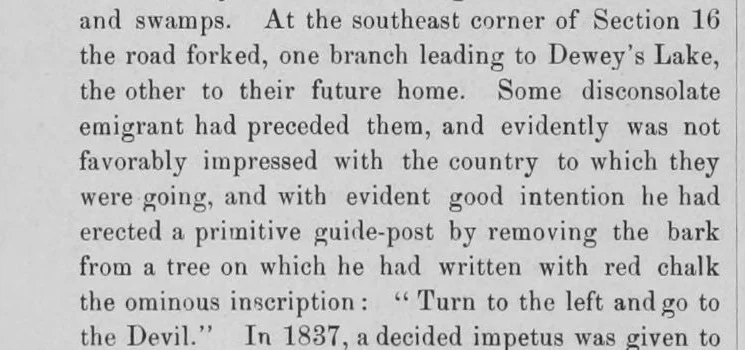 History of Cass County, Michigan (1882), p. 356. Internet Archive.
The 1882 county history records a warning chalked in red on a peeled tree at the fork of the old road to “Dewey’s Lake”: “Turn to the left and go to the Devil.” No telling of the 1964 Dewey Lake Monster that we found mentions it.
In The True Story of the Dewey Lake Monster: The Week the Valley Went Wild · found by Michael Urbanski, Project Scroll
What we searched
Wikipedia’s Dewey Lake Monster article; Robert Atkinson’s survey of the 1964 papers (2017); Visit Southwest Michigan’s haunted-places list; the Observer’s lake-monster article; web searches for the red-chalk sign with Dewey Lake.
- The True Story of the Dewey Lake Monster: The Week the Valley Went Wild
The lake behind the monster’s name was named for a pioneer. The county history of 1882 says Henry Dewey settled in Silver Creek because the land around “the lake which bears his name” had so much to recommend it. No telling of the Dewey Lake Monster that we found says who Dewey was.
In The True Story of the Dewey Lake Monster: The Week the Valley Went Wild · found by Michael Urbanski, Project Scroll
What we searched
History of Cass County, Michigan (1882), p. 356; Wikipedia’s Dewey Lake Monster article; Robert Atkinson’s survey (2017); Silver Creek Township’s own history page; web searches for Henry Dewey with Dewey Lake and Silver Creek.
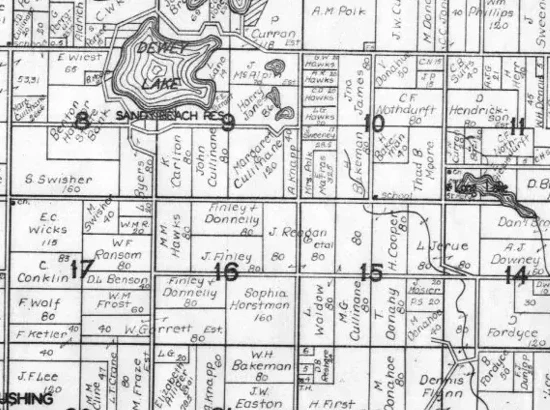 Silver Creek Township plat, about 1928.
Read against the township plat, the warning seems to have pointed one way. Coming up the old track from Indian Lake to the south-east corner of Section 16, where, the 1882 history says, “the road forked, one branch leading to Dewey’s Lake, the other to their future home,” a traveler bore left, to the north-west, to reach Dewey’s Lake. If so, the road the warning sent “to the Devil” was the road to Dewey’s Lake, and the Treats took the other.
In The True Story of the Dewey Lake Monster: The Week the Valley Went Wild · found by Michael Urbanski, Project Scroll
What we searched
The 1882 history’s account of the fork (p. 356); the plat of Silver Creek Township of about 1928; every telling of the red-chalk sign and the Dewey Lake story we could find.
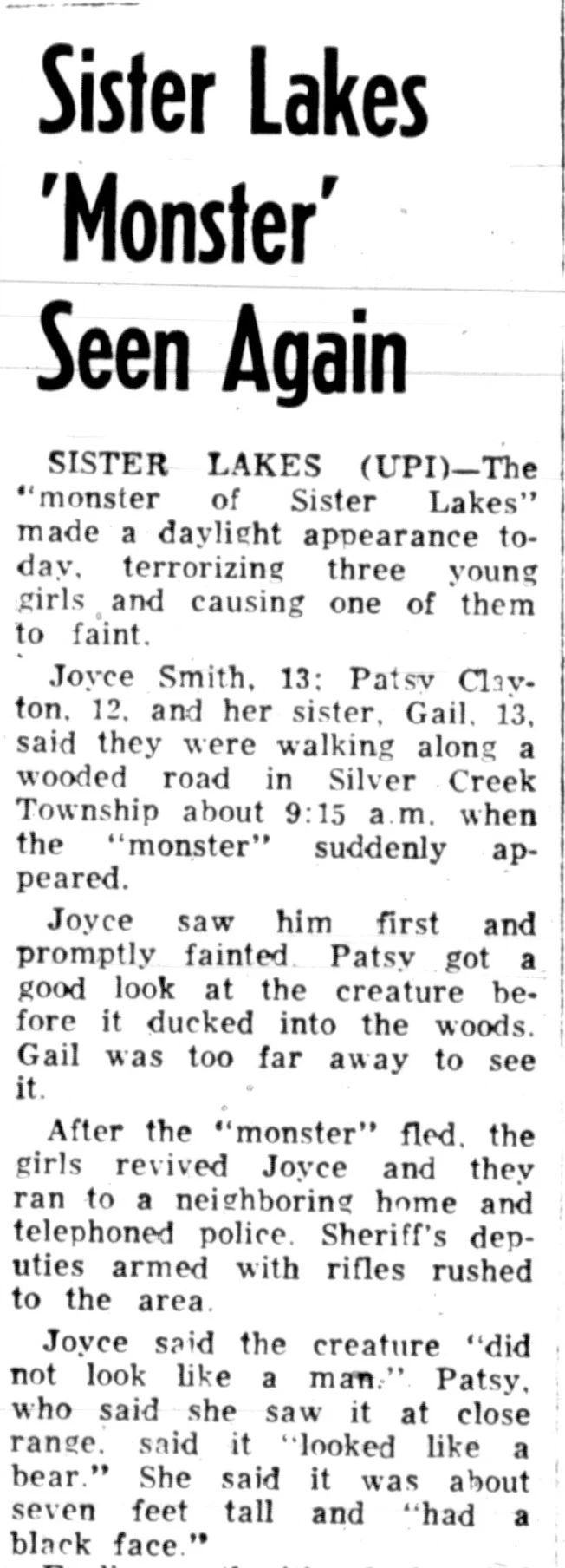 Isabella County Daily Times-News, 11 June 1964, p. 1 (United Press). Digital Michigan Newspapers.
The description the country repeated in 1964, about nine feet and five hundred pounds, went out on the United Press wire on 11 June in the words of Mrs. John Utrup, the farm wife who said it had chased her into her house (so too Leader Publications of Dowagiac, in 2017). Atkinson’s survey (2017) gives it to the Browns, and the National Observer of that month gave the height to her husband, measured against a bush in their yard.
In The True Story of the Dewey Lake Monster: The Week the Valley Went Wild · found by Michael Urbanski, Project Scroll
What we searched
The United Press story of 11 June 1964 as printed in the Isabella County Daily Times-News (p. 1); Robert Atkinson’s survey of the 1964 papers (2017), which credits the Browns; Wikipedia’s Dewey Lake Monster article; web searches for Utrup with the height and weight. Leader Publications, Dowagiac (23 February 2017); Twisting the Myths (2025).
- The True Story of the Dewey Lake Monster: The Week the Valley Went Wild
Two months after Dewey Lake, the United Press tied a new scare straight back to it: “Now Sheridan Has Its Own ‘Monster,’” a lion in Montcalm County, first Sister Lakes and now this. And the wire repeated Dewey Lake’s own explanation for the silence: other people had seen it, but did not talk about it “for fear of ridicule.” No telling of the Dewey Lake Monster that we found mentions the Sheridan sequel.
In The True Story of the Dewey Lake Monster: The Week the Valley Went Wild · found by Michael Urbanski, Project Scroll
What we searched
Isabella County Daily Times-News, 10 August 1964, p. 2 (United Press); Robert Atkinson’s survey (2017); Wikipedia; Notebook of Ghosts (2020); web searches for Sheridan, lion and Sister Lakes.
- The Indian Lake Sea Serpent: Twelve Feet Long, and Shy
The state’s own fishery record shows what had just been put into Indian Lake before the 1898 serpent scare: five thousand lake trout fry in 1878 and again in 1879, then four hundred thousand walleye fry in 1893 and again in 1897, the year before the serpent. The state’s record lists no muskellunge, in the survey of 1887 or in the stocking table. No telling of the Indian Lake serpent that we found mentions the stocking.
In The Indian Lake Sea Serpent: Twelve Feet Long, and Shy · found by Michael Urbanski, Project Scroll
What we searched
The Michigan DNR’s Indian Lake Status of the Fishery Resource Report (2015-199); the 1898 and 1899 newspaper items; modern tellings of the serpent online; web searches for Indian Lake, serpent and stocking.
- Licking Valley RegisterCovington, Kentucky17 September 1847
The raiders’ own home paper, the Covington Licking Valley Register of 17 September 1847, put their bail at “something over four thousand dollars.” Every later account we have found gives $2,600, the figure first printed in the county history of 1875 and repeated in 1882.
In The Kentucky Raid of 1847 · found by Michael Urbanski, Project Scroll
What we searched
The county histories of 1875, 1882 and 1906; the House Divided Project’s narrative of the 1847 stampedes; D. G. Chardavoyne’s article in The Court Legacy (2004); Wikipedia; the Underground Railroad Society of Cass County’s pages; the Clio entry; the State Bar of Michigan’s milestone pages; web searches for the bail figure.
- Licking Valley RegisterCovington, Kentucky17 September 1847
The same 1847 Kentucky account says the raiders’ baggage wagon, its wheels taken, “was then delivered up.” The story that it was rolled into Birch Lake is first told, as far as we can find, in the 1930s (a sighting the House Divided Project dates to 1936, and the Unionville Crescent of 5 March 1937); Cooper Wingert (2024) cites the 1847 account for the stripped wheels but follows the Birch Lake story.
In The Kentucky Raid of 1847 · found by Michael Urbanski, Project Scroll
What we searched
The county histories of 1875 and 1882, searched for “wagon”; the House Divided narrative; Wikipedia; the society’s pages; web searches for the wagon and Birch Lake.
- Congressional GlobeWashington1848–1851
The story that Henry Clay cited the Cass County “Michigan riots” “in detail in Congress” starts with Rogers’s county history of 1875 (p. 129). The Congressional Globe of 1848 to 1851, searched issue by issue, records no such speech by Clay; the Michigan cases told in the Senate in 1850 were the Marshall case (William L. Dayton, 22 March) and a Missouri owner’s case (Joseph R. Underwood, 3 April).
In The Kentucky Raid of 1847 · found by Michael Urbanski, Project Scroll
What we searched
Rogers (1875) and the 1882 history; Wikipedia’s article on the raid, which repeats Rogers; the Underground Railroad Society of Cass County’s pages; the Leader’s series of 2018; web searches for Clay, the Senate and the raid.
- Congressional GlobeWashington20 April 1850
On 18 April 1850 a petition from N. B. Blackman, D. H. Ringer, Luther Humphrey and 40 other citizens of Cass County, Michigan, was presented in the House of Representatives, “praying that persons arrested as fugitive slaves may be entitled to trial by jury, before delivered up to the claimant.” The law passed that September gave no such trial.
In The Kentucky Raid of 1847 · found by Michael Urbanski, Project Scroll
What we searched
The county histories of 1875, 1882 and 1906; Wikipedia; the House Divided Project; Chardavoyne (2004); the society’s pages; web searches for the petitioners’ names.
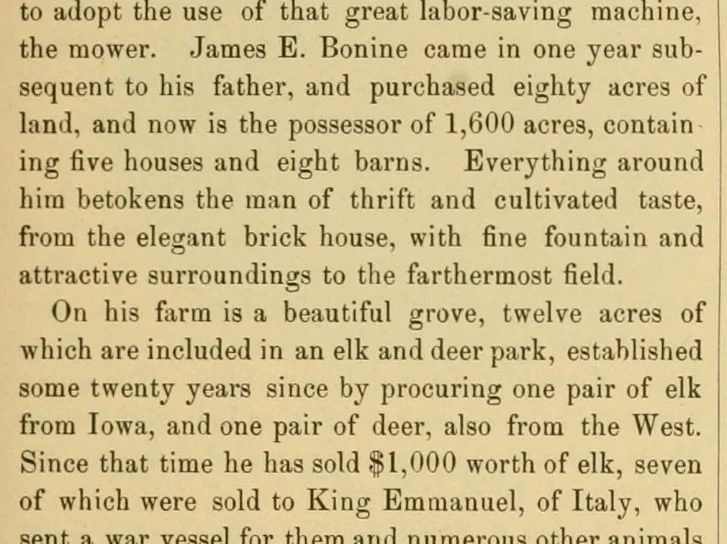 History of Cass County (1882), p. 251. Internet Archive.
Probably the earliest description of the building now called the Bonine carriage house: in 1882, “exactly opposite his residence, which is on a corner,” “the finely-built storehouse,” with two rows of arbor vitae running from it. The history says nothing of fugitives there.
In The Bonine House at Vandalia · found by Michael Urbanski, Project Scroll
What we searched
The Underground Railroad Society of Cass County’s pages on the house and carriage house; eight Leader articles of 2009–2021; the Clio entries; local radio and television features; Wikipedia; web searches for Bonine with “storehouse” and “arbor vitae”.
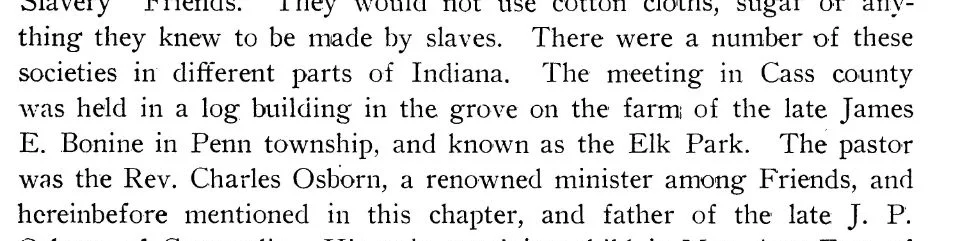 Glover, Twentieth Century History of Cass County (1906), p. 386. Internet Archive.
Glover’s history of 1906 places the meeting of the Anti-Slavery Friends of Cass County, with the Rev. Charles Osborn as pastor, “in a log building in the grove on the farm of the late James E. Bonine … known as the Elk Park.” Modern accounts say only that the Bonines were members.
In The Bonine House at Vandalia · found by Michael Urbanski, Project Scroll
What we searched
The same sources as for the storehouse, with web searches for the Anti-Slavery Friends with Bonine and Elk Park.
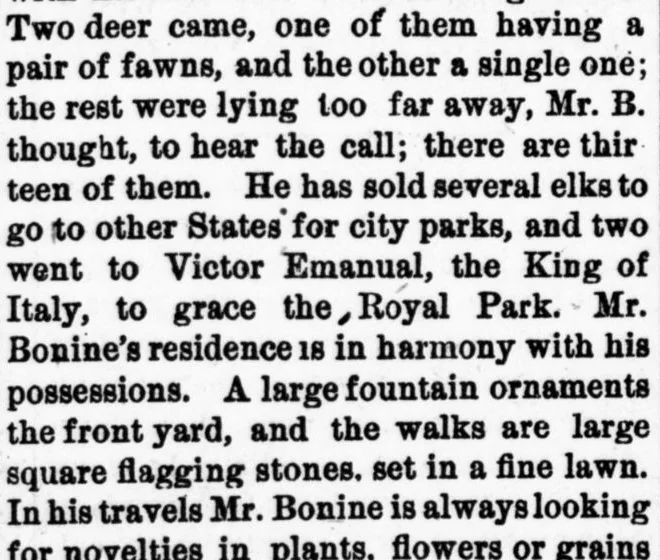 Michigan Farmer, 18 August 1885. Internet Archive.
The earliest eyewitness account of the Bonine elk park we have found, in the Michigan Farmer of 18 August 1885: a 40-acre park behind a ten-foot fence, ten elk and thirteen deer, the elk coming to the call “Come Bill!”, and a large fountain and flagstone walks before the house. The visitor writes that two elk “went to Victor Emanual, the King of Italy, … to grace the Royal Park,” with no warship; the owner’s own letter of 1875, and the county history of 1882, say seven.
In The Bonine House at Vandalia · found by Michael Urbanski, Project Scroll
What we searched
The Underground Railroad Society of Cass County’s pages on the house, carriage house and Quaker timeline; eight Leader articles of 2009–2021; the Clio entry; local radio and television features; Wikipedia; Internet Archive full-text searches for Bonine with elk, Italy and “Victor Emmanuel”; Italian sources on the wapiti of La Mandria, none of which names Michigan.
- East Jordan News-Herald“A herd of 12 to 15 elk”8 October 1953
The Bonine Elk Park outlived its founder by half a century. Isaac A. Bonine wrote to the federal Biological Survey in 1907 that he had bred elk “for about thirty-five years”; a 1908 newspaper reports elk sold at $100 a head to parks in Detroit and Grand Rapids; the WPA’s 1941 guide to Michigan found “more than a score of American elk” there, sold “to zoos, parks, and private gardens, and sometimes to Elk lodges”; and in October 1953 a newspaper photograph shows 12 to 15 elk still on the park. That was the year the farm left the family: G. Elwood Bonine’s 1976 obituary says the Elk Park Farms were in the family “from 1837 to 1953.” The elk outlived the family’s ownership: a school paper on the farm, pasted into a Decatur scrapbook, notes that “the farm has been sold since this story was written, but we understand the new owners are maintaining the elk.” By 1963 the park was spoken of in the past tense.
In The Bonine House at Vandalia · found by Michael Urbanski, Project Scroll
What we searched
The Underground Railroad Society of Cass County’s pages on the house, carriage house and Quaker timeline; eight Leader articles of 2009–2021; the Clio entries; local radio and television features; Wikipedia; Internet Archive full-text searches for “Bonine Elk Park” and “Elk Park farm”; the Biological Survey bulletins; the WPA guide; the Friends of Silverbrook obituary transcriptions. Internet Archive full-text search of the Decatur scrapbook and the 1963 token guide.
- Genealogy of the Sharpless FamilyPhiladelphia1887
The dates missing from modern accounts of the Bonines: James E. Bonine was born in Wayne County, Indiana, on 5 September 1816 and married Sarah Ann Bogue at Cassopolis on 8 August 1844; she was born in Preble County, Ohio, on 30 April 1825 and died at Vandalia on 17 September 1909. The Pioneer Society roll printed in 1906 gives James E. as coming to the county in 1841, a year before his father, not in 1843.
In The Bonine House at Vandalia · found by Michael Urbanski, Project Scroll
What we searched
The Underground Railroad Society of Cass County’s pages on the house, carriage house and Quaker timeline; eight Leader articles of 2009–2021; the Clio entry; local radio and television features; Wikipedia; the Sharpless (1887), Bogue (1944) and Hannum (1911) genealogies; Indiana Quaker meeting abstracts; Glover’s 1906 history, p. 352, checked against the page image.
- History of Cass CountyChicago1882, p. 258
James E. Bonine was superintendent of the Air Line railroad through Penn Township, giving “three years time, $6,000 right of way, and $6,000 cash,” by the 1882 county history. The line was the Michigan Air Line, opened through Vandalia in 1871. No modern account of the Bonine House we have read mentions it.
In The Bonine House at Vandalia · found by Michael Urbanski, Project Scroll
What we searched
The Underground Railroad Society of Cass County’s pages on the house, carriage house and Quaker timeline; eight Leader articles of 2009–2021; the Clio entry; local radio and television features; Wikipedia; web searches for Bonine with “Air Line” and railroad.
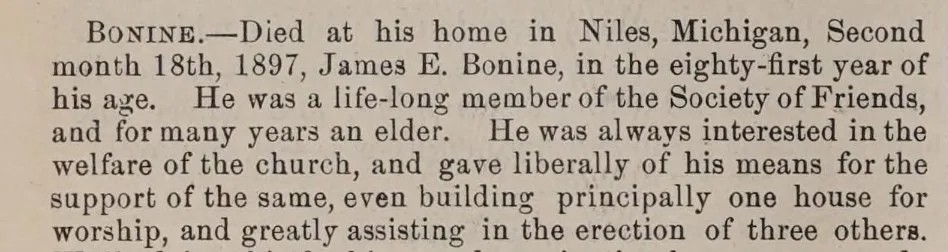 The American Friend, vol. 4 (1897), p. 308. Internet Archive.
James E. Bonine, the builder of the Bonine House, died at his home in Niles on 18 February 1897, “in the eighty-first year of his age,” after an illness of four months, by his obituary in the Quaker weekly The American Friend. It says he built “principally one house for worship” and helped build three others. No modern account we have read gives the date; a 1906 Berrien County history and a syndicated newspaper piece of 1908 give 1898.
In The Bonine House at Vandalia · found by Michael Urbanski, Project Scroll
What we searched
The Underground Railroad Society of Cass County’s pages on the house, carriage house and Quaker timeline; eight Leader articles of 2009–2021; the Clio entries; local radio and television features; Wikipedia; Find a Grave (a bot check stopped us) and Geni (a title only); Internet Archive full-text searches for James E. Bonine with died, funeral and 1897; the Friends of Silverbrook obituaries; Glover’s necrology.
 Bulletin de la Société d’acclimatation (Paris, 1872), p. 500. Internet Archive.
The Italian side of the Bonine elk story has a record of its own. In 1872 Benvenuto Comba, the naturalist of the King of Italy’s park of La Mandria, reported that the king had sent the Count di Castiglione “to America to buy wapiti” and that the first shipment of 60 landed 47 alive; his report of 1873 shows the American elk still dying, six that year to the time of writing. No account of the Bonine sale we have read connects it with the king’s buying in America. Bonine’s own letter puts his sale of seven elk before April 1875, most likely after the shipments of 1863–65; the Italian report is context, not proof.
In The Bonine House at Vandalia · found by Michael Urbanski, Project Scroll
What we searched
The Underground Railroad Society of Cass County’s pages on the house, carriage house and Quaker timeline; eight Leader articles of 2009–2021; the Clio entries; local radio and television features; Wikipedia; Italian accounts of La Mandria (Rivista Savej, Fondazione 1563, Wikipedia); Internet Archive full-text searches for wapiti with Mandria and Castiglione.
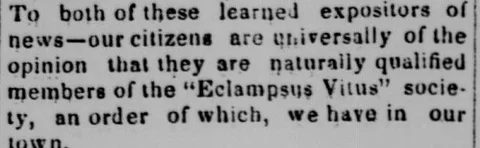 Indiana American, Brookville, 27 Feb. 1846. Hoosier State Chronicles.
The earliest dated mention of E Clampus Vitus yet found anywhere: a letter from Connersville, Indiana, printed in the Indiana American of Brookville on 27 February 1846, which speaks of “the ‘Eclampsus Vitus’ society, an order of which, we have in our town.” The order’s own histories give no dated record before 1847.
In E Clampus Vitus: the complete record · found by Michael Urbanski, Project Scroll
What we searched
Full-text searches for “Eclampsus Vitus”, “Eclampses Vitus” and “Clampus Vitus”; Hoosier State Chronicles; Internet Archive; Wikipedia’s articles on E Clampus Vitus and Ephraim Bee and their references; ecvinc.org and chapter websites; Then and Now (E Clampus Vitus, 1966); the Shumate list of early lodges as given by the Julia C. Bulette chapter; HMDB; the 1888 Biographical and Historical Record of Vermillion County, Indiana, which dates the order there to about 1873.
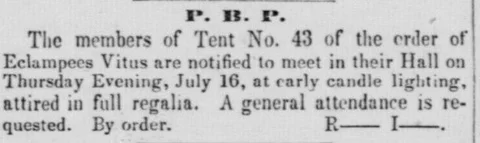 Indiana State Sentinel, Indianapolis, 16 July 1846. Hoosier State Chronicles.
An Indianapolis lodge in July 1846: the Indiana State Sentinel notified “the members of Tent No. 43 of the order of Eclampees Vitus” to meet in their hall on 16 July, “attired in full regalia.” No history of the order mentions Indiana.
In E Clampus Vitus: the complete record · found by Michael Urbanski, Project Scroll
What we searched
The searches listed for the Connersville letter, with web searches for the Sentinel and “Clampus”, and the Indiana State Library’s newspaper pages.
 Journal of the House of Representatives of Indiana, 1846–47. Internet Archive.
A lodge that asked a state legislature for a charter: House bill No. 242 in the Indiana House of Representatives, winter 1846–47, “to incorporate Jackson Lodge of the ancient order of Eclampses Vitus, of Centreville, Indiana,” was put off with a joke.
In E Clampus Vitus: the complete record · found by Michael Urbanski, Project Scroll
What we searched
The searches listed for the Connersville letter, with searches for “Jackson Lodge” with Clampus and Centreville, and the Indiana State Library’s archives catalogue.
- 89 places · 1845–1905Texas to HawaiiThe register
A register of 89 places where E Clampus Vitus is on record before 1905, each with its earliest surviving record, marked for how far we have seen it ourselves: an answer to the 1966 call for a list of the early lodges. It builds on the dated chronology in Seth Slopes’s anthology (2000) and on Shumate’s list.
In E Clampus Vitus: the complete record · found by Michael Urbanski, Project Scroll
What we searched
Then and Now (1966), which names about fourteen places; the Shumate list as given by the Julia C. Bulette chapter; ecvinc.org and chapter websites; Wikipedia and its references; HMDB. Slopes (2000) in full-text search, year by year.
- San Joaquin RepublicanStockton, California14 April 1852
The earliest dated California notice of the order yet seen: the San Joaquin Republican of Stockton, 14 April 1852, calling “THE MEMBERS of the E. C. V.” to their hall on the corner of El Dorado and Centre streets, a month before the notices of 14 May 1852 cited in Slopes’s anthology (2000). Slopes, citing the Stockton Journal, also gives a record of 1850.
In E Clampus Vitus: the complete record · found by Michael Urbanski, Project Scroll
What we searched
Then and Now (1966); Wikipedia, which cites the Daily Alta California of 3 September 1852; the Sacramento Union of 28 September 1852; ecvinc.org and chapter websites; web searches for the Stockton notice. Slopes (2000) in full-text search.
- Wheeling Daily IntelligencerWheeling, West Virginia1 February 1867
The Wheeling Daily Intelligencer of 1 February 1867 called Ephraim Bee “the recognized American head” of the order, and Caleb Cushing “the man who brought the secrets of the order to this country.”
In E Clampus Vitus: the complete record · found by Michael Urbanski, Project Scroll
What we searched
Wikipedia’s Ephraim Bee article and its references; the West Virginia Archives page on Bee, which prints a different Intelligencer sketch of 1863; ecvinc.org; web searches for the phrase.
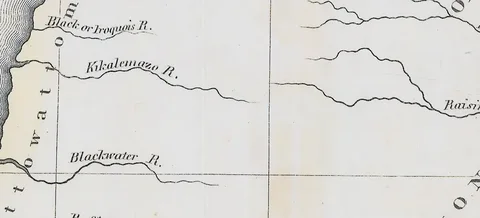 Carey & Lea, map of Michigan Territory, 1822. MSU Libraries.
The unnamed “atlas of 1823” that first spelled the river “Kikalemazo” is, we believe, Carey & Lea’s American Atlas: its map of Michigan Territory, dated 1822 and unchanged in most copies of the atlas of 1823, letters the river “Kikalemazo R.” The map’s spelling was noted in The Rag Picker (1984), without naming the atlas.
In How Kalamazoo got its name · found by Michael Urbanski, Project Scroll
What we searched
The Kalamazoo Public Library’s pages; Wikipedia’s “Etymology of Kalamazoo” and its source, Gannett’s Origin of Certain Place Names (1905); local news sites; web searches linking Carey & Lea and “Kikalemazo”.
 Durant, History of Kalamazoo County (1880). Internet Archive.
The cherry tree did not rename Kalamazoo, so far as any record shows. The fine is real: Kekic (1984) quotes the court record of 1833, a jury of six and $4.62½. But no nineteenth-century history ties it to the change of name: not the Pioneer Collections of 1877, Durant (1880) or the Compendium (1906), though each tells of Bronson and the renaming.
In How Kalamazoo got its name · found by Michael Urbanski, Project Scroll
What we searched
The three histories named; the Kalamazoo Public Library’s Bronson biography; the City of Kalamazoo’s page; Wikipedia; local news sites that repeat the story.
- A lodge of E Clampus Vitus, in Cassopolis, in 1846
The lodge of the “Ancient and Honorable Order of Eclampsus Vitus” instituted at Cassopolis in the spring of 1846, recorded by Rogers (1875) and Mathews (1882) with its four charter members named, is the earliest lodge of the order yet found anywhere with its members’ names written down, and the first known in Michigan.
In A lodge of E Clampus Vitus, in Cassopolis, in 1846 · found by Michael Urbanski, Project Scroll
What we searched
Full-text searches for “Eclampsus Vitus”, “Eclampses Vitus” and “Clampus Vitus”; Wikipedia’s articles on E Clampus Vitus and Ephraim Bee and their references; ecvinc.org and chapter websites; Then and Now (E Clampus Vitus, 1966); the Shumate list of early lodges; Rogers (1875) and Mathews (1882); the Cope genealogy of the Sharpless family (1887); Michigan newspapers of 1898.
- A lodge of E Clampus Vitus, in Cassopolis, in 1846
Three of the Cassopolis lodge’s four charter members married sisters of one family, the Bealls: the Niles obituary of their brother Nathaniel Beall, in September 1898, names all three women among his survivors (though it counts “two sisters”), and Cope’s genealogy gives the marriages: Bonine in 1844, Laban Harter in 1847, and Dr. Leander Osborn, to a younger sister, Helen, in 1854. The lodge was very nearly a family affair.
In A lodge of E Clampus Vitus, in Cassopolis, in 1846 · found by Michael Urbanski, Project Scroll
What we searched
Full-text searches for “Eclampsus Vitus”, “Eclampses Vitus” and “Clampus Vitus”; Wikipedia’s articles on E Clampus Vitus and Ephraim Bee and their references; ecvinc.org and chapter websites; Then and Now (E Clampus Vitus, 1966); the Shumate list of early lodges; Rogers (1875) and Mathews (1882); the Cope genealogy of the Sharpless family (1887); Michigan newspapers of 1898.
- A lodge of E Clampus Vitus, in Cassopolis, in 1846
The Cassopolis founders’ family came from Centreville, Indiana, the very town whose “Jackson Lodge” of the order came before the Indiana legislature for a charter that winter: the Beall sisters were born there, and the lodge’s young doctor read medicine there under a physician married to the sisters’ aunt.
In A lodge of E Clampus Vitus, in Cassopolis, in 1846 · found by Michael Urbanski, Project Scroll
What we searched
Full-text searches for “Eclampsus Vitus”, “Eclampses Vitus” and “Clampus Vitus”; Wikipedia’s articles on E Clampus Vitus and Ephraim Bee and their references; ecvinc.org and chapter websites; Then and Now (E Clampus Vitus, 1966); the Shumate list of early lodges; Rogers (1875) and Mathews (1882); the Cope genealogy of the Sharpless family (1887); Michigan newspapers of 1898.
No findings match.
How to read the register
Every entry has been searched for in print first. Each carries a grade, for how new it is, and a kind, for what sort of finding it is. Findings that turned out to be in print already are withdrawn from the count and credited on the story.
- Discovery108 in the registerNothing earlier was found in print.
- New documentation33 in the registerSomeone had said it before, without a source we could check; ours is the first verifiable record.
- Recovered42 in the registerAn old printed book says it, with its source, but no modern account we could find uses it.
Kinds of finding
- New record
- A fact in no published account.
- Earliest record
- The first appearance in print, earlier than any account gives.
- Correction
- The record says otherwise than the accounts.
- Connection
- Two records that had not been put together.
- Identification
- An unnamed source named.
- Map reading
- A fact read from a map.
- Compilation
- A list that did not exist before.
- Myth tested
- A story traced and found to have no early source.
- From the record
- A point the record makes that the modern accounts leave out.
The eight tests a finding must pass are set out under How we research.
Citing a finding
Cite its research note and DOI where it has one; otherwise cite the story, and credit Michael Urbanski, Project Scroll. Every finding has its own link: use “Link to this finding.”
Know of an earlier one?
“New” means new to print as far as we can tell, not that nobody ever noticed. If you know of an earlier publication of any of these, tell us: we will credit it on the story and here.