Dowagiac, 1912
Five minutes with Roosevelt at Dowagiac
On Saturday, 30 March 1912, Theodore Roosevelt’s special train stopped at Dowagiac for five minutes. He came to ask Michigan for a primary election; the town came to see a president; and Oscar C. Haight’s camera caught the crowd.
By Michael Urbanski · Project Scroll · · 12 min read

Dowagiac, Mich. The news came the day before. As the Dowagiac museum’s Steve Arseneau retold it in 2016 from the Dowagiac Daily News, the paper called it an “exclusive announcement”: the former president would halt his special train in Dowagiac “and make a five minute speech from the rear platform.” Few people in the town had ever seen him.
It was Saturday, 30 March 1912, and Roosevelt was campaigning to take the Republican nomination from President Taft. The stores were to close for the visit. A whistle at the water works was to sound when the train left Niles, and the interurban from Benton Harbor and St. Joseph ran a special schedule to bring people in from Berrien County.
What the town got was five minutes, a speech that began with babies, and a crowd so thick that one photographer’s card of it is still the best record of the day. Here is the story of those five minutes: why the colonel was on that train, what he came to Michigan to say, what happened at the other stops down the line, and who was behind the camera.
Why the colonel was running
DocumentedTheodore Roosevelt had left the White House in 1909 and handed the party to his chosen successor, William Howard Taft. By 1911 he had soured on Taft, and early in 1912 he decided to take the nomination from him. On 10 February 1912 seven Republican governors wrote urging him to say he would accept the nomination if it came to him “unsolicited and unsought.” One of the seven was Michigan’s governor, Chase S. Osborn. Roosevelt answered them in a letter dated 24 February: “I will accept the nomination for President if it is tendered to me.”
DocumentedIn the same letter he named the issue he would carry across the country. One of the chief principles for which he stood, he wrote, was “the genuine rule of the people,” and “therefore I hope that so far as possible the people may be given the chance, through direct primaries, to express their preference as to who shall be the nominee of the Republican Presidential Convention.”
ReadingThat was the point of the whole campaign. In 1912 most delegates to the national conventions were still picked by party conventions run by party organizations, and the organizations mostly belonged to the sitting president. Roosevelt’s best chance was to get the question before the voters, state by state. Only a few states held presidential primaries that spring, and Michigan was not one of them.
DocumentedThe race was weeks old when the train reached Dowagiac. Roosevelt had given what the press called his first campaign speech at Carnegie Hall in New York on 20 March. Robert La Follette, the other challenger, had won the first primary of the year, in North Dakota, on 19 March, and Taft had won New York’s on 26 March.
Dowagiac makes a day of it
DocumentedThe Daily News said, as Arseneau quotes it, that “Nothing in months has created so much interest as the exclusive announcement” that the colonel would halt his special train in the town. It expected thousands of visitors from all over the region. City officials planned to sound the “mocking bird whistle” at the Water Works station when the train pulled out of Niles, the stop before Dowagiac, so that people would know to start for the depot, and the merchants agreed to close their stores.
DocumentedThe trolley helped. The electric interurban from Benton Harbor and St. Joseph ran a special schedule for the day to bring people in from Berrien County. That line was new: the Benton Harbor–St. Joe Railway & Light Company had reached Dowagiac only in 1911, according to the Michigan railroad historian’s record of the company.
DocumentedThe train would stop at the Michigan Central depot, a brick station in the Tudor Revival style, built in 1902–03 for the railroad that ran from Chicago to Detroit through Niles, Dowagiac, Kalamazoo, Battle Creek, Jackson and Ann Arbor. The building is still there, and is on the National Register of Historic Places.
ReadingThere was no radio and no television. For most people in Cass County, a few minutes beside a railroad car were the only chance they would ever have to see a president. That is why the paper made so much of a five-minute stop.
Late, and brief
The train had left Chicago late and came in about an hour behind time, at half past three. Roosevelt began, as the paper reported it, “Ladies, gentlemen and babies,” and spoke for about five minutes, mostly about a bill to give Michigan a primary election. He wished he could stay longer, the paper said, but all he could say was “good luck and good bye.” The Daily News headline read “Monster Crowd Sees Roosevelt: Colonel Talks For 5 Minutes.”
DocumentedThe paper was struck by who came. Interest, it said, “was general. It was not partisan. It extended to all classes of people and to people of all political factions.” Arseneau, writing more than a century later, called it the most famous visit by any politician to the town.
ReadingWhy talk about a Michigan primary bill in Dowagiac, of all places? Because the fight over it was going on in Lansing that very season, and Roosevelt was counting on public pressure. A few hours later, at Ann Arbor, he would say the same thing more sharply.
The primary fight
DocumentedGovernor Osborn, one of Roosevelt’s seven governors, had called the legislature into special session early in 1912. A Michigan Daily story of 28 February quotes him linking the call in part to the student paper’s own straw vote, in which, he noted, the Socialist Eugene Debs had polled more votes than either Taft or La Follette.
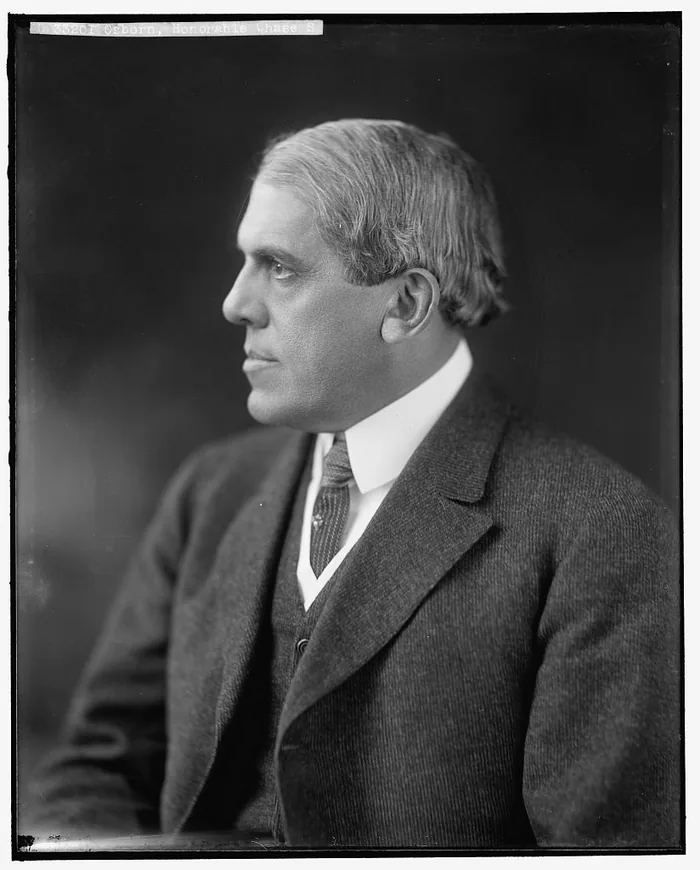
DocumentedThe bill did not carry in time. Michigan held no presidential primary in 1912; the account of that year’s primaries in Wikipedia says Taft’s supporters blocked the legislation. The state’s delegates were chosen in the old way, at party conventions, and Taft’s people carried them.
DocumentedElsewhere, where voters did get to choose, the results went the colonel’s way. Of the thirteen Republican presidential primaries held in 1912, Roosevelt won nine, from Illinois on 9 April to South Dakota on 4 June. Taft won two, New York and Massachusetts, and La Follette won two, North Dakota and Wisconsin.
Twelve hours in Michigan
DocumentedDowagiac was one stop on a long day. A wire story printed in Michigan papers the next week said the colonel put in “12 strenuous hours” in the state, with speeches from the car platform at Kalamazoo, Battle Creek and Ann Arbor. That night he spoke for an hour at the Light Guard armory in Detroit. The hall was full an hour early, about a thousand people waited in the street, and it was announced from the stage that he would speak to them from a balcony of the Hotel Cadillac.
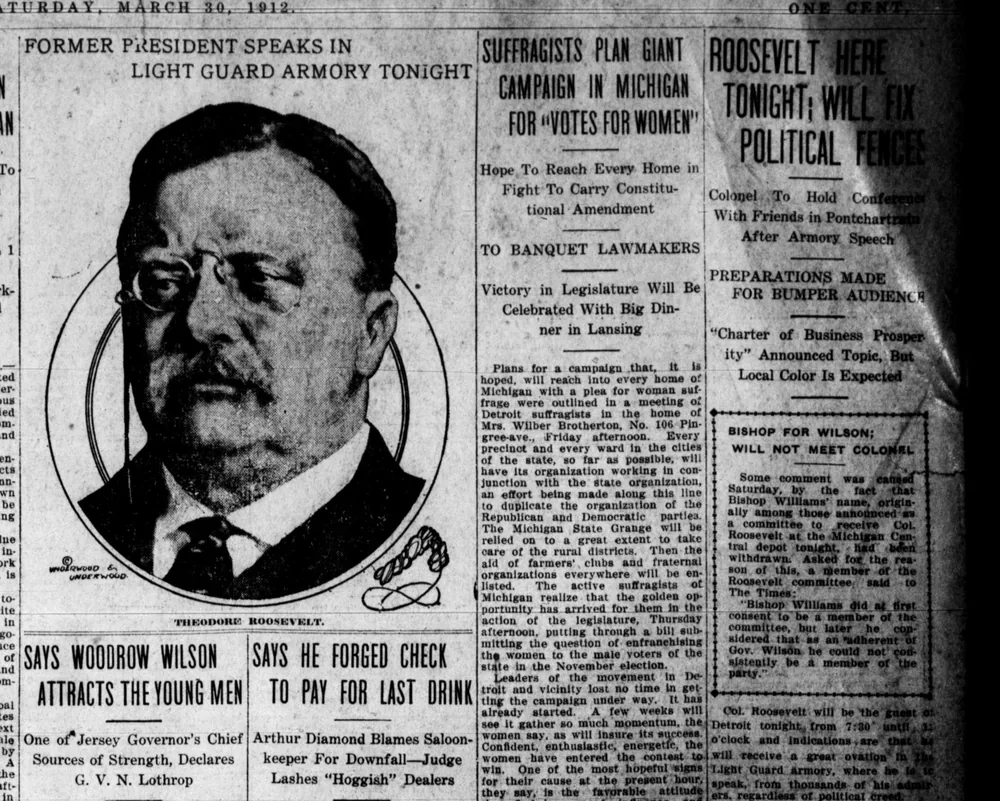
DocumentedAnn Arbor had been told to expect him at 6:14 that evening. The Michigan Daily of that morning, Saturday, 30 March 1912, reported the time from a telegram received the night before, and promised “twenty minutes of strenuous oratory” from the back platform of the last car, in the Michigan Central yards a little east of the depot. When Roosevelt had passed through the year before, the paper recalled, a vast crowd had met him.
DocumentedHe gave Ann Arbor five minutes too. The Daily’s Sunday story, headlined “Roosevelt Talks But Five Minutes,” said the train was half an hour late. About two thousand people were packed around the car, with more pressing behind, and he opened with a protest on their behalf: “This isn’t a square deal.” Then he went straight to the primary. He praised Governor Osborn and the legislators who were working for a direct presidential primary, and told the crowd that “The men who represent the people rightly are the men who do what the people wish them to do.” Those who fought the primary against the voters’ wishes, he said, were not representing the people properly.
“Wish I had more time to talk.”
DocumentedThe Daily’s reporter had some fun with the ending. The colonel, he wrote, kept doffing his broad-brimmed black hat as the train swung out, “leaving the spectators to cheer a bit, clean off the mud, count the black eyes, and work homeward.”
ReadingPut the Dowagiac and Ann Arbor reports side by side and the day’s pattern is plain. The train was running late from the start, and each town got less than it was promised: five minutes instead of twenty at Ann Arbor, an hour’s wait at Dowagiac. The message was the same at every stop. Give the people a primary, and let the voters, not the party conventions, choose the nominee.
The man with the camera
Haight’s card, signed “Haight Photo.”, shows the crowd packed across the tracks by the depot, with the train at the right.
DocumentedThe photographer was Oscar Clayton Haight. The New York Public Library’s Photographers’ Identities Catalog, drawing on the Clements Library’s Directory of Early Michigan Photographers, gives his birth date as 4 December 1878, in Michigan, and records him working in Grand Rapids from 1901 to 1910 and in Dowagiac from 1911 to 1914, with a studio at 214½ South Front Street in 1911. He lived, by the same record, until 1978.
ReadingSo the Roosevelt card was made by a man who had been in town barely a year, at the height of the real-photo postcard craze, when a local photographer could print his pictures straight onto postcard stock and sell them over the counter within days. Captioning the card with the date was a good commercial instinct: everyone in that crowd would want a copy. The card is now in the David V. Tinder Collection of Michigan Photography at the University of Michigan’s William L. Clements Library.
After the whistle stop
DocumentedRoosevelt lost the nomination. At the Republican National Convention in the Chicago Coliseum, 18–22 June 1912, Taft’s forces won the fights over the contested delegations and Taft was renominated on the first ballot. Michigan’s thirty delegates cast twenty votes for Taft and nine for Roosevelt, with one not voting. Roosevelt accused Taft of “steamroller tactics” and told his delegates to take no further part. That August he was nominated by the new Progressive party, the Bull Moose.
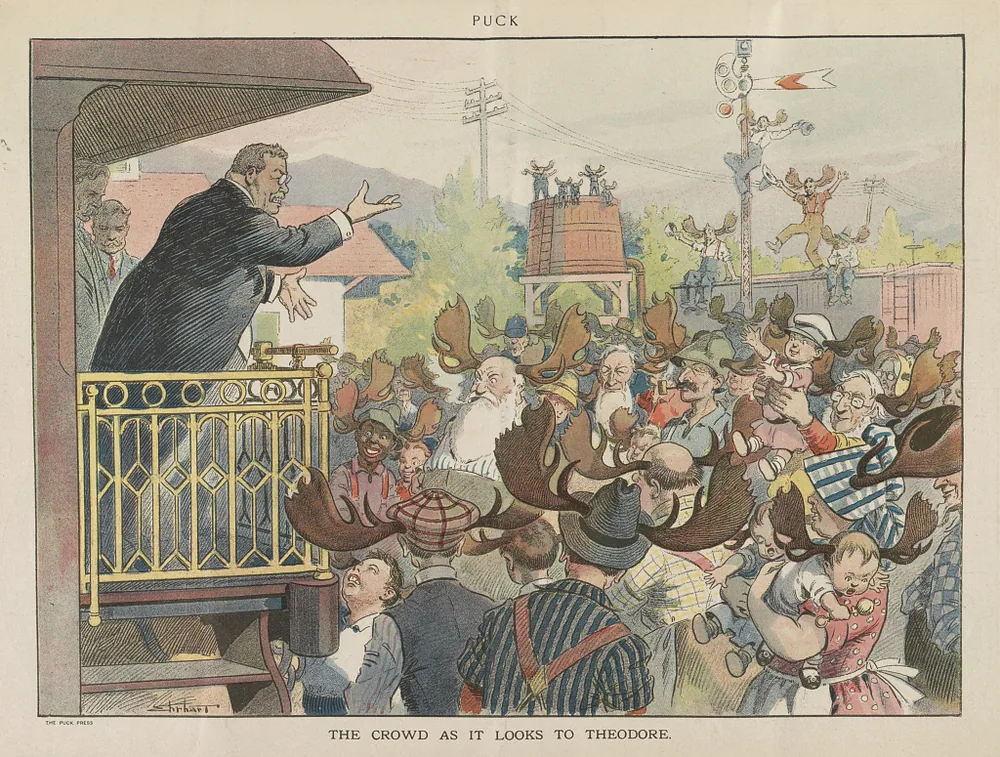
DocumentedIn November the split in the Republican vote elected the Democrat, Woodrow Wilson. Michigan went the other way: it was one of the states Roosevelt carried, with 214,584 votes, 38.95 percent, against 152,244 for Taft and 150,751 for Wilson, and he took all fifteen of its electoral votes. But not Cass County. There Wilson won with 2,081 votes, ahead of Taft with 1,472 and Roosevelt with 1,442. The colonel who drew a “monster crowd” in March finished third in the county in November.
DocumentedWilson came through Dowagiac that year too. Arseneau writes that his train paused near the viaduct for a speech in 1912, though no one seems to have written it up the way the Daily News wrote up Roosevelt.
DocumentedRoosevelt’s ties to Michigan did not end with the election. In May 1913 he went to Marquette to try a libel suit against George A. Newett, editor of the Iron Ore of Ishpeming, who had written in the 1912 campaign that Roosevelt got drunk “and that not infrequently.” Newett withdrew the charge in court, the jury found for Roosevelt, and Roosevelt asked only nominal damages. He was awarded six cents.
A timeline
- 1909 Roosevelt leaves the White House; Taft takes office
- 10 Feb 1912 Seven governors, Michigan’s Chase Osborn among them, urge Roosevelt to run
- 24 Feb 1912 Roosevelt says he will accept the nomination
- 20 Mar 1912 His first campaign speech, Carnegie Hall
- 30 Mar 1912 Dowagiac at about 3:30 pm; Ann Arbor in the evening; Detroit that night
- 9 Apr 1912 Roosevelt wins the Illinois primary, the first of nine
- 18–22 Jun 1912 Taft renominated at Chicago
- Aug 1912 The Progressive party nominates Roosevelt
- Nov 1912 Wilson elected; Roosevelt carries Michigan, finishes third in Cass County
- May 1913 The Marquette libel trial: six cents
If you go
The Michigan Central depot where the crowd stood is at 200 Depot Drive, Dowagiac, and trains still stop there: Amtrak’s Wolverine and Blue Water call at the station. Stand on the platform, face the tracks, and compare the view with Haight’s card. The Dowagiac Area History Museum, whose director, Steve Arseneau, retold the story from the Daily News, holds a large collection of photographs of the town; check its website for hours before you go.
Sources
- Steve Arseneau, “A presidential stop in Dowagiac,” Leader Publications, 8 September 2016 (from the Dowagiac Daily News, March 1912)
- “Col. Roosevelt visits Michigan: makes car platform speeches at Kalamazoo, Battle Creek and Ann Arbor,” Pinconning Press, 4 April 1912, p. 2, Digital Michigan Newspapers
- The same story, Milford Times, 6 April 1912, p. 6, Digital Michigan Newspapers
- Roosevelt Special, March 30th 1912 (real-photo postcard, Oscar C. Haight), Tinder Collection, Clements Library, University of Michigan
- “Roosevelt Will Arrive in City at 6:14 This Evening,” The Michigan Daily, 30 March 1912, Michigan Daily Digital Archives, Bentley Historical Library
- “Roosevelt Talks But Five Minutes,” The Michigan Daily, 31 March 1912, Michigan Daily Digital Archives, Bentley Historical Library
- Governor Osborn on the special session and the Daily’s straw vote, The Michigan Daily, 28 February 1912, Michigan Daily Digital Archives, Bentley Historical Library
- Theodore Roosevelt, Letter to Republican Governors Declaring Willingness to Accept the Nomination, 24 February 1912 (New York Times, 26 February 1912), The American Presidency Project, UC Santa Barbara
- Geoffrey Cowan, “Teddy Roosevelt Defends the Presidential Primary,” History News Network, 1 February 2016
- 1912 Republican Party presidential primaries, Wikipedia
- 1912 Republican National Convention, Wikipedia
- 1912 United States presidential election in Michigan (statewide and county returns), Wikipedia
- Oscar Clayton Haight, Photographers’ Identities Catalog, New York Public Library (citing the Directory of Early Michigan Photographers, Clements Library)
- Benton Harbor–St. Joe Railway & Light Company, michiganrailroads.com
- Dowagiac station, Wikipedia
- Jay G. Hayden, “Was T. R. a Drunk?,” American Heritage, vol. 15, no. 6, October 1964
- Osborn, Chase S., Honorable. Harris & Ewing photograph. Library of Congress, Prints and Photographs Division.
- The Detroit Times, 30 March 1912 (last edition), p. 1: “Roosevelt Here Tonight.” Chronicling America, Library of Congress.
- S. D. Ehrhart, “The crowd as it looks to Theodore,” Puck, 2 October 1912. Library of Congress, Prints and Photographs Division.
Numbers in the text point to this list; entries without a number are further sources we consulted. How we research › · The libraries behind all our stories ›
See the card in the gallery Walk Dowagiac Spot someone in the crowd?
Corrections: none
First published 22 October 2026; last updated 23 October 2026. Like all our pages, it is expanded from time to time with new records, pictures and features. No factual corrections have been needed so far.
About this research
Research and reporting Michael Urbanski Project Scroll
- Sources
- Every fact on this page is drawn from the sources listed above, and each can be checked where it is held.
- Corrections
- Errors are corrected on the page, and each correction is noted there.
- Contact
- To report an error or share a record that adds to the story, write to research@projectscroll.com.
- Method
- How we research ›
© 2026 Michael Urbanski and Project Scroll. All rights reserved. The text, original maps, charts and illustrations may not be reproduced without permission; brief quotations with credit and a link back are welcome. Material from other sources belongs to its holders and is credited where it appears; public-domain material is marked as such.


