
E Clampus Vitus · Part 2
E Clampus Vitus revived, 1931 to today
How a lunch at the Clift Hotel became the chapters of today, across the American West: the re-founders, the mock-scholarly books, the Drake’s Plate hoax that was believed for forty years, the plaques, when each chapter was founded, where the record shows it, the Grand Council and where the archives are.
By Michael Urbanski · Project Scroll™ · First published · Updated · 69 min read
This is part 2 of a series. Start with Part 1 ›

New finding 1 new finding in this story. See what’s new ›
San Francisco. In 1936 a brass plate turned up near San Francisco Bay, cut with the words Francis Drake was said to have left in 1579 to claim the land for his queen. For forty years most of the experts believed it was his. Who cut it, and why, is a story that begins five years before the find, over lunch at a San Francisco hotel, with an order whose horn had been silent since 1920.
It begins with a diary. On 25 November 1930 a lawyer named Carl Wheat stood up at a luncheon of the California Historical Society, in the Clift Hotel, and read from the journal of a gold-rush storekeeper, Charles E. De Long. On 27 April 1856, at Young’s Hill in Yuba County, De Long had written that he “helped organize the E Clampsus Vitus Order on the hill.” The Society’s report of the meeting noted that De Long “joined the ‘E Clampus Vitus Society’”127. The order’s horn had been silent for ten years. By Wheat’s own later account, the idea of bringing it back had come to him and a friend that spring. How they did it ›
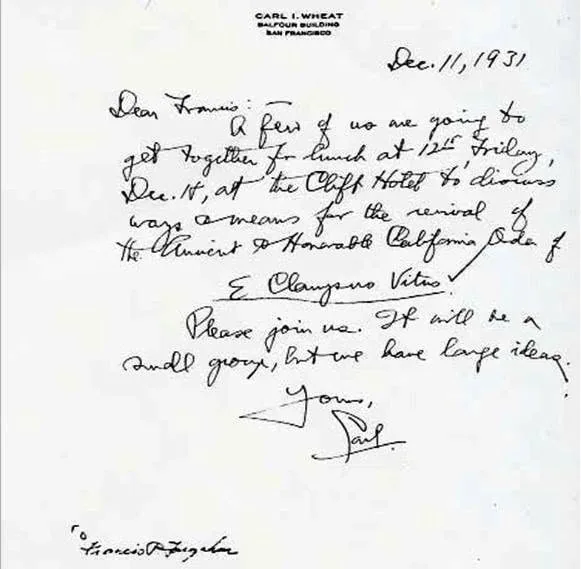
A year later, on a Friday in December 1931, Wheat called a small group to the Clift Hotel “to ‘discuss’ ways & means for the revival of the Ancient & Honorable California Order” of E Clampus Vitus. He promised his guests nothing but “large ideas.” Five months later the revived order made its first pilgrimage into the gold country. Within a decade it had books, chapters, plaques and that hoax. Today it has 51 chapters across the eleven western states it counts as its own, and the Historical Marker Database lists close to nineteen hundred of its markers. This is how that happened, from the record.
This is the second part of the series. Part 1 is a lodge at Cassopolis, Michigan, in 1846, the earliest yet found with its charter members named; this part takes up the order’s revival in 1931 and follows it to today.
- 22charter members of the revival
- 40years the plate of brass was believed
- 1,877entries in the order’s marker series
- 51chapters today
How this story was researched Where we looked, what the labels mean, and who helped
Where we looked. The newspapers of the revival years in the free public archives (the California Digital Newspaper Collection, the Library of Congress’s Chronicling America, the Internet Archive), the Bancroft Library’s published reports on the Plate of Brass, the order’s own books from The Enigmatical Book of Vitus (1934) to Seth Slopes’s anthologies, the historical-marker databases for the plaques, and the order’s and its chapters’ public websites.
What the labels mean. Documented marks a fact from a record of the time. New finding marks one we could not find in any published history, article or website we searched.
Who helped. Jim Cirner, a past Sublime Noble Grand Humbug of E Clampus Vitus (No. 54), opened his public albums of clippings, “ECV ® Back in the Day,” and sent us the order’s 1966 history, Then and Now; he found the Daily Alta’s report of the Senate at Benicia. Seth Slopes’s histories and the chapters’ own records of their plaques made the long lists possible.
What this is not. Project Scroll is independent and is not affiliated with E Clampus Vitus, Inc. The page tells what has been printed in public, and nothing of the order’s ceremonies. How we research ›
The re-founders
DocumentedHow it began. By Wheat’s own account in the order’s history of 1966, “it was along in the spring of the year 1930 that it dawned upon the minds of two men,” Wheat and Leon O. Whitsell, to bring the old order back; G. Ezra Dane gave “an agreement to do all the dirty work necessary for this great revival.” “Conceived in 1930, reborn in 1931” (Then and Now, 1966, p. 19). The first chapter was Yerba Buena No. 1, at San Francisco.
DocumentedThe order was already in Wheat’s work. That same March, the California Historical Society Quarterly carried Wheat’s edition of the journal of Charles E. De Long, a Yuba County storekeeper who rose to be United States Minister to Japan. On 27 April 1856 De Long wrote that he had “helped organize the E Clampsus Vitus Order on the hill,” at Young’s Hill; in May he recorded its first initiates, “by way of experiment.” Wheat’s note on the entry ran to two pages: the order “was one of the most ludicrous sideshows of life in the mines of California,” its founding place disputed, “some say at Sierra City, others at Downieville, and still others at Hangtown”126. On 25 November 1930 Wheat read from the diary to the California Historical Society, at a luncheon at the Clift Hotel, the hotel where the order would be brought back thirteen months later; the Society’s report of the meeting noted that De Long “joined the ‘E Clampus Vitus Society’”127.
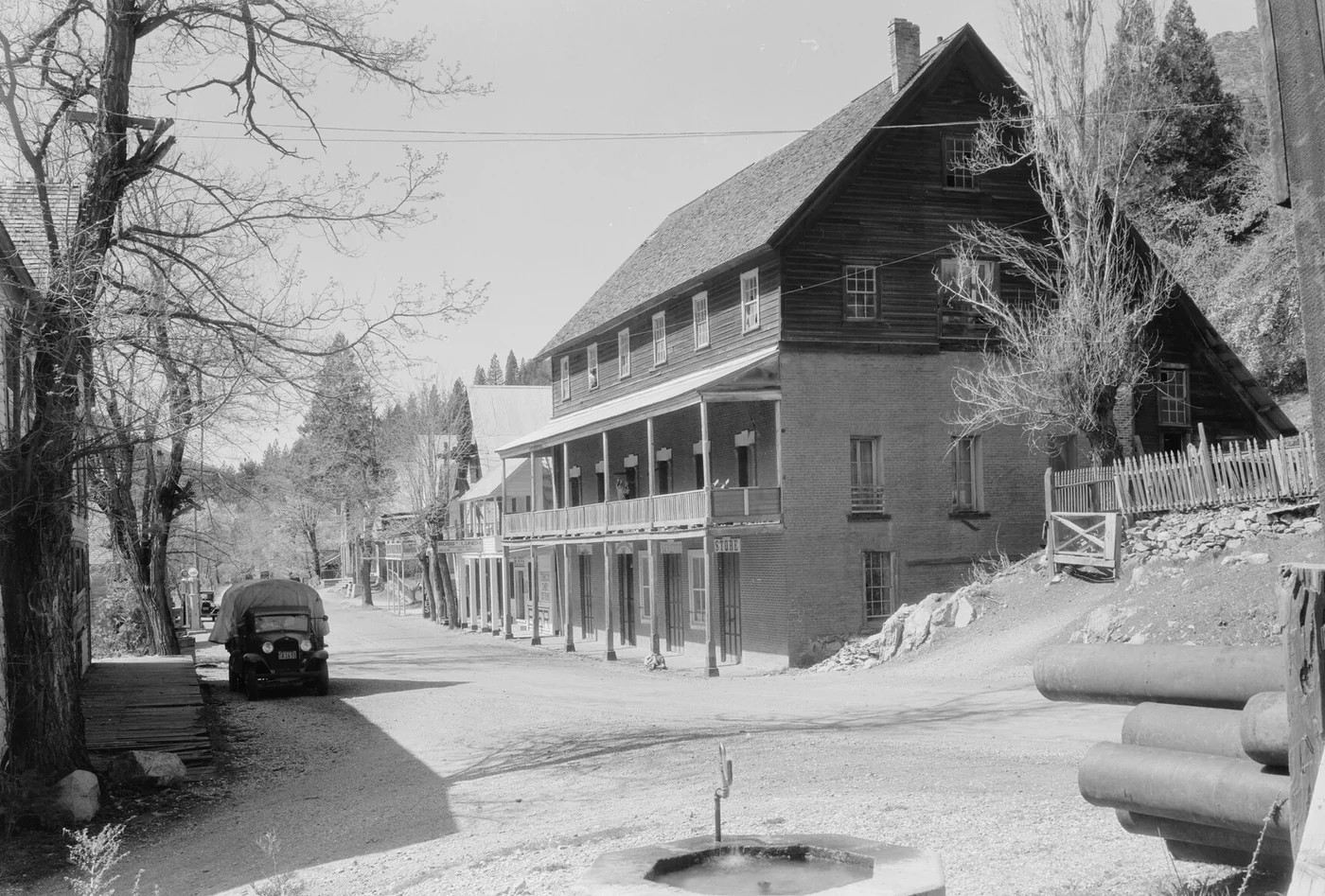
DocumentedClamptonville, 1932. The first pilgrimage set out on Saturday, 28 May 1932, in three automobiles and “one of the heaviest rains of the winter.” Eleven men went, each with an office of the old order: Moore, Wheat as Noble Grand Humbug, Ernest A. Wiltsee, Dane, George D. Lyman, Edwin Grabhorn, Whitsell, Douglas S. Watson, Francis Farquhar, Edgar B. Jessup and Thomas W. Norris. At Sierra City Moore went up to the attic of his old home and found the gray plug hat he had worn as a Clamper, “buried in attic dust for 35 years.” Of the eleven, only Moore had worn the hat before. At Camptonville, rechristened Clamptonville for the night, they were welcomed by Bill Meek, “pioneer member of the society of this place,” and “the sound of the Hewgag from the porch of the Meek store called the wayward Clampers together,” every man an officer and “all officers of equal indignity.” There Moore, “last N.G.H. of Balaam Lodge No. 107,304,” gave the new chapter, Capitulus Redivivus No. 1, its Great Charter, and was made Clampatriarch; Meek was made Grand Honorary Humbug. The old lodge’s blunderbusket, with “a barrel six feet long and a two inch bore,” went home with them to San Francisco (Appeal-Democrat, 2 and 6 June 1932; Sacramento Bee, 1 June 1932; Morning Union, 29 May 1932). Wheat was the revived order’s first Noble Grand Humbug; Douglas S. Watson followed him, and on 16 June 1934, at Auburn, Thomas W. Norris.
- Carl I. Wheat 1892–1966 · the reviver
- Lawyer and historian, born at Holliston, Massachusetts; chief counsel of the California Railroad Commission; author of the five folio volumes of Mapping the Transmississippi West, 1540–1861 (1957–63). The third President of the order, 1954–55. His plaque on the Wall of Comparative Ovations at Murphys, by William Gordon Huff, was dedicated in 1964.
- G. Ezra Dane 1904–1941 · the researcher
- Born at Pasadena; a lawyer and a writer of folklore, western history and humour, educated at Pomona College and Harvard. Wheat set him to research the order’s history (Wilson, 1995); his notes for a dissertation on the order are among his family’s papers at the Huntington Library. He wrote Ghost Town (1941) with his mother, Beatrice (Jodon) Dane, and died that October. His plaque at Columbia was dedicated on 21 September 1947.
- Leon O. Whitsell 1876–1966 · the co-founder
- Lawyer, admitted to the Iowa bar in 1900; citrus farmer and supervisor in Orange County; a member of the California Railroad Commission from 1925 to 1938, its president from 1928; Grand Master of the Masons of California, 1938–39. The second President of the order, 1945–54. His scrapbooks are at the University of the Pacific (Mss186).
- Adam Lee Moore 1847–1946 · the link
- Born at Rahway, New Jersey, on 5 May 1847; “taken in” to the old order at Downieville in 1867, by Dane’s account, and later Royal Platrix and Noble Grand Humbug of Balaam Lodge at Sierra City. He “proved to be a ‘gold mine’” of the old ways (Then and Now, p. 20). A mining man at Gold Creek and a stage driver, he married Miss Larrieu at Downieville in 1879; in 1935 a handbill billed them as “the oldest married couple who sing for the radio.” When he fell ill at ninety-six, with no income, “the Clampers of the bay region rallied to his assistance” (May 1943). He died on 13 November 1946, as his grave at Downieville records; his plaque at Downieville was unveiled on 4 July 1953 (Then and Now; the list of William Gordon Huff’s plaques gives 1955).
DocumentedThe twenty-two. The order’s own list of the charter members of the revival (Tom Barry, Hewgag Monitor, October 1986): Adam Lee Moore, Carl I. Wheat, Francis P. Farquhar, Edgar B. Jessup, Ernest A. Wiltsee, Leon O. Whitsell, George D. Lyman, Thomas W. Norris, Douglas S. Watson, James D. Stewart, Edwin Grabhorn, Charles P. Cutten, Jesse M. Whited, Lee L. Stopple, Frederick C. Clift, William T. McSorley, Henry R. Wagner, Phil T. Hanna, G. Ezra Dane, William Bull Meek, John McSorley and George N. Napoleon. Edwin Grabhorn, the San Francisco fine printer, was the first Poor Blind Candidate of the revived order (Charles Camp, in Then and Now, p. 20).
Did you know? In September 1937 Adam Lee Moore, at ninety, flew from San Francisco to Newark on an inaugural airline run with other pioneers, and in New York danced with the chorus girls at the French Casino (International News Service, September 1937). In June 1946 the Auburn chapter, Lord Sholto Douglas No. 3, gave Governor Earl Warren, later Chief Justice of the United States, a life membership. Both as clipped in Jim Cirner’s albums “ECV ® Back in the Day”.
Did you know? When the Mariposa Gazette printed the whole revived order’s roster on 4 June 1936, Yerba Buena’s forty-odd members included the director of the Bancroft Library, Herbert E. Bolton, and a young San Francisco photographer listed as “Ansel E. Adams, P.B.C.”: a Poor Blind Candidate.
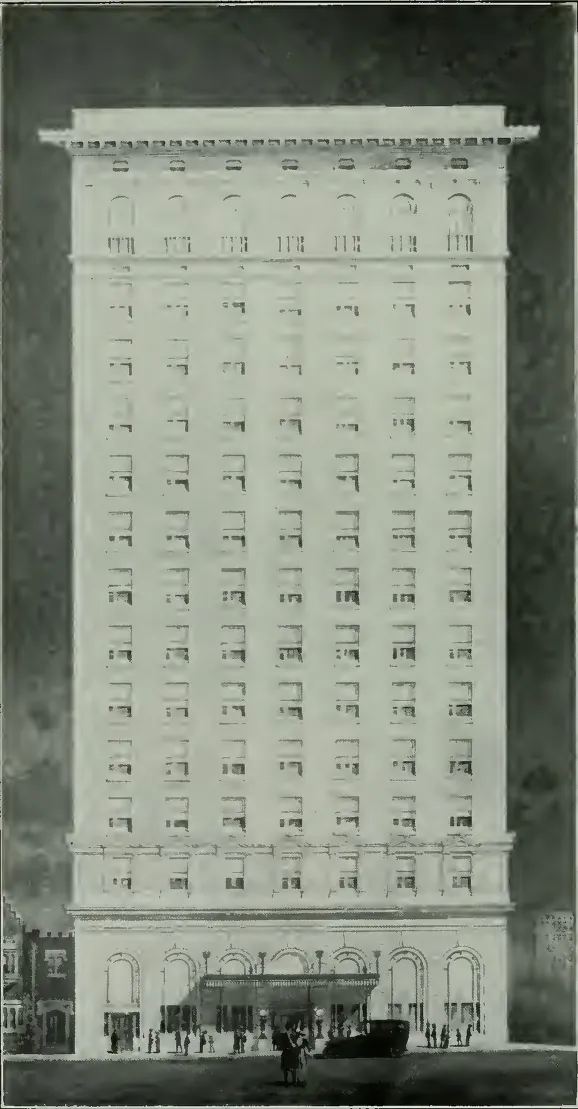
DocumentedThe lunch at the Clift. Asked in the 1960s for the date of the revival, Wheat answered, through his wife, only “1931” (Then and Now, 1966). His own invitation gives the day. On 11 December 1931, on the letterhead of his law office in the Balfour Building, he wrote to Francis P. Farquhar that a few of them were going to get together for lunch at 12:15 on Friday, 18 December, at the Clift Hotel; Farquhar came, and is one of the twenty-two. So did the hotel’s owner. The Nevada City Nugget of 20 May 1932 named “Fred Clift, proprietor of the Clift hotel,” with Wheat, Whitsell and Ernest Wiltsee, among “the membership chartering the revival of the order,” and its notice of 8 April 1932 called the brethren back to the Clift at noon “for business important to the organization.”
DocumentedThe sources differ on the year. The order’s history of 1966, the University of the Pacific’s finding aid and Barry give 1931; the Huntington Library’s finding aid for the order’s records gives 1932, and the Joaquin Murrieta Chapter’s history has Wheat as Yerba Buena’s first Noble Grand Humbug in 1932. ReadingBoth fit the record: the lunch was called for December 1931, and the first pilgrimage went out in May 1932.
The handover at Marysville, 1940
DocumentedThe Clampers of 1931 were not the only E Clampus Vitus in California. The Marysville boosters had incorporated theirs on 9 November 1915, for a period of fifty years. On 18 May 1940 “a historic meeting was held in Marysville between the few remaining directors of the 1915 incorporation” and the revivers, who came with proxies from Leon Whitsell, Thomas Norris, G. Ezra Dane, Charles Camp, Ed Jessup and V. L. Van der Hoof; Lee L. Stopple was elected President, Ronald L. Olson Vice-President and Van der Hoof Secretary of the corporation (Then and Now, pp. 20–21). The revivers had found, Eric Falconer remembered in 1950, that “State Senator W. P. Rich and a group of Marysville Clampers had beaten them to the punch. … They supplied the organization and we threw in the enthusiasm.”
DocumentedWhat the order was for. Six years earlier the revivers had put their purpose in their own words: “To foster and perpetuate the glamour of the Days of Gold, to pass the staff of relief to those anxious to receive it, to keep a friendly eye upon the widows and orphans especially the widows” (Appeal-Democrat, June 1934). The order tied itself to history, too: “All PBC’s must prove an interest in California history,” and in 1963 the Argonauts were chartered, a chapter “restricted to members or those eligible for the Society of California Pioneers”; its delegate, Hobart Lovett of Berkeley, became the order’s Clamparchivist when the office was created (Then and Now). The chapter was dissolved in 1972, still in good standing; Ken Castro’s plaque book of 1981 records it. As Sedley Peck of Platrix put it in 1940, “In addition to a little horseplay, its members are engaged in protecting and preserving the archives and historical spots and monuments which are about to be engulfed by an ignorant and unfeeling generation.”
DocumentedThat September, at Sonoma, the new board made Adam Lee Moore its Honorary President: “the oldest Clamper and the only surviving Noble Grand Humbug of the Gold Region,” Clampatriarch for eight years, and for two years “the accredited successor of his late majesty Norton I, Emperor of the United States and Protector of Mexico, under the title of Adam I.” He signed the charter of North San Juan that day as “Emperor of the United States and Protector of Mexico.”
DocumentedBurying the oil lamp. North San Juan already knew the Clampers. When electric light reached the old mining town in May 1939, they came up to hold a funeral for the oil lamp. The motto for the day was “Fiat Lux!”, “Let there be light”; Moore, at a reported 100, was to arrive from Nevada City by stagecoach; there would be two parades, one by torchlight, and about a hundred new members initiated. Clyde Gwin of Nevada City, Grand Humbug of the William Bull Meek chapter, arranged the program (“Clampers Will Bury San Juan’s Oil Lamps at Fiesta,” Sacramento Bee, 8 May 1939, as clipped in Jim Cirner’s album).
Did you know? The revived order went to Washington twice. On 18 March 1937 a “Grand Triumvirate” of Dane, Whitsell and Moore gave Carl Wheat and Milford Springer plenary power for “Cherry Tree Chapter, No. 11,” to meet “within the shadow of that vast symbol” erected to George Washington; the Booke of Brasse announced the infant chapter “obstetrically delivered in the Roosevelt Hospital.”
The books of the revival
DocumentedThe revived order announced itself in print, in small, limited editions full of mock scholarship.
- 1934 Carl I. Wheat, The Enigmatical Book of Vitus (Yerba Buena): the first, a small brown book of about forty pages.
- 1935 The Curious Book of Clampus, or Gumshaniana, “the second official publication”: how California was first discovered by a Chinese navigator, Hee Li.
- 1936 My Darling’s ECV: The Esoteric Book of E, from Ward Ritchie’s press for the Platrix chapter, with Boyd Stutler’s article on Ephraim Bee.
- 1937 Ye Preposterous Booke of Brasse, “the fourth booke,” bound to look like the plate itself: Drake’s plate claimed for the order (below), and the charter of a chapter at Washington. Jim Cirner’s copy was Ed Grabhorn’s own.
- 1939 What Was Your Name in the States? The Clampers’ Book of Balladry, or Hewgagiana.
- 1949 Credo quia absurdum (Placerville): the order’s anthology of its own history; and Wheat’s “The Clampers” in the Pacific Historical Review.
- 1957 Fool’s Gold (Los Angeles: Platrix Chapter), 300 copies, with a facsimile of an old gold-camp lodge’s ritual.
- 1961 The Clamper, the order’s paper, edited by Coke Wood, in print by May.
- 1966 E Clampus Vitus: Then and Now, 1852–1966 (Stockton), the order’s history of itself.
First editions of several of them are at the Huntington Library and the Sacramento Public Library.
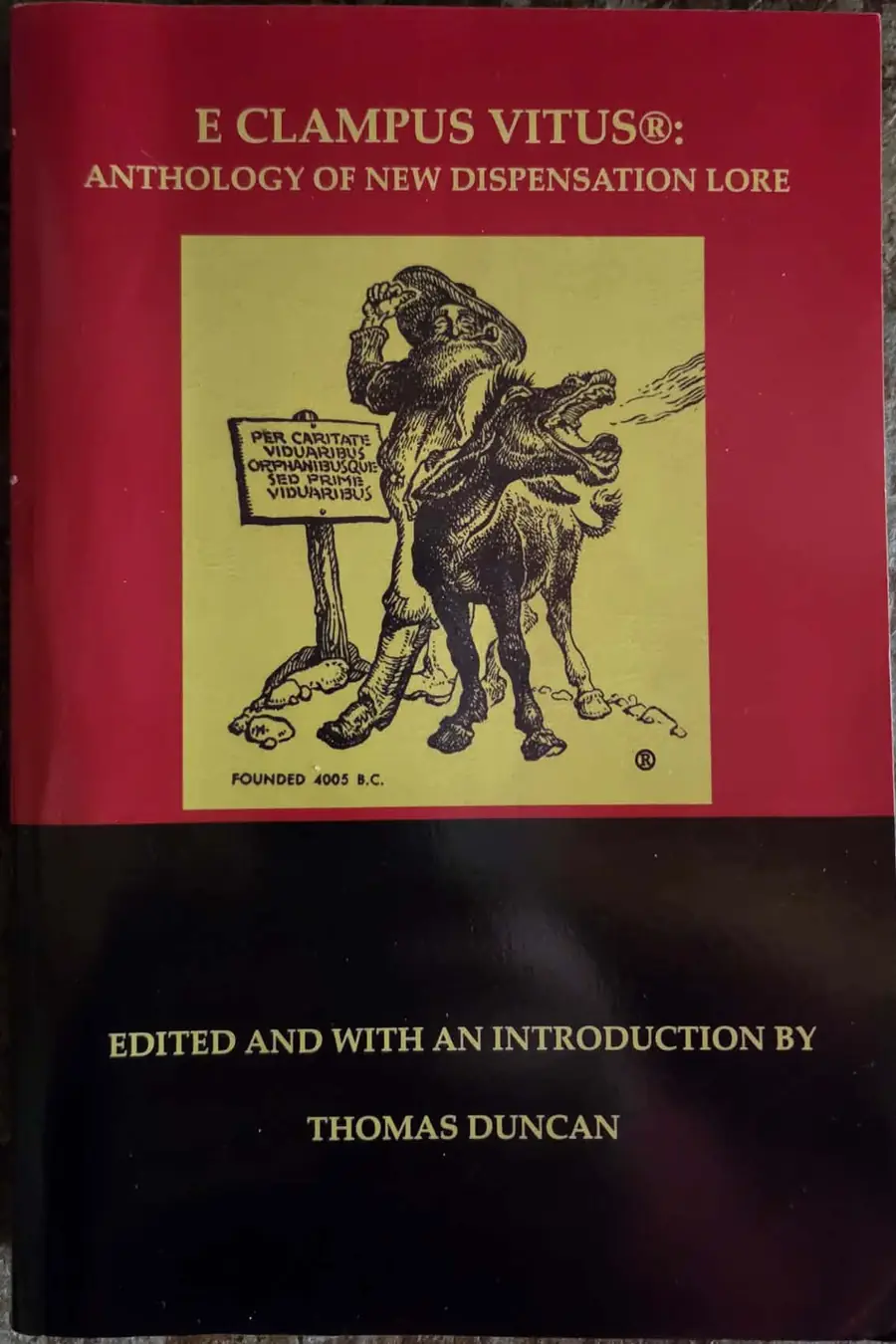
DocumentedThe Clampers call the revived order the New Dispensation, and these were its scriptures. “In The Enigmatical Book of Vitus the story of the resuscitation of the Order has been told,” Wheat wrote in 1949, “and the spirit of Credo quia absurdum has been outlined in The Curious Book of Clampus. Later, The Esoteric Book of E and Ye Preposterous Booke of Brasse carried the tale farther.” In 2009, seventy-five years after the first of them, Thomas Duncan, a Berkeley professor emeritus and an initiate of the Matuca chapter, gathered six of them into one volume, E Clampus Vitus: Anthology of New Dispensation Lore: “For Clampers, this anthology is essential for a more complete understanding of their society. For non-Clampers, this anthology provides a new perspective on the Gold Rush.”
Drake’s Plate of Brass, 1936–2003
DocumentedIn 1936 a brass plate was found near San Francisco Bay, inscribed as the plate Francis Drake was said to have left in 1579 to claim the land for Queen Elizabeth. Herbert E. Bolton, director of the Bancroft Library, announced it as genuine in 1937, and the plate went to the University of California. The Clampers claimed it at once: “we should now re-claim [the plate] as the rightful property of our ancient Order” (Ye Preposterous Booke of Brasse, 1937).
DocumentedForty years later the Bancroft had the metal tested. Its report, The Plate of Brass Reexamined (1977), found the brass too even and too rich in zinc for Drake’s time. Who made it was told in 2003. An article in California History, made public in 2003 in the issue dated 2002, by Edward Von der Porten, Raymond Aker, Robert W. Allen and James M. Spitze showed that “the playful E Clampus Vitus historical fraternity, also known as the Clampers, was responsible for the prank,” as the University of California put it on 18 February 2003. By their account G. Ezra Dane instigated it; George Haviland Barron designed the plate; George C. Clark cut the letters; Lorenz Noll and Albert Dressler are believed to have helped; and someone painted “ECV” on the back in fluorescent paint. Of the makers, only Dane is known to have been a Clamper, and the order’s leaders “did not sanction the joke.” The Bancroft’s officials called the article “very persuasive,” and said the plate would remain on display; today the Bancroft shows a facsimile of it in its third-floor foyer.
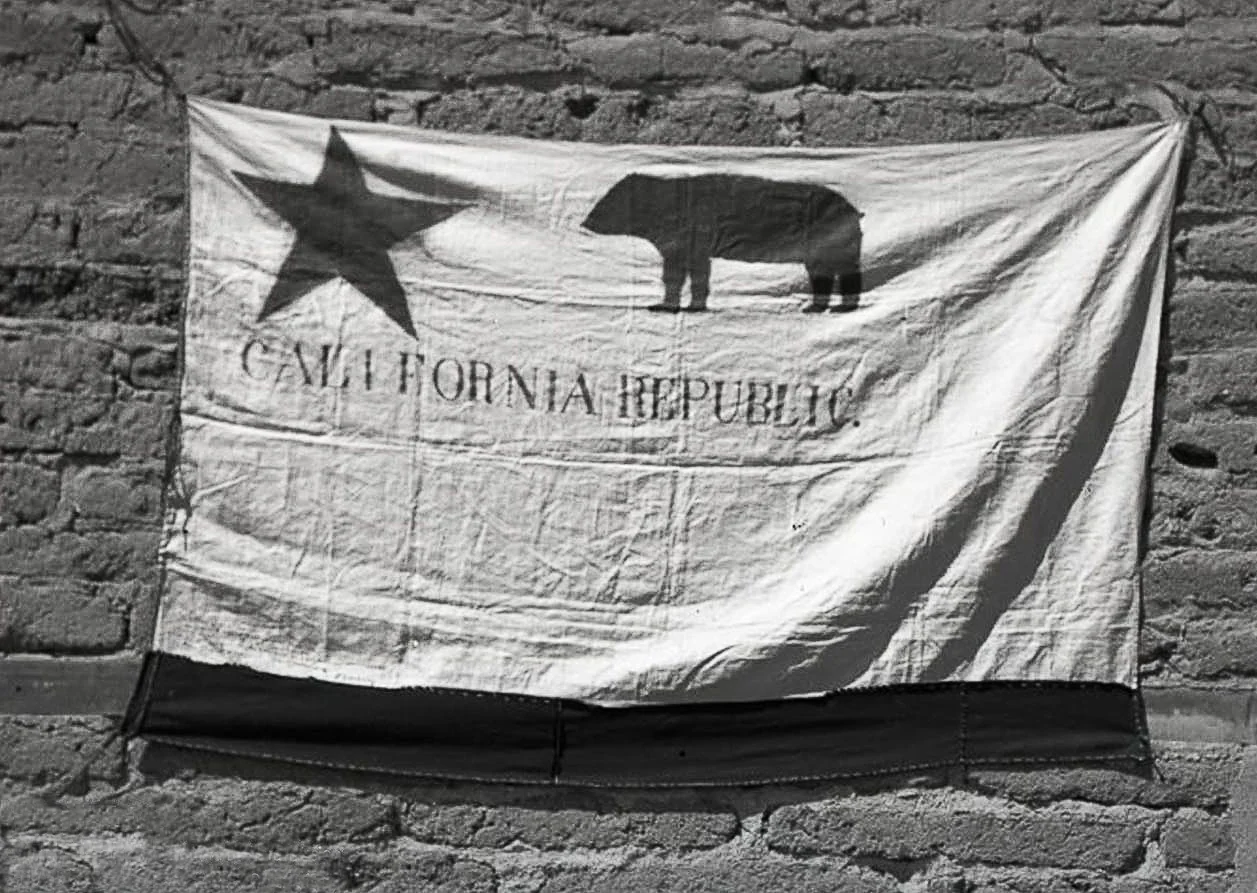
DocumentedA hoax before the hoax. The plate was not the first joke of Dane’s circle. At a dinner at Sutter’s Fort early in 1936, Harry Peterson, the fort’s curator and “a new member,” showed the brethren an “original Bear Flag” said to have been saved from the fire of 1906; it had been “made ‘of whole cloth’ by the curator,” and “some of those who were present still think Peterson should have been ducked in the river” (a Sacramento paper, 8 March 1936). “It is the custom at a meeting of E. Clampus Vitus for each chapter to present some hoax,” the Sacramento Union explained, and some forty-six of forty-eight members “swallowed it whole” (5 April 1936). Both as clipped in Jim Cirner’s albums “ECV ® Back in the Day”.
DocumentedThe joke that told the truth. In 1937 the Clampers’ own Booke of Brasse hailed the find by “our brother clampers, Bolton and Watson,” as “authentic beyond any shadow of suspicion,” then went one better. Under ultraviolet light, it reported, the plate showed “the faint phosphorescent outline of an earlier inscription,” three letters, “E.C.V.”: “indisputable proof” that Drake’s chaplain had been Noble Grand Humbug of a Clampchapter aboard the Golden Hind. Sixty-six years later the investigators of 2003 told of “ECV” painted on the back of the real plate in fluorescent paint. The joke had been in print all along: the investigators of 2003 counted the Booke’s “E.C.V.” among the hints the plate’s makers left.
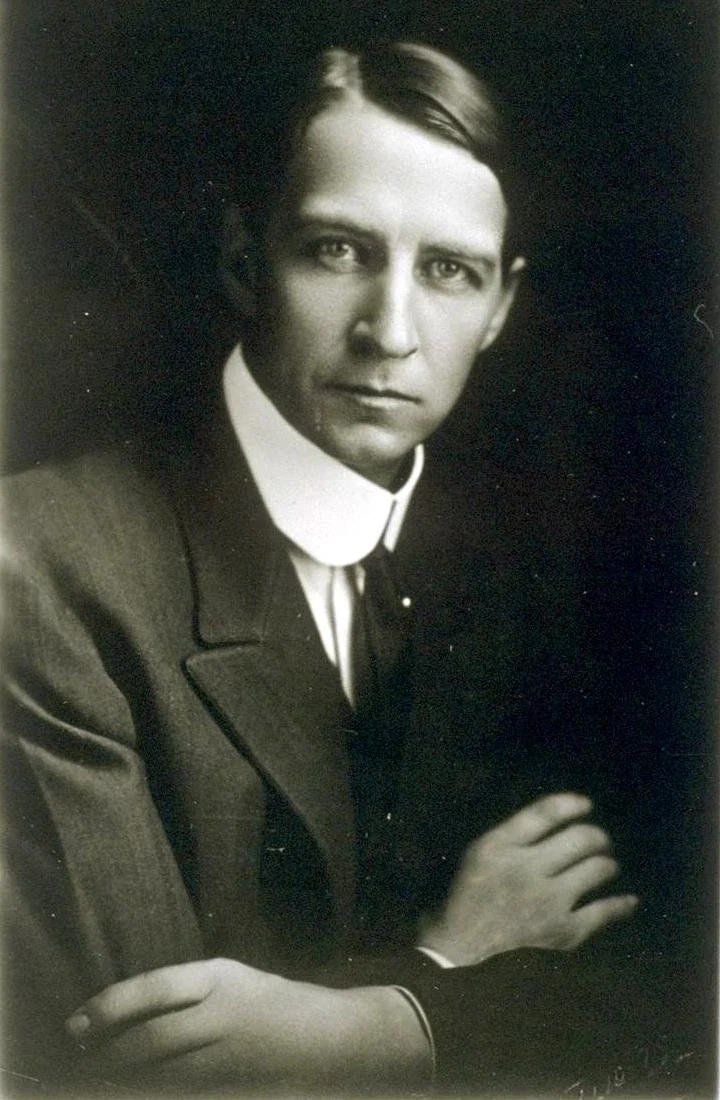
DocumentedDrake on the menu. The Booke keeps the minutes of the Clampers’ meeting of 6 February 1937, at the Wells Fargo museum and then dinner at the Ellis Saloon, with Dane, as Noble Grand Humbug, for toastmaster. Among the speeches: “Bolton expostulated at some length on Drake.” That was the month the plate reached him, and two months before he announced it to the California Historical Society, on 6 April 1937. Bolton, by every account, was the joke’s target, not one of its makers.
DocumentedThe answer from Tuolumne. The Clampers also gave Drake a reply. On 29 May 1937, at their sixth annual pow-wow, held at the invitation of Chief William Fuller of the Me-Wuk at the tribal roundhouse on the rancheria above Tuolumne, Chief Fuller, the order’s Grand Honorary Humbug, revoked Drake’s grant of 1579, “in virtue of his authority as the legitimate successor of the original Great Hi-Ho,” and a counter-plate “of similar size and shape to that left by Sir Francis Drake” was unveiled on a stone monument beside the roundhouse. G. Ezra Dane, as Noble Grand Humbug, wrote the notice; the anthropologists Ronald L. Olson and Edward W. Gifford of the University of California arranged the day with Chief Fuller (Tuolumne Prospector, 21 May 1937; The Banner, Sonora, 27 May 1937; United Press, 27 May 1937). The Matuca chapter later honored Chief Fuller with plaques of its own: at Mi-Wuk Village in 1963, five years after his death, and at Bald Rock Ranch, his birthplace and the old pow-wow ground near Twain Harte, in 1967.
ReadingIt was a Clamper’s joke at the expense of a fellow Clamper: Bolton was a member too, and the plan, by its makers’ account, was to end it with “a good laugh over a dinner table.” The dinner never came. Dane died in October 1941, with the plate still in the Bancroft’s keeping as Drake’s, and his part in it was not told until 2003. No hoax in American history has a better claim to the motto Credo quia absurdum.
DocumentedThe plate’s long career as the real thing. For forty years the plate was California’s, and its story only grew. Jim Cirner, who collects every telling of it that takes the plate at its word, keeps these in his album of the hoax:
- 1937The Pony Express Courier tells how a chauffeur, William Caldeira, said he had found the plate near Drakes Bay in 1933 and tossed it from his car near Greenbrae, where Beryle Shinn picked it up in 1936; the California Historical Society rewarded Shinn with $2,000. Already there were “rumors that the metal is of a type later than Drake’s time.”
- 1948The state’s Centennial Caravan carries it as an exhibit: “The brass plate affixed by Sir Francis Drake on California shores in 1579.”
- 1950A state schoolbook, Irmagarde Richards’s Early California, pictures it with its words for children to read.
- 1965A teacher’s manual assures teachers that “scientists are sure” it is the one Drake left.
- 1977The Bancroft’s tests find modern brass.
- 2003The makers are named.
- 2017The Grand Council publishes the whole joke itself.
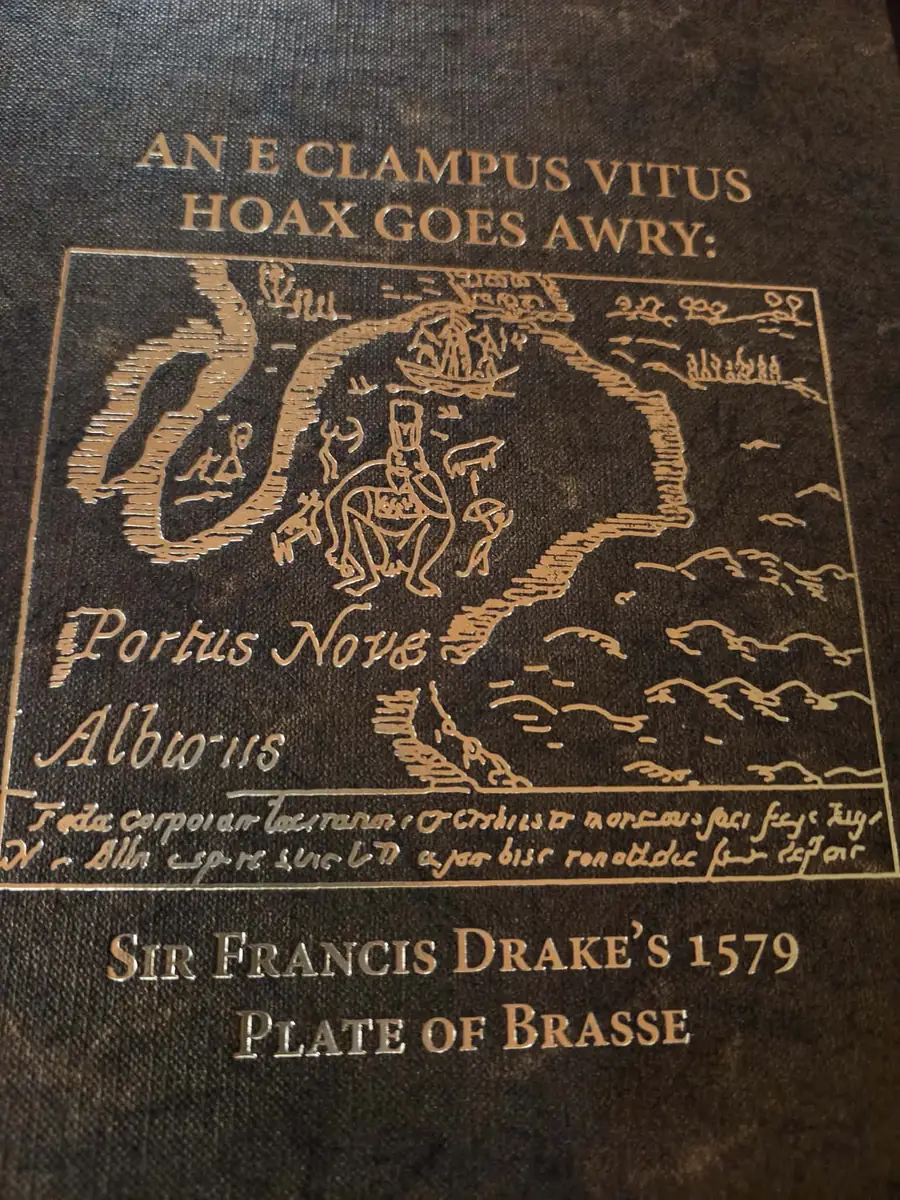
DocumentedThe order has since told the story itself, and with relish. In 2017 its Grand Council published An E Clampus Vitus Hoax Goes Awry: Sir Francis Drake’s 1579 Plate of Brasse, by Robert J. Chandler, James M. Spitze, Stephen Zovickian and David Holmes; Spitze was one of the four who had named the makers in 2003. Its cloth cover is stamped in gold with “Portus Novae Albionis,” the little view of Drake’s harbor in New Albion from Jodocus Hondius’s map of about 1595.
The plaques
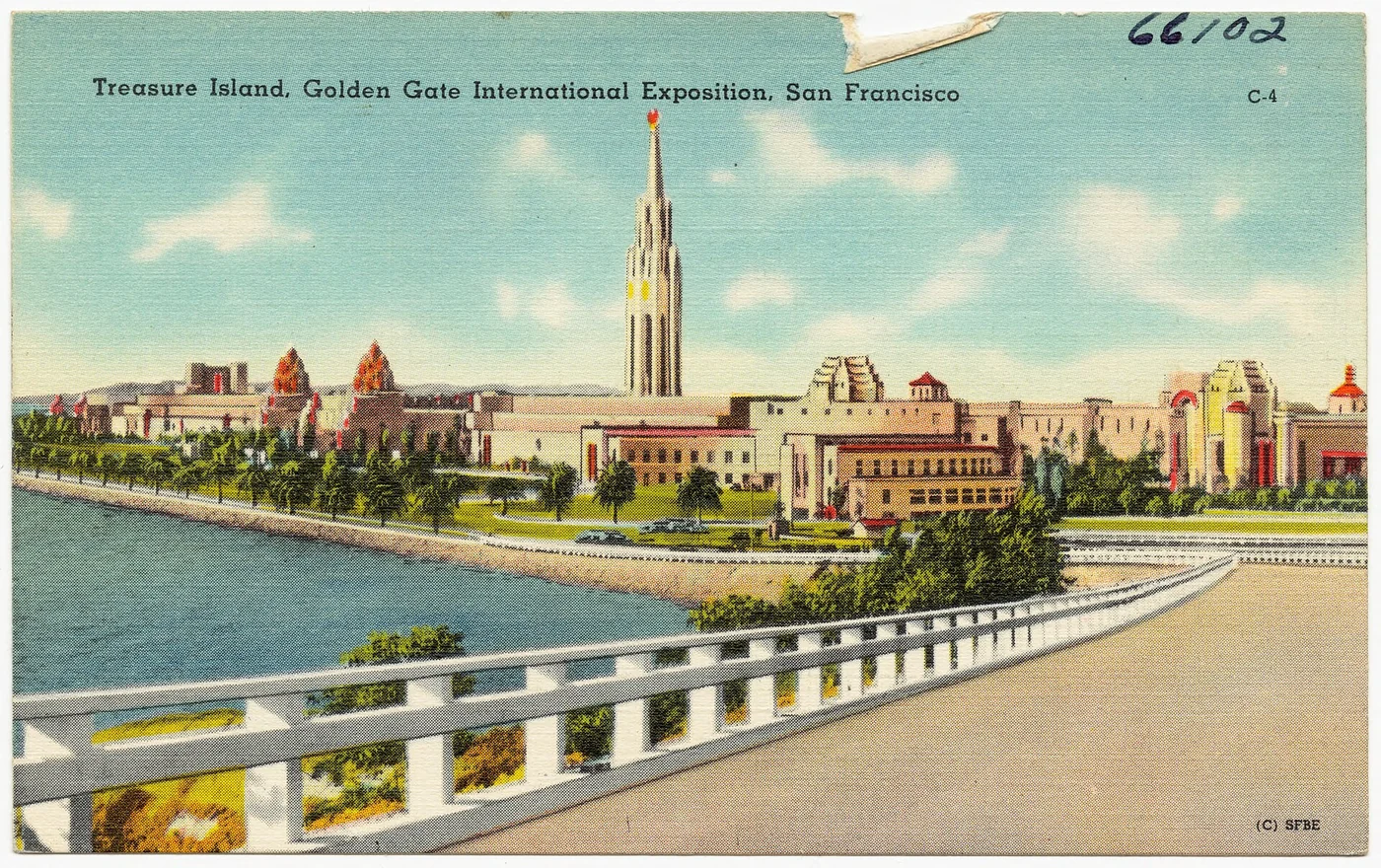
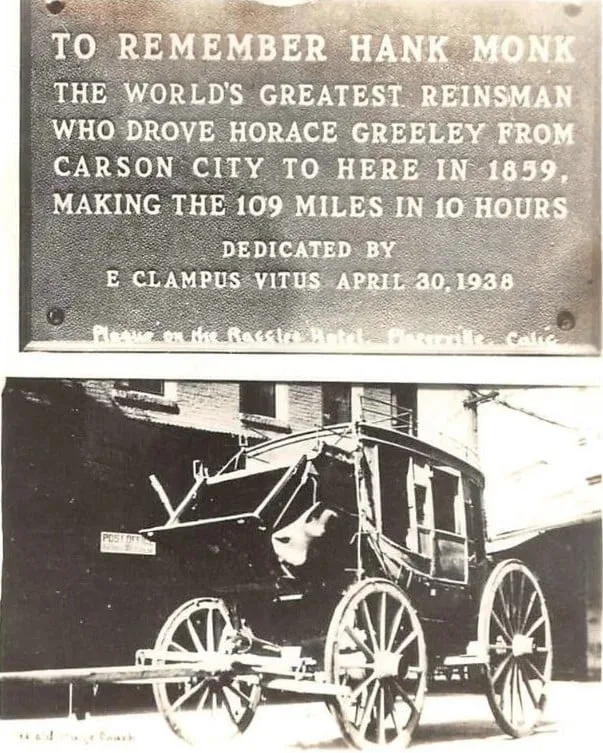
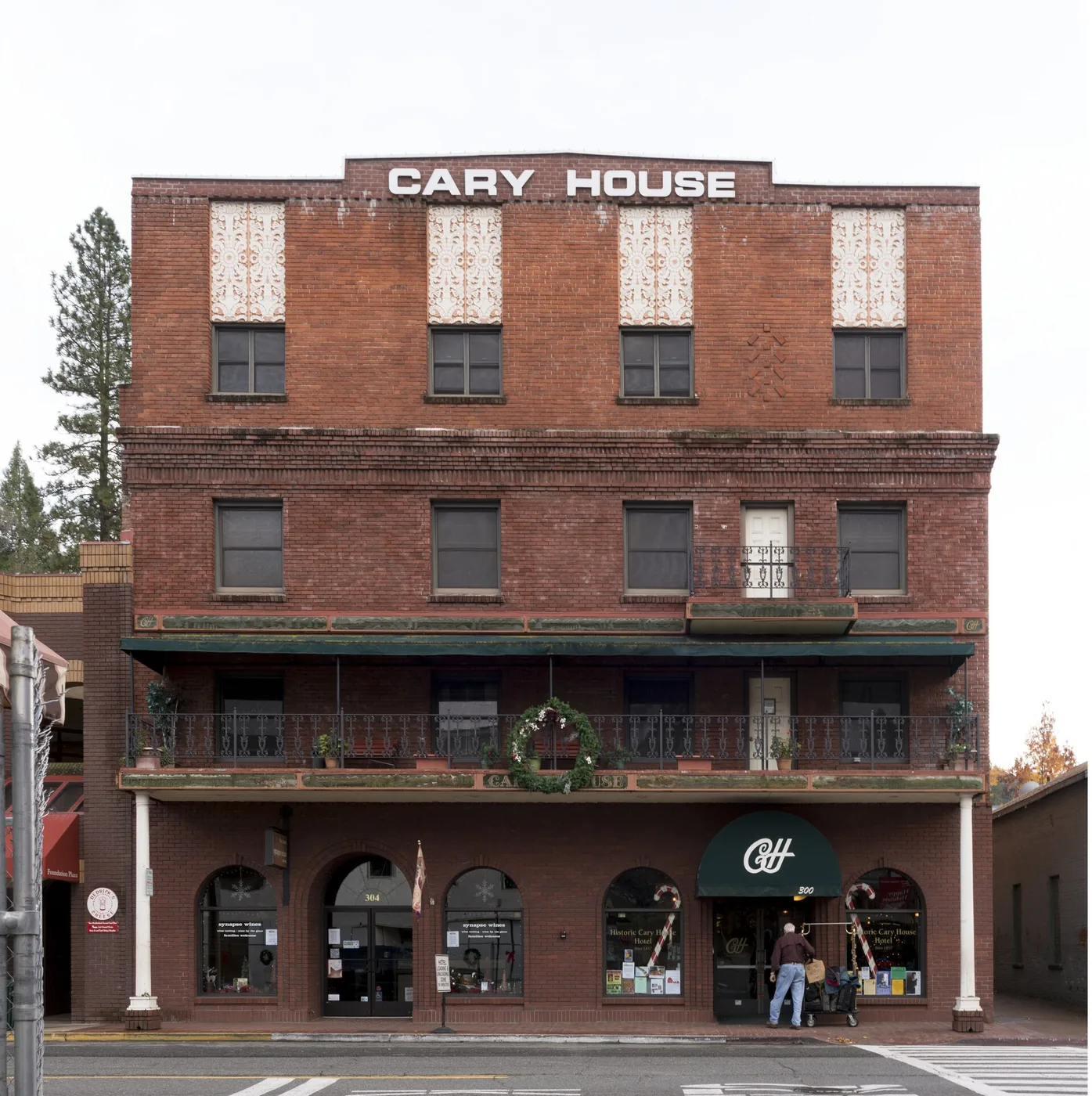
DocumentedThe plaques came early. The first, by the Platrix chapter’s own history, was unveiled on 15 September 1934 at Roger Dalton’s ranch in Glendora: “This monument, dedicated by E Clampus Vitus, September 15, 1934, to the memory of the forgotten miner, marks the place of discovery of gold in San Gabriel Canyon, 1854.” On Washington’s Birthday, 22 February 1936, Yerba Buena and Platrix together set one at Sutter’s Fort, where “James W. Marshall on January 28, 1848, here disclosed to Capt. Sutter his discovery of gold made at Coloma four days before”; that June came Moffat’s Mint at Mariposa, and on 29 January 1938 a plaque on the old Montgomery Block in San Francisco to Duncan Nicol, who “invented and served Pisco Punch,” benefactor humani generis. The James W. Marshall chapter was chartered at Placerville on 30 April 1938 “with the dedication of a plaque to Hank Monk,” the stage driver (Then and Now, p. 20): “the world’s greatest reinsman,” the plaque says, who drove Horace Greeley over the mountains from Carson City in 1859. It went up on the Raffles Hotel, as the old Cary House was called from 1926 until 1979, and the city’s list of markers now places it inside, in the hotel’s dining room. William Gordon Huff’s plaque for the “Grand Procrastination” of Steinbeck’s Tortilla Flat was dedicated the same year, though, as its own text admits, “It took 47 years however, to get around to mounting it”: it went up in 1985. John M. Studebaker’s followed at Placerville in August 1939. Emperor Norton’s had a harder road. It was unveiled at the San Francisco terminal of the new Bay Bridge on 25 February 1939, with Charles Camp as Humbug, on the day the Clampers on Treasure Island were feting Adam Lee Moore, but “something got fouled up, and we were denied permission to place the plaque in the terminal,” Yerba Buena’s Humbug Eric Falconer said in 1950, when Lee Stopple still had the bronze and the chapter set out to honor the Emperor “eleven years late.”
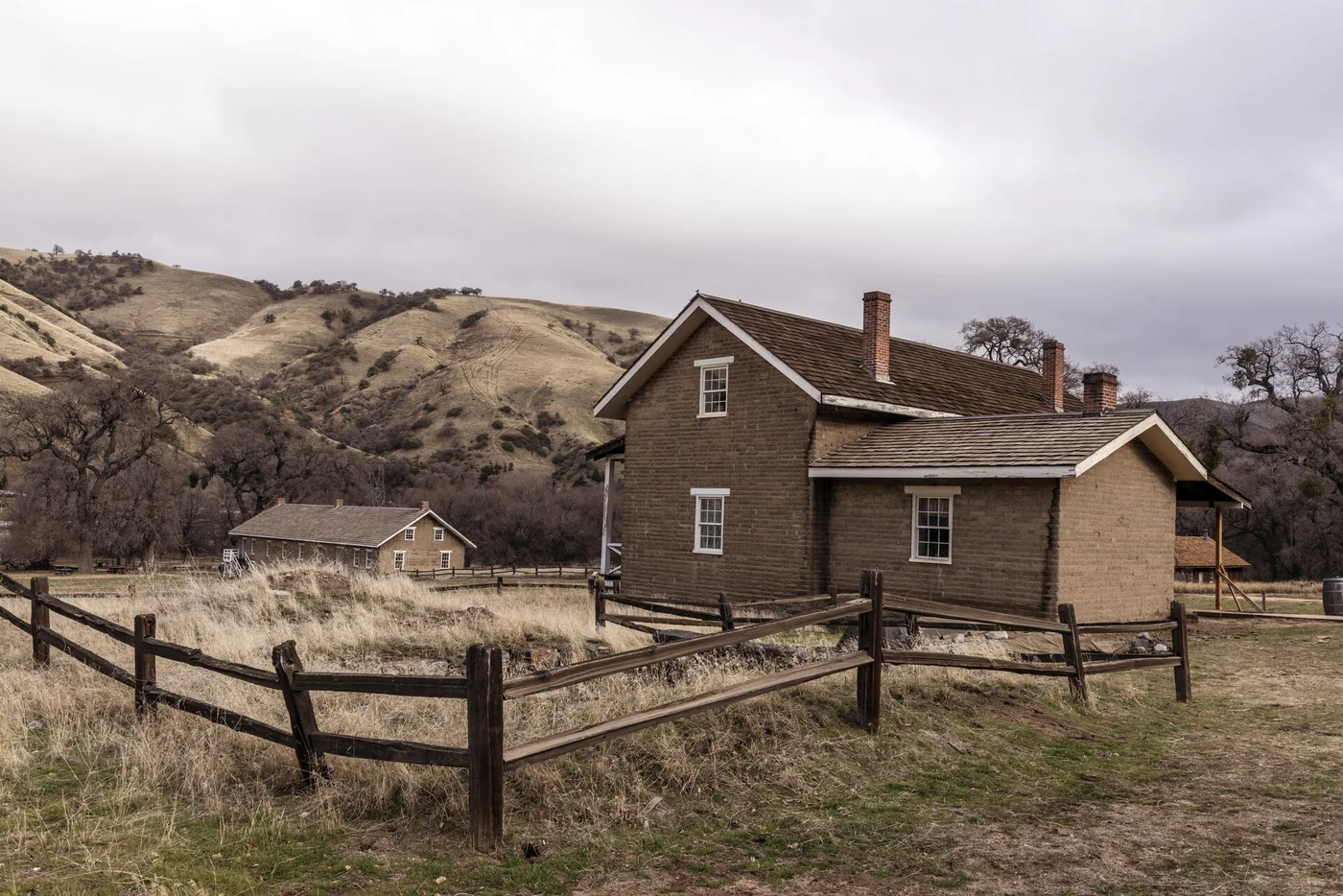
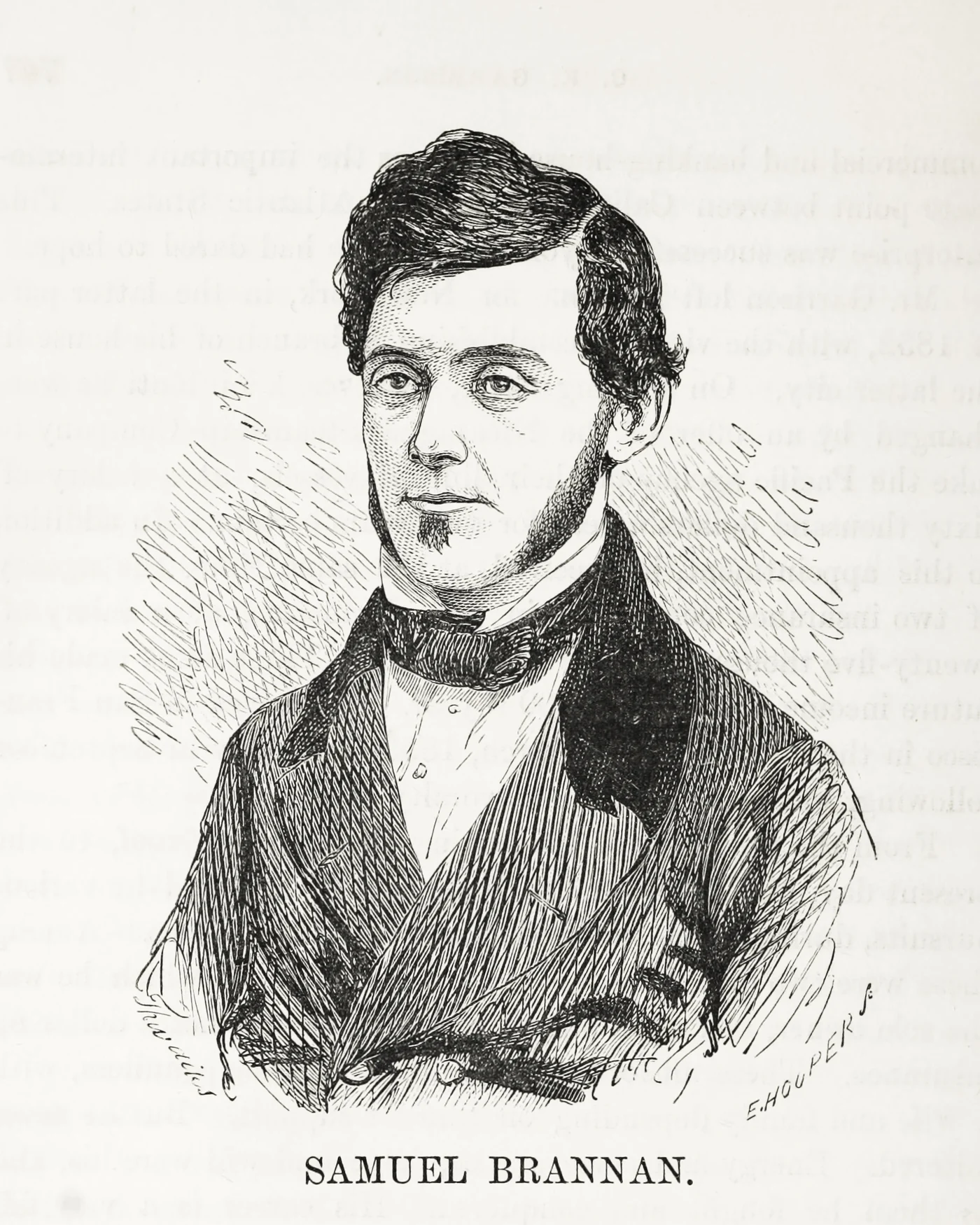
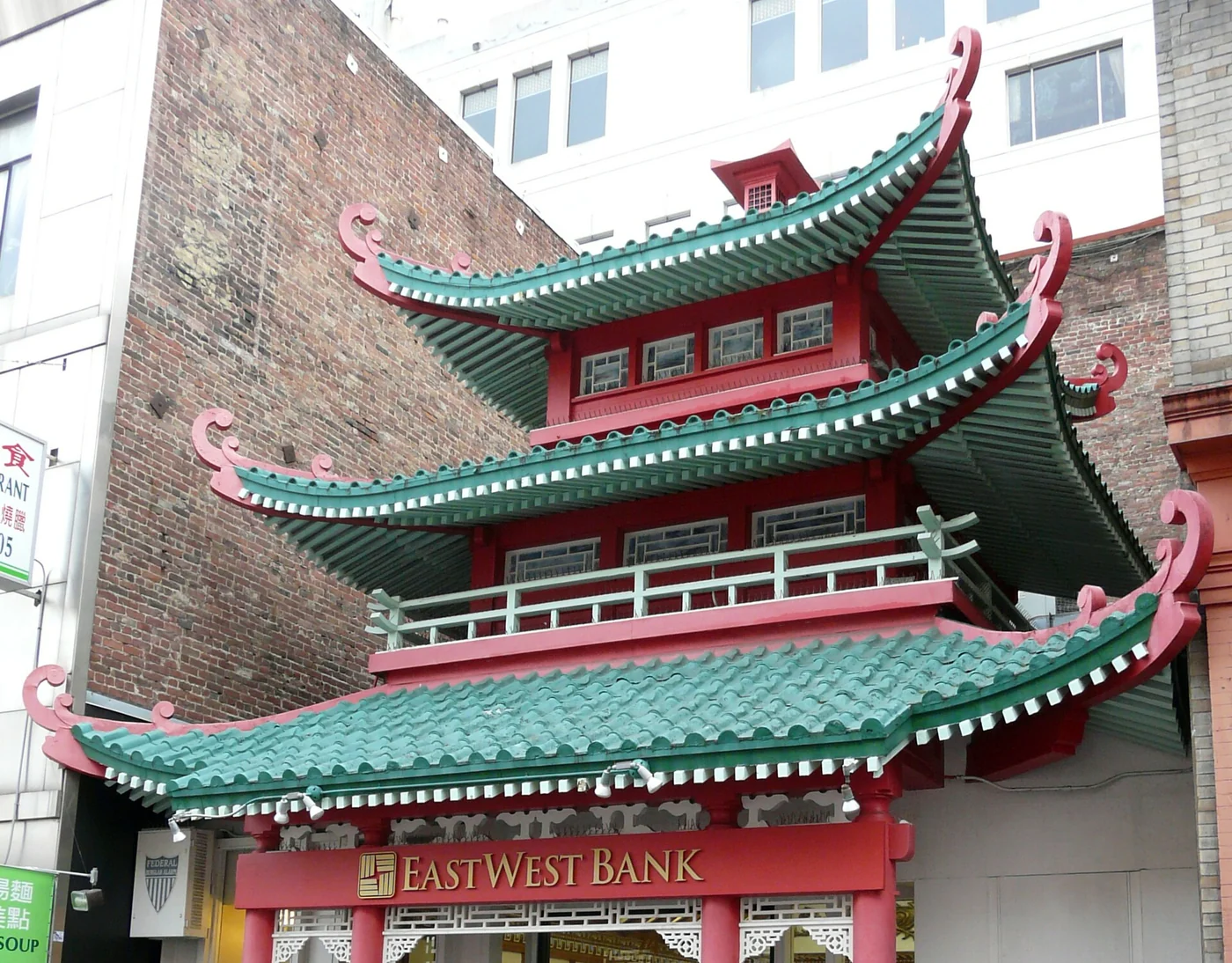
DocumentedHonors and plaques, 1936–37. One of the earliest is still where they put it. On 6 February 1937, at the Chinese telephone exchange on Washington Street in San Francisco, Ad Schuster gave an oration on Sam Brannan and unveiled the plaque “placed by the Clampers on the site of the Office of the California Star” (the Booke of Brasse’s minutes). Its words are short: “On this site January 9, 1847 the California Star, the first newspaper in San Francisco, was published by Samuel Brannan.” It is set in the porch of the old exchange, now a bank, at 743 Washington Street. In April 1936 the Clampers rode out to Camp Cady and Calico, where they made Bob Greer, the last surviving miner of the Calico boom, a Grand Honorary Humbug. In October 1937 at Fort Tejon they unveiled “a plaque bearing the names of all the soldiers buried in the little cemetery,” seven privates and Lt. Thomas F. Castor. Their meetings, the Los Angeles Times said, were “odd mixtures of roistering horseplay and serious purpose. They always meet at some historic spot, and usually unveil a plaque” (Lee Shippey, 20 October 1937). The Camp Cady and Fort Tejon reports as clipped in Jim Cirner’s albums.
DocumentedThe forgotten, remembered. Many of the order’s plaques honor people the histories left out. In 1956 the Clampers set a plaque to the Chilean miners carried off by an epidemic near Placerville in 1852. In 1966 the James Savage chapter set a plaque at the Chinese cemetery at Borden. For the golden spike centennial in May 1969 a plaque at the Confucius Temple in Sacramento honored “Central Pacific’s Other Big Four,” the Chinese railroad workers, and in 1976 Platrix set one beside the Chinese Historical Society’s marker to “over three thousand Chinese who helped build the Southern Pacific Railroad.” In 2007 the Clampers gave Juana Briones, the Californio pioneer of San Francisco, a new headstone at Holy Cross Cemetery. All from clippings in Jim Cirner’s albums “ECV ® Back in the Day”.
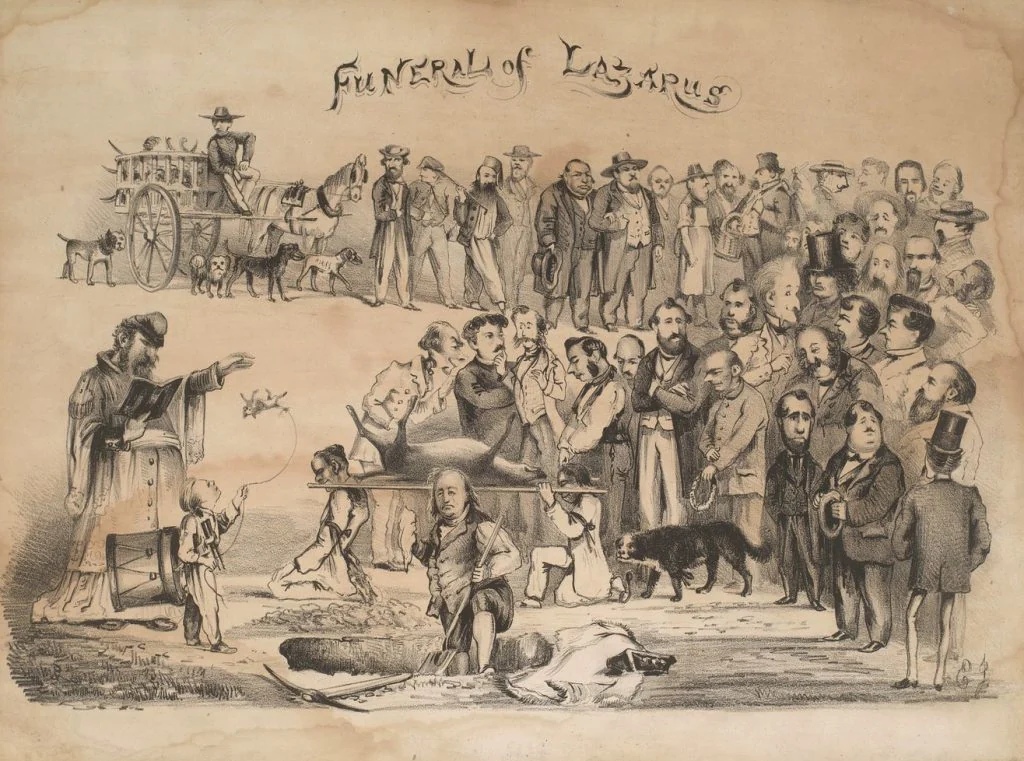
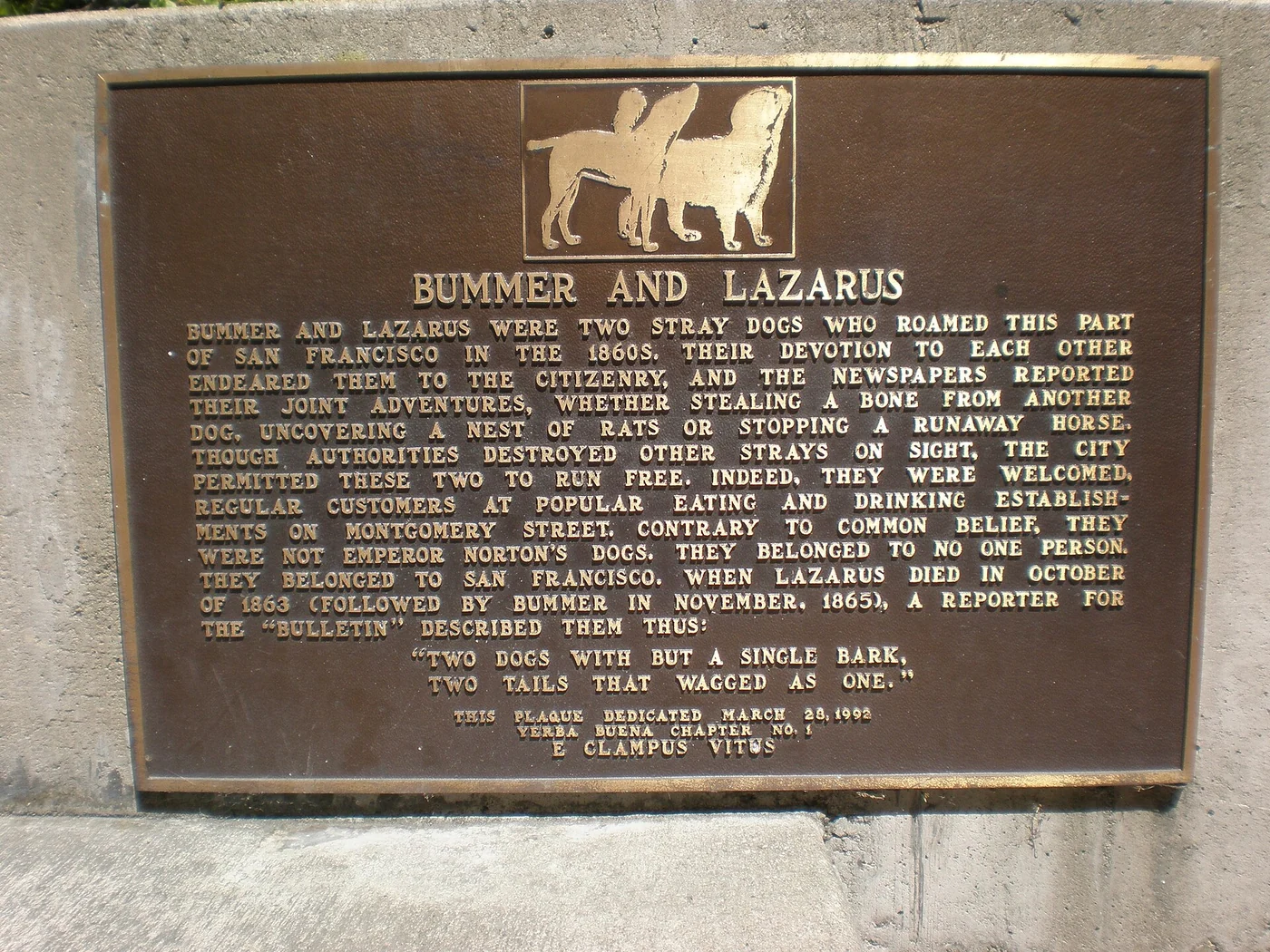
DocumentedFunny, and true. The plaques keep the order’s sense of humor. In 1957 the Clampers “set out to dedicate a memorial plaque on a ghost town and couldn’t find the place”: Mormon Island lay under Folsom Lake, so the plaque was to go on a hilltop nearby (Oakland Tribune, 11 April 1957). At Placerville in 1959 “the gentle hearts of many Clampers” were “distressed that these gents, who gave so much to publicize Hangtown,” the three men whose hanging gave the town its name, “appear to have been hanged in their underwear and that their grave is unmarked.” In 1972 a plaque at Chester saluted the lumberjacks: “At work they were prodigious, at play preposterous, and although their skid road became skidrow, they gave the forest to our nation.” In 1973 Las Plumas del Oro set the “World’s First Underwater Plaque” for drowned Prattville, the “Atlantis of Almanor,” by heaving it into Lake Almanor. In 1992 more than a hundred Clampers dedicated a plaque at the Transamerica Pyramid to Bummer and Lazarus, the dogs of Emperor Norton’s San Francisco, and gave $111.11 to the SPCA; and in 1993 the Julia C. Bulette chapter raised a monument to Mary Jane, a Comstock mine mule: “The within was only a mule. Still, she was nobody’s fule. Stranger, tred lightly.” All from clippings in Jim Cirner’s albums “ECV ® Back in the Day”.
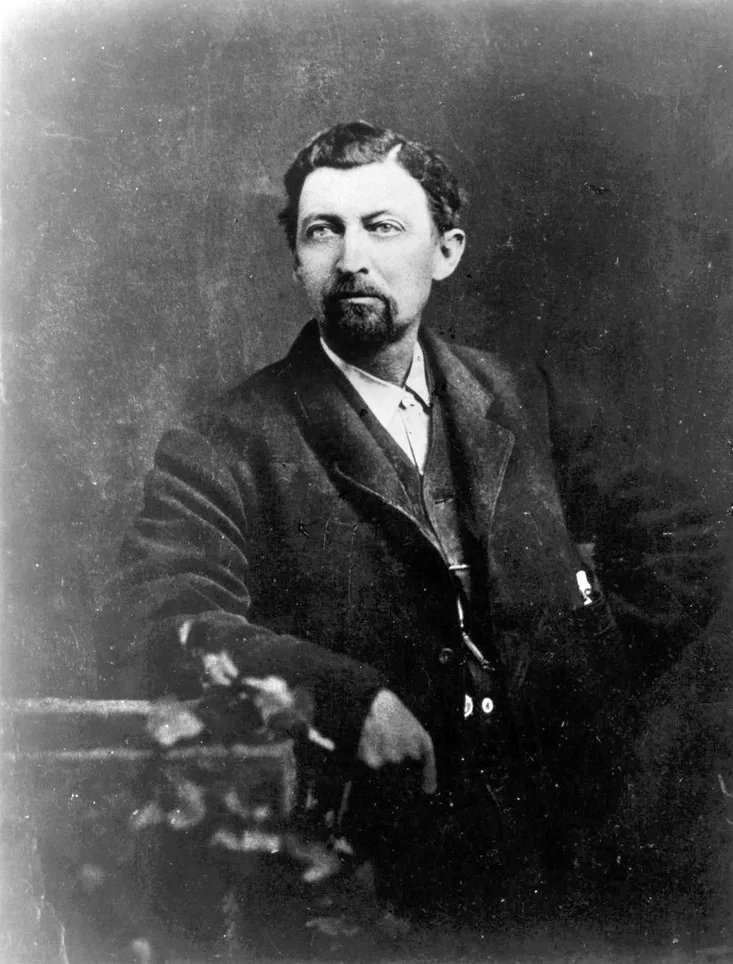
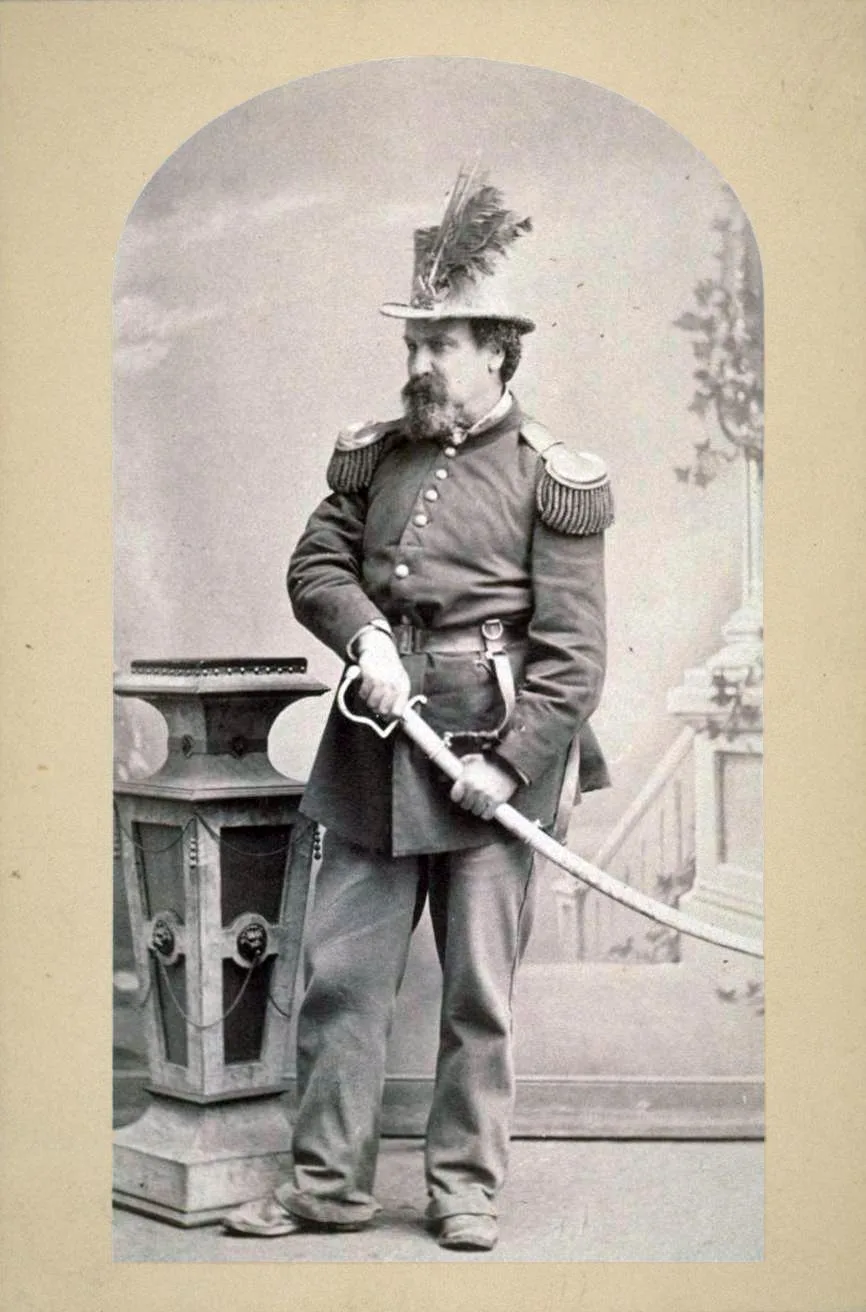
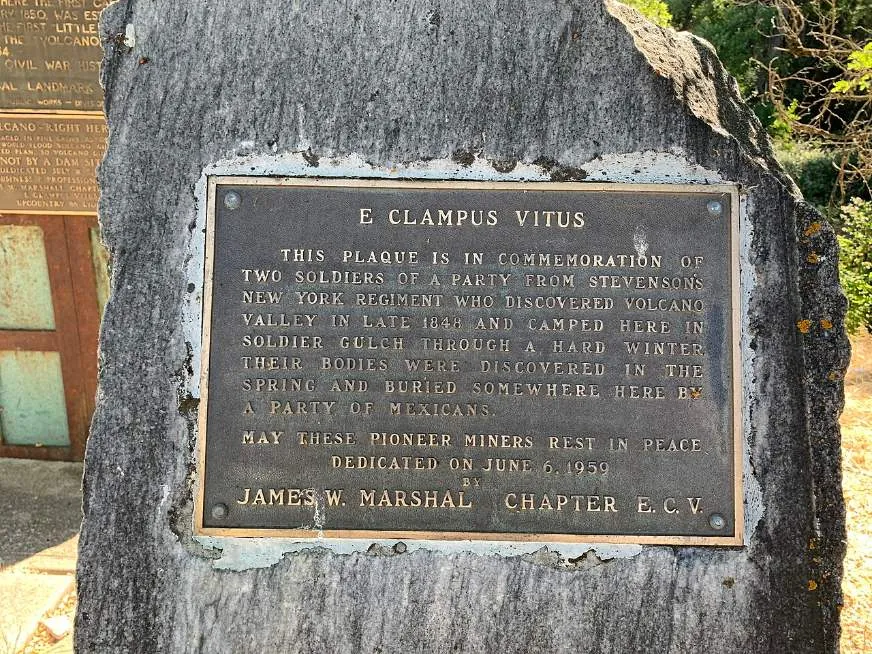
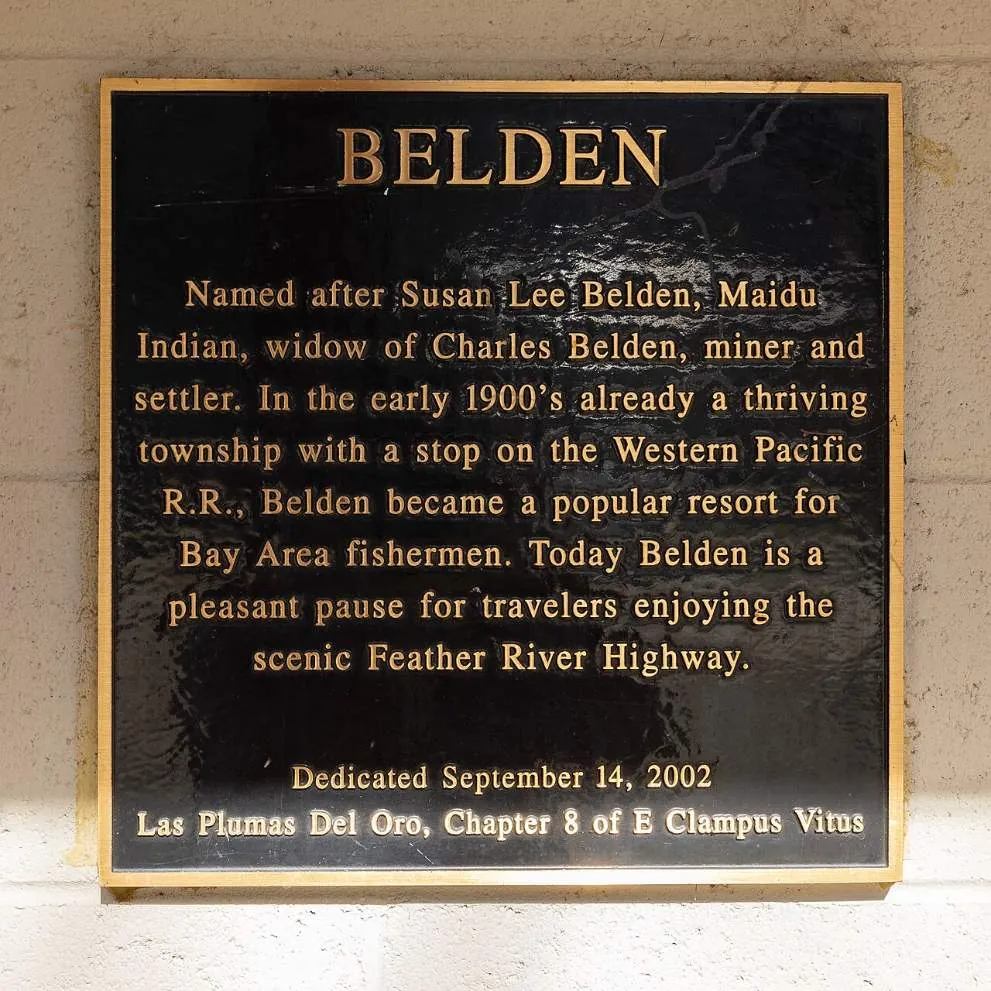
DocumentedBy 1995, Alan Wilson wrote, the Grand Council’s plaque books covered “nearly seven hundred plaques”; a further book, of 2009, records those of 1994 to 2007. The Historical Marker Database lists 1,877 entries in the order’s series (31 October 2026), counting markers the order shares with others; a 2025 study found its hand in at least 149 California Historical Landmark plaques.
Find a plaque near you. The Historical Marker Database keeps a list of the order’s plaques, with photographs and maps: E Clampus Vitus on HMDB ›16
The chapters, one by one
DocumentedYerba Buena sponsored the first chapters: “Amatuca [Matuca], like all other chapters up to this time, was organized or sponsored by Clampers from Yerba Buena” (Then and Now, p. 22, writing of 1948). After the first few, the chapters stopped numbering in order and took jokes and dates for numbers instead: 49, 1849, 64, 1004, 54-40.
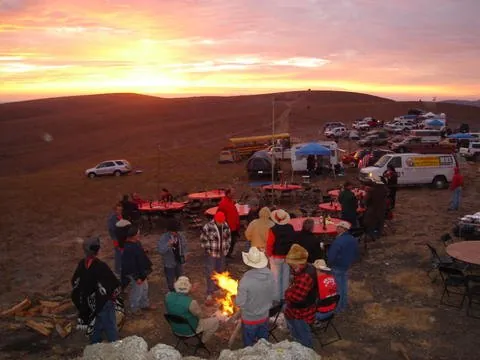
The early chapters, year by year every chapter from Yerba Buena No. 1 in 1931, as the order’s histories date them; all of today’s chapters are in “Find your chapter” below
- 1931–32Yerba Buena No. 1, San Francisco.
- 1933 or 1934Platrix No. 2, Los Angeles.
- 2 Apr 1934Lord Sholto Douglas No. 3, Auburn, “Wood’s Dry Diggings” (the roster in Then and Now gives 1935; Moore presented its charter at the State Theatre on the nights of 9 and 10 May 1935, with Douglas S. Watson’s farce Gold from Ophir), named for the Scottish lord the Clampers of Marysville initiated in 1896.
- 15 Sep 1934Platrix sets the order’s first plaque, in San Gabriel Canyon.
- 1935–36Quivira No. 4, at Santa Fe, New Mexico; New Helvetia No. 5, at Sutter’s Fort, Sacramento (22 February 1936); President Walker No. 6, at San Diego. None survives today.
- 18 Mar 1937Cherry Tree No. 11, Washington, D.C., for Carl Wheat and Milford Springer; gone.
- 2 Apr 1938William Bull Meek No. 10, at Nevada City, chartered by the Auburn chapter and instituted with Adam Lee Moore officiating, before ninety-six candidates, “probably the largest group ever initiated in one evening.” The papers of that week fix the date (Appeal-Democrat, 30 March 1938, and the Nevada City papers of March and April); the Sacramento Bee of 1939 gave 26 March, and later accounts 1936.
- 30 Apr 1938James W. Marshall No. 49, Placerville.
- 21 Sep 1940North San Juan Diggins No. 13, chartered at Sonoma and instituted at North San Juan on 26 October, Moore presiding; it is not among today’s chapters.
- 31 May 1941Major William Downie, at Downieville.
- 1948Matuca No. 1849, Columbia.
- 1954–59Las Plumas del Oro, Quincy (8 May 1954); Snowshoe Thompson, first as Markleeville-Genoa (1956); Estanislao No. 58, organized at Knights Ferry on 21 June 1958, sponsored by the Tuolumne County Clampers (Oakdale papers, 29 May and 26 June 1958); Wm Morris Stewart No. 8591, Nevada City (1958), which joined William Bull Meek No. 10 on 4 March 1962 as Meek–Stewart No. 10; James Savage, Fresno, chartered on 14 February 1959 (Fresno Bee, 15 February 1959).
- 1962–66Monterey Viejo, whose charter Yerba Buena presented on 10 March 1962 (at Paicines, with some thirty-five charter members, by the Hollister Free Lance of 6 March, announcing it; some lists give 1958); Peter Lebeck, to be formed on the Kern River on 19 May 1962, now at Bakersfield; John P. Squibob, San Diego; Trinitarianus, Weaverville; Julia C. Bulette No. 1864, Virginia City, Nevada, Sam Brannan No. 1004 (then of Sutter County), Chief Truckee and Argonauts, all four chartered at Murphys in June 1963 (Argonauts, for members of the Society of California Pioneers only, was dissolved in 1972); Bodie No. 64, chartered in May 1965; Pair-O-Dice, Paradise, voted a charter in May 1966; that November it took in Governor-elect Ronald Reagan.
- 1969–79Billy Holcomb No. 1069 (1969); Slim Princess, Bishop, and Tuleburgh No. 69, Stockton (at work from 1969); Frank C. Reilly, Marysville, and Humbug No. 73, Yreka (1972); Sam Brannan No. 1004 woken at Napa (1973); Mountain Charlie No. 1850 and Dr. Samuel Gregg George (1974); Joaquin Murrieta No. 13 (1976) and Growlersburg No. 86 (at work by 1974); and, far to the north, Athabasca No. 93A at Jasper in the Canadian Rockies (20 September 1978), which claimed British Columbia and Alberta, “feeling as Drake did.”
- 1988–2023Matt Warner No. 1900, the first in Utah (1988); Lost Dutchman No. 5917+4, the first in Arizona (1990); Doc Maynard No. 54-40, chartered on Whidbey Island, Washington, as the 42nd (9 September 2006); Copper Queen No. 1915, Yerington, Nevada (2023).
DocumentedEleven cases of beer. A chapter could fall asleep and be woken. Sam Brannan No. 1004, one of the four chartered at Murphys in 1963, began at Yuba City, with Yolo, Colusa, Glenn and Sutter counties for its territory: its first plaques went up at the entrance to Sam Brannan Park in Yuba City in 1963, “dedicated to Sam Brannan, founder of Yuba City,” and in front of the post office at Dobbins, in Yuba County, in 1966. After 1969 it went quiet, and its territory was held in trust by Chapter No. 10 of Nevada City, William Bull Meek–William Morris Stewart. Over the Memorial Day weekend of 1973, at Murphys, Ed Hawkins Jr. put a petition to reactivate it before the Board of Proctors. It carried an offer of eleven cases of beer for the territory, and Chapter No. 10 accepted, so ending its trust. The Proctors approved on the motion of Earl Schmidt, seconded by Louie Beaupre. The chapter was reorganized at Napa, with Hawkins as its first Noble Grand Humbug; it celebrated its re-chartering on 23 March 1974 and set its first new plaque that year at Knights Landing. Its territory now runs over Glenn, Colusa and Napa counties and part of Yolo, and it calls itself, with no one’s leave, the Protector of Solano County. In 1988 the two chapters rededicated the Yuba City plaque together, and Sam Brannan is still going strong, from a Santa Rosa address. (Sam Brannan Chapter No. 1004, Book of Plaques, compiled by Loren A. Wilson, from Jim Cirner’s collection; Then and Now, 1966; the plaques at Yuba City and Dobbins, in the Historical Marker Database.)
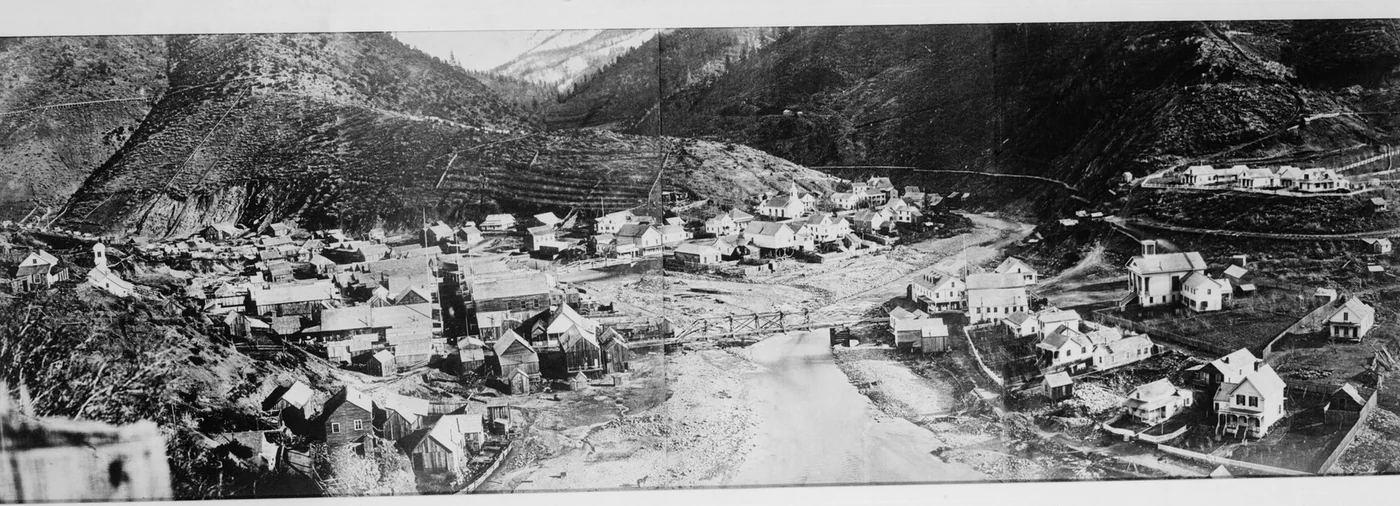
DocumentedChristmas at Downieville, 1937. On 10 December 1937 the Yuba flooded Downieville, the old order’s mountain stronghold. The Clampers answered within days: Auburn’s lodge held “a meeting extra-ordinary” at the Freeman Hotel, the order asked Congress for $250,000 to rebuild the town, and at Christmas a caravan of a hundred cars brought “$400 worth of gifts” for “the 98 children in town,” with Santa Claus from Auburn and Adam Lee Moore, ninety, leading the drive (the Auburn Journal, 16 December 1937 and 10 February 1938; Associated Press, 19 December 1937). Radio made it a Christmas story: in 1964 KNBC broadcast it “for the 21st time” (Phil Hindley, Christmas editorial, 24 December 1964).
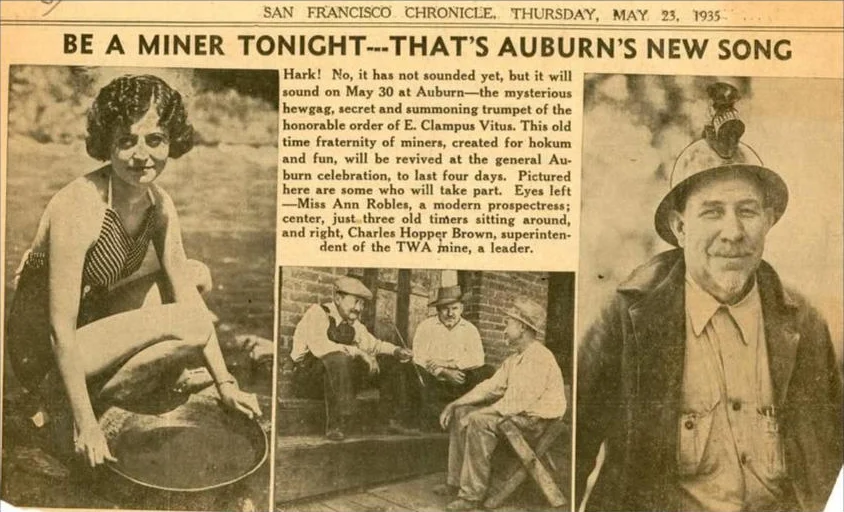
DocumentedAuburn’s chapter went public with a fanfare. “Hark! No, it has not sounded yet, but it will sound on May 30 at Auburn,” the San Francisco Chronicle announced on 23 May 1935: “the mysterious hewgag, secret and summoning trumpet of the honorable order of E. Clampus Vitus. This old time fraternity of miners, created for hokum and fun, will be revived at the general Auburn celebration, to last four days.” That was the town’s public Gold Rush Revival, three weeks after the charter night. Jim Cirner found the clipping.
Did you know? Auburn’s chapter had a goat, and the Auburn Journal followed its career like a serial. It escaped in March 1936; it turned up at Loomis that May with “a new coat of gilt paint … on his horns,” and stampeded loose again; a borrowed stand-in put “his mistress up a tree,” so the Clampers bought him; “Clamper Goat Number One” came home from Penryn in May 1937. On 2 February 1939 the paper reported, “The Clamper Goat is dead.” Its head was mounted, and led the parade that May, “followed by the male kid.”
Dates from Then and Now (1966) to 1966, from the newspapers of the time, and from the chapters’ own histories and plaques after. Where the sources disagree, both dates are given; where no public source gives a year, none is shown.
DocumentedToday E Clampus Vitus recognizes 51 chapters in what it counts as eleven western states. By its own list, thirty-four are based in California, seven in Nevada, two each in Colorado and Washington, and one each in Arizona, Idaho, Montana, Oregon, Utah and Wyoming; and New Mexico, the eleventh, has its Clampers in Arizona’s Lost Dutchman Chapter, whose number, 5917+4, once counted four of them: “The +4 is the number of NM Members at that time.” Each chapter runs its own affairs, led by a Noble Grand Humbug who serves for one year.
New findingThe order lists its chapters with no dates, and no list of when each was founded could be found in print or online. The map, the chart and the table below are built from the first such list, compiled for this page from the order’s 1966 history, the chapters’ own records, dated plaques and newspaper reports.
- Founding year on record
- First found at work that year
Find your chapter. All 51 chapters of today, as E Clampus Vitus, Inc. lists them. Tap a heading to sort; type to search. Project Scroll cannot put anyone in touch with a chapter; membership is by invitation of the order.
| Al Packer | 100 | Colorado Springs | CO | outpost 1994 |
| Billy Holcomb | 1069 | Crestline | CA | 1969 |
| Bodie | 64 | Mammoth Lakes | CA | 1965 |
| Branciforte | 1797 | Felton | CA | — |
| Chief Truckee | 3691 | Truckee | CA | 1963 |
| Copper Queen | 1915 | Yerington | NV | 2023 |
| De la Guerra y Pacheco | 1.5 | San Luis Obispo | CA | about 1991 |
| Doc Maynard | 54-40 | Kent | WA | 2006 |
| Dr. Samuel Gregg George | 1855 | Visalia | CA | 1974 |
| Estanislao | 58 | Modesto | CA | 21 June 1958 |
| Eureka | 101 | Eureka | CA | — |
| Four Georgians | 4681 | Helena | MT | at work by 2016 |
| Frank C. Reilly | 5978 | Marysville | CA | 1972 |
| Growlersburg | 86 | Georgetown | CA | at work by 1974 |
| Grub Gulch | 41-49 | Oakhurst | CA | by 1979 |
| Humbug | 73 | Yreka | CA | 1972 (charter granted; established 1973) |
| Irish Kate Barrett | 1858 | Spokane | WA | by 2011 |
| James Savage | 1852 | Fresno | CA | 14 February 1959 |
| James W. Marshall | 49 | Lockeford | CA | 1938 |
| Jesse Lee Reno | 1422 | Reno | NV | at work by 2021 |
| Joaquin Murrieta | 13 | San Leandro | CA | 1976 (chartered) |
| John A. Sutter | 1841 | Sacramento | CA | 2013 (chartered; outpost 2010) |
| John P. Squibob | 1853 | San Diego | CA | 1962 |
| Julia C. Bulette | 1864 | Virginia City | NV | 1963 |
| Las Plumas del Oro | 8 | Quincy | CA | 1954 |
| Lassen-Loomis | 1914 | Manton | CA | — |
| Lord Sholto Douglas | 3 | Auburn | CA | 1934 |
| Lost Dutchman | 5917+4 | Scottsdale | AZ | 1990 |
| Lucinda J. Saunders | 1881 | Elko | NV | by 1986 |
| Major William Downie | 1849 | Downieville | CA | 1941 |
| Matt Warner | 1900 | Helper | UT | 1988 (outpost 1979) |
| Matuca | 1849 | Columbia | CA | 1948 |
| Monterey Viejo | 1846 | Salinas | CA | 10 March 1962 (some lists: 1958) |
| Mountain Charlie | 1850 | San Jose | CA | 1974 |
| Pair-O-Dice | 7-11 | Paradise | CA | 1966 |
| Peter Lebeck | 1866 | Bakersfield | CA | 1962 |
| Platrix | 2 | Sierra Madre | CA | 1933 (or 1934) |
| Queho Posse | 1919 | Henderson | NV | 2000 |
| Robert Leroy Parker | 1889 | Dolores | CO | by 2018 |
| Sam Brannan | 1004 | Santa Rosa | CA | 1963 (re-chartered 1973) |
| Samuel L. Clemens | 1856 | Winnemucca | NV | — |
| Slim Princess | 395 | Bishop | CA | 1971 |
| Snake River | 1811 | Boise | ID | by 2012 |
| Snowshoe Thompson | 1827 | Sparks | NV | 1956, as Markleeville-Genoa (re-chartered 1976) |
| South Pass 67’ers | 1867 | Lander | WY | founded 2016 |
| Trinitarianus | 62 | Weaverville | CA | 1962 |
| Tuleburgh | 69 | Stockton | CA | at work from 1969 |
| Umpqua Joe | 1859 | Cave Junction | OR | by 2013 |
| Vigilantes | 1911 | Westwood | CA | by 2005 |
| Wm Bull Meek – Wm Morris Stewart | 10 | Nevada City | CA | 2 April 1938 (later accounts: 1936); as the merged chapter, 4 March 1962 (The Union: 5 May 1962) |
| Yerba Buena | 1 | San Mateo | CA | 1931–32 |
“By” a year means the chapter is first found at work that year. A chapter’s number is usually a date or a joke, not a count; Matuca and Major William Downie both carry 1849. Years are from Then and Now (1966) to 1966, and from the chapters’ own histories, newspapers and dated plaques after.
The Grand Council
Did you know? Carl Wheat’s own plaque on the Wall of Comparative Ovations at Murphys was dedicated by the Grand Council on 30 May 1964, two years before he died.
DocumentedThe Grand Council “was actually organized at a meeting of the Directors of ECV at the Fair Grounds in Mariposa on May 8, 1954,” and Carl Wheat “was given the title of, ‘His Benign Austerity – In Perpetuity’” (Then and Now, 1966). Every Noble Grand Humbug of every chapter, past and present, sits on it. Before 1957 the order had Presidents: Lee L. Stopple (1940–45), Leon O. Whitsell (1945–54), Carl I. Wheat (1954–55) and Edgar B. Jessup (1955–57). From 1957 its head has been the Sublime Noble Grand Humbug, Jessup the first, as Albert Shumate remembered it: “In 1957, when the council met at Murphys, Ed Jessup became the first Sublime Noble Grand Humbug of the Grand Council.” The holders since include the order’s historians Albert Shumate (1963–65) and Alan L. Wilson (1981–82), and Jim Cirner (2023–24), who has helped with these pages.
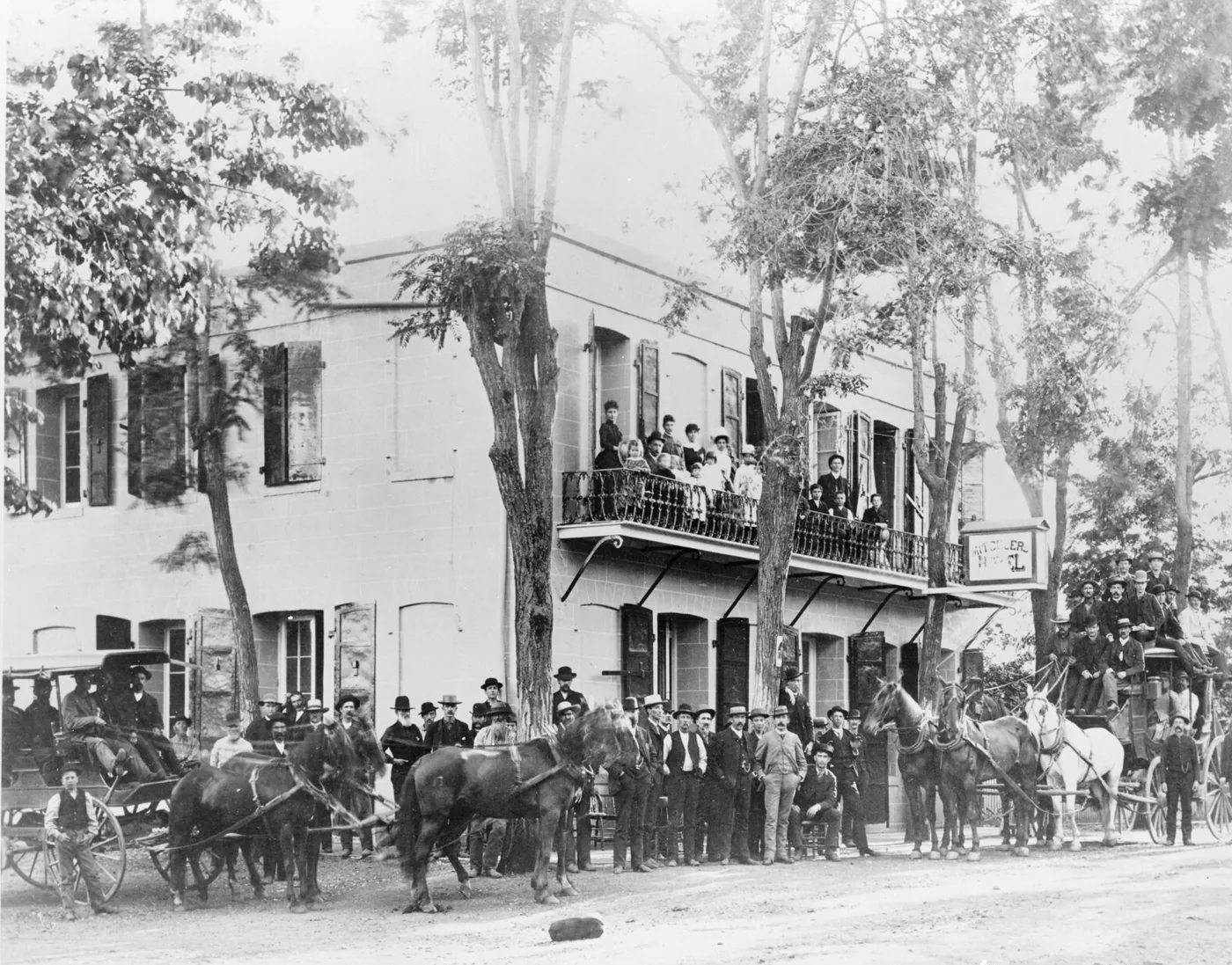
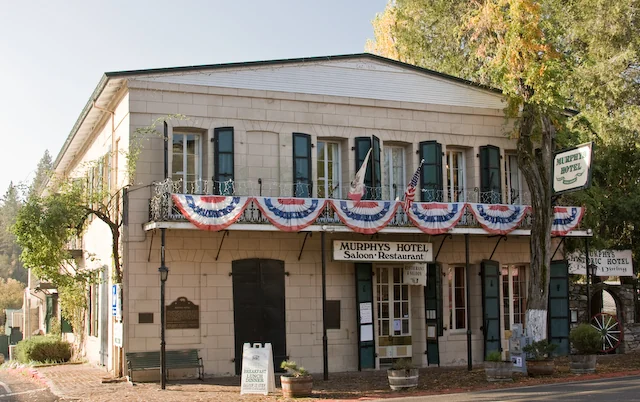
DocumentedThe Council at Murphys. Through the 1960s the Grand Council met each spring at Murphys, and the Stockton Record reported it. On 1 June 1963 it chartered four new chapters at once (the Stockton Record counted three), one of them across the line in Nevada. In 1964, with Albert Shumate presiding, it resolved that the mint should go on coining silver dollars, threatening, “We will march on Washington in a body,” and the Clampers “went wild” at the news that a member of Matuca had found the recorded land description, dated 24 February 1853, of an “E.C.V.” saloon. In 1965, electing Sid Platford, it voted that charters would “not be issued to any chapters outside of California,” when, the Stockton Record said, the only one outside was at Virginia City (Stockton Record, 6 June 1963, 1 June 1964 and 5 June 1965, as clipped in Jim Cirner’s album “ECV ® Back in the Day” #3). That rule did not last: the order now has chapters across the eleven western states it counts as its own.
Did you know? Governor Ronald Reagan proclaimed 6 July 1968 “E Clampus Vitus Day,” so that “the Dumbellican Brotherhood of the mines may hearken to the braying of the Hewgag” at the California Exposition grounds. The Legislature took note as well: the index to the Statutes of California for 1968125 lists “E Clampus Vitus Day” at chapter 164. Four years earlier, in January 1964, the Wm Morris Stewart chapter (by then Bull Meek–Stewart) demanded that Nevada rename itself “East California” and added “Courtesy of Nevada City, Nevada County, California” under the “Welcome to Nevada” sign on U.S. 40; Governor Pat Brown replied that “California could absorb the whole state of Nevada with far less pain than Nevada could absorb just one of our 58 counties” (Associated Press and United Press, 2–9 January 1964). That May, at the order’s first bi-state convention in Sacramento, Governors Pat Brown and Grant Sawyer sat for a mock hearing of the California–Nevada border dispute, and the Clampers “rolled up the state line.” Who kept the records? That was the job of “the Chairman of the Other Committee. Unfortunately, he was not present. Never has been since the society was organized” (May 1964). These as clipped in Jim Cirner’s albums.
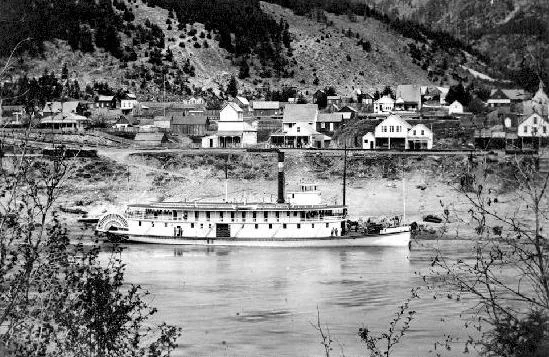
DocumentedFar afield. The revived order reached past California early, and not always for long. At Santa Fe in 1935 the New Mexican greeted a returning archaeologist as “District Grand Klooper of the famous Pacific Coast fraternity of E. Clampus Vitus,” and Jesse L. Nusbaum of that city as its “Deputy Grand Valetudinarian”: the circle of the short-lived Quivira chapter. In 1942 a chapter for Nevada, to be called the “Carson county chapter of Utah territory,” was put off “until after the war is won,” for want of tires and gasoline. In August 1968 a Ned McGowan Chapter set a plaque to the gold-rush outlaw at Yale, British Columbia (Hope Standard, 7 August 1968), ten years before Athabasca. And some chapters came and went: Neversweats No. 1863, born in 1980, was declared defunct by the Board of Proctors in the late 1990s. The count kept climbing all the same: twenty-two chapters in California in 1966, twenty-three at the Council of 1968, and in November 1976 a party at Clayton for “the founding of the organization’s 29th chapter,” Joaquin Murrieta, “what may be the organization’s last new chapter” (Oakland Tribune, 3 November 1976). It was not. All from clippings in Jim Cirner’s albums.
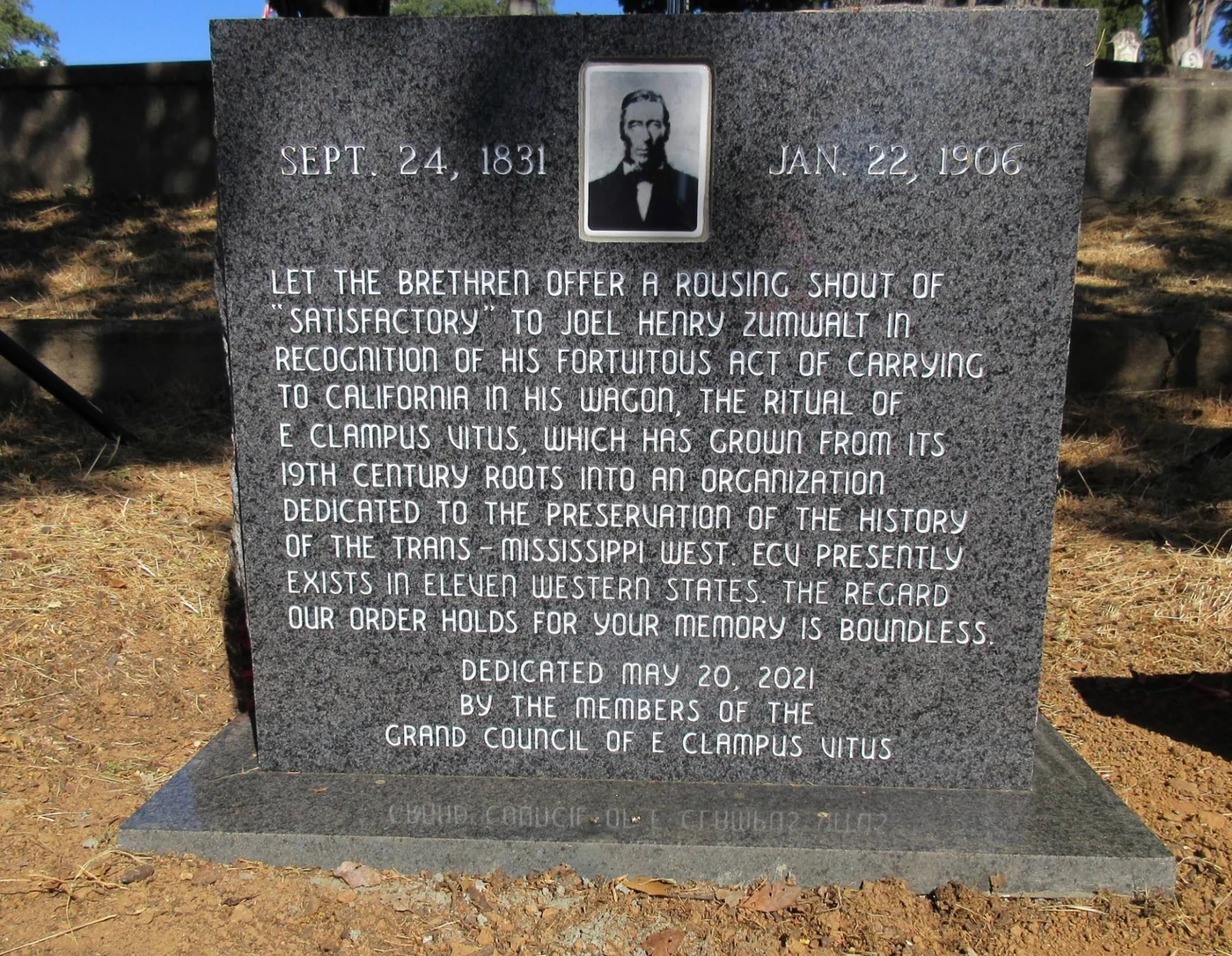
DocumentedThe Grand Council is made up of the current and past Humbugs; a Board of fifteen Proctors manages its business, and its officers are styled Sublime, among them the Sublime Grand Noble Recorder, who keeps track of the order’s copyrights and registered trademarks. It met at Murphys over Memorial Day weekend until 1993, then at Mariposa (Wilson, 1995), and later at Antioch; in 1998 the annual meeting came back to Sonora, where the order’s officers had first met in 1947, as a plaque of 2023 records. It now meets each May, the weekend before Memorial Day, at the Mother Lode Fairgrounds, Sonora.
The order today
DocumentedFifty-one chapters and counting. The order that twenty-two men revived at a lunch table is bigger now than it has ever been. Its own list names fifty-one chapters and four outposts, groups working toward a charter, from San Diego to Spokane and from the coast to the Wind River Mountains of Wyoming129. There were forty-two in 2006131; Doc Maynard, in Washington, was chartered that September as the forty-second18. Montana’s Four Georgians were setting up monuments at Helena by 2019160, and a Wyoming chapter received its charter in 2022161. Each May some four or five hundred redshirts come to the Mother Lode Fairgrounds at Sonora for the Grand Council130. A man still cannot ask to join: a Clamper, in the order’s own words, is a man “a brother has decided to invite”46.
DocumentedThe plaques, still going up. The Historical Marker Database counted 785 of the order’s markers in 2013; by November 2026 its E Clampus Vitus series held 1,877 entries, old plaques photographed late among them, and markers since lost16132. “This organization has researched and erected more historical markers in the American West than any other group,” the Pahrump Valley Times wrote in 2017, when the Clampers put up signs at the ghost town of Rhyolite; the Bureau of Land Management’s archaeologist, Jonah Blustain, said, “We hope they come and do a whole bunch more”133. The stories they choose are the small ones. “We put up plaques of less known history because if we didn’t bring it up, it would pretty much be forgotten,” Ron Metzger, Humbug of the Robert Leroy Parker chapter, said at Grand Junction, Colorado, in August 2025, where about forty people came to see one unveiled134. Chapters pay for them from their own dinners and with local sponsors, pour the concrete themselves, and dedicate them in public, with speeches and the families of the people remembered.
DocumentedThe widows, the orphans and the rest. The motto still puts the widows first, and the chapters still give. Some of it is money: a $1,000 scholarship from the Estanislao chapter for history students at Modesto Junior College136; $1,864 from the Julia C. Bulette chapter to the valedictorian of Virginia City High School in 2019137; $10,010.10 from Nevada County’s chapter to Sierra Services for the Blind in 2006, with two $500 scholarships a year for Nevada Union High School131; scholarships for students going to trade school, paid for by an oyster stand at a Labor Day festival in southern Oregon138. Much of it goes to small museums: “by donating to our area museums we are helping to preserve and protect history which is what Clampers do,” said Jim Utterback of the Copper Queen chapter in Nevada in 2019139, and the San Lorenzo Valley Museum, the Lyon County Museum, the Murphys Old Timers Museum and the friends of South Pass City in Wyoming have all had the Clampers’ checks.
DocumentedWork days. More of it is labor. Nearly twenty members of the Estanislao chapter mowed and trimmed the Oakdale Citizens Cemetery in 2025144; in 2021 Clampers cleared fire-damaged brush, mended the rock steps and put in a bench at the Boulder Creek IOOF cemetery after the CZU fire145; in Washington, fourteen members of the Doc Maynard chapter gave about fifty-four hours to restoring the chapel car Messenger of Peace at the Northwest Railway Museum in 2012146; and in Nevada the Copper Queen chapter is raising money to put a new roof on the Copper Queen building of 1881 at Wabuska147. Nevada County’s Clampers, for their part, helped persuade the state to buy the Malakoff Diggins, now a state historic park131. In 2009 the Nevada Legislature thanked the order by resolution for “providing protection and kindness”148.
A Clamper’s glossary, revival edition
- Chapter
- A lodge of the revived order: the old order’s lodges are its chapters now. A group working toward its charter is an outpost; Matt Warner in Utah was an outpost from 1979 and a chapter from 1988.
- Clampatriarch
- The title given to Adam Lee Moore, the old gold-rush member who joined the revival (Credo quia absurdum, 1949); since 1954, every Noble Grand Humbug, past and present, is a Venerable Clampatriarch of the Grand Council.
- Capitulus Redivivus
- “The chapter revived”: the name the revivers gave their first chapter at Camptonville in 1932, and the root of Yerba Buena’s style, “Redivivus No. 1,” “founded in 4005 B.C., resuscitated in 1932 A.O.” (Redwood City Tribune, 25 July 1967).
- His Benign Austerity
- The title given to Carl Wheat in 1954, when the Grand Council was organized: “His Benign Austerity – In Perpetuity” (Then and Now).
- Grand Honorary Humbug
- An honor for a friend of the order: Bill Meek at Camptonville in 1932, Bob Greer, the last miner of the Calico boom, in 1936, and Chief William Fuller at Tuolumne in 1937.
- Wall of Comparative Ovations
- The wall of plaques at Murphys, among them Carl Wheat’s, dedicated in 1964.
- Hewgag
- The great horn that calls the Clampers together, sounded since the gold camps. The horn Chico brought to Oroville in 1916 was so long “that it took twelve men to carry it.”
- Poor Blind Candidate
- A candidate for membership, as the Clampers style him. Edwin Grabhorn, the San Francisco printer, was the revived order’s first.
- New Dispensation
- The revived order, from 1931 on, as the Clampers call it, against the Old Dispensation of the gold camps.
- Noble Grand Humbug
- The head of a chapter, for one year.
- XNGH
- A past Noble Grand Humbug, as the Clampers write it: Leon Whitsell was “XNGH No. 4” of YB1, Yerba Buena No. 1, its fourth Humbug. A past head of the whole order is an XSNGH.
- Sublime Noble Grand Humbug
- The head of the whole order, chosen by the Grand Council; Edgar B. Jessup was the first, in 1957, in the order’s own list.
- Clamproctors
- The board of fifteen, the corporation’s directors, who manage the Grand Council’s business; since 1957 elected by the Clampatriarchs (Proctors, for short).
- Staff of Relief
- Adam Lee Moore’s staff, the Grand Council’s gavel since 1955.
- Satisfactory!
- The order’s cry of approval, old and new: the answer to “What say the brethren?!”
- Redshirt
- A Clamper, for the red shirt he wears.
- Noble Grand Recorder
- The chapter’s secretary (also written Grand Noble Recorder). A chapter may also have a Noble Grand Historian, as Swift Berry was in 1957.
- Widder
- A redshirt’s wife or sweetheart, first in the order’s charity: per caritate viduaribus orphanibusque, sed prime viduaribus. In 1950, before Lake Isabella drowned old Kernville, the Clampers made Nettie Hight Yarbrough, born in a storm on Greenhorn Mountain in 1868, an Honorary Clamp Widow; she signed herself “Grand Honorary Widow No. 1 of Whiskey Flat.”
From the order’s 1966 history, Then and Now, the newspapers of the revival years, the order’s and its chapters’ public websites, and the Platrix chapter’s history.
Where the archives are
OpenClose the libraries and collections that hold the record
- Stockton University of the Pacific, Holt-Atherton Special Collections: the E Clampus Vitus Archives, from 1935 (Mss101), kept at the California Historical Society from 1961 and, when space ran short there, moved to Pacific in 1976 with the aid of its historian and Clamper Richard Coke Wood; and Whitsell’s scrapbooks (Mss186).
- San Marino The Huntington Library: the order’s records, 1933–1984 (mssEClamp), mostly from Sid Platford; the Dane family papers (mssDane).
- Berkeley The Bancroft Library: the plate itself; the Thomas W. Norris papers, with two scrapbooks of the early revival; Lois Rather’s papers.
- Los Angeles UCLA Library Special Collections (LSC.1796); USC Libraries, the Platrix Chapter’s records, 1994–2019.
- Virginia City The Julia C. Bulette Chapter, whose hall is the E Clampus Vitus Building at 34 B Street (built 1867), and whose second Noble Grand Humbug was Marshall (Marsh) Fey (below). The Marsh Fey Collection, by the credit printed with it, includes Carl Wheat’s invitation of December 1931 to the revival lunch (below).
- San Diego San Diego History Center: the Squibob Chapter’s historic site reports (MS 49).
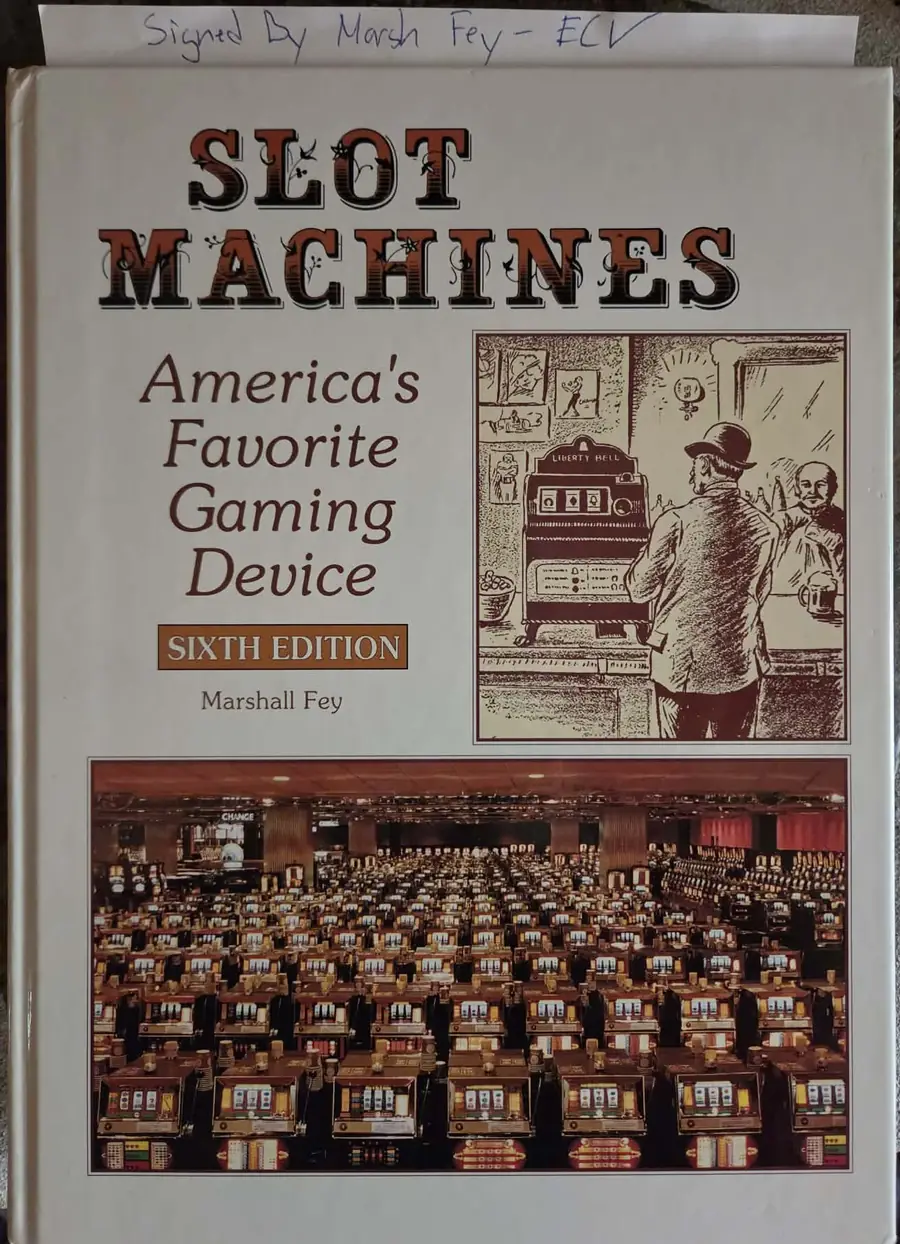
DocumentedThe man who kept the letter. Marsh Fey (1928–2024) was a grandson of Charles Fey, the San Francisco mechanic who built the first slot machines in 1894 and invented the three-reel Liberty Bell in 1898. With his brother Frank he opened the Liberty Belle saloon and restaurant in Reno in 1958, named for their grandfather’s machine with an “e” added to make her a lady, and there, until it closed in 2006, they showed one of the finest collections of old slot machines in the world; Charles Fey’s own machines went on to the Nevada State Museum at Carson City. Marsh wrote the history of the slot machine, through six editions. He kept, too, the order’s papers that came his way, among them Carl Wheat’s invitation of 1931 to the lunch that began the revival. In 2026 Marsh Fey’s chapter, Julia C. Bulette, announced a plaque to the Liberty Belle in front of the Reno-Sparks Convention Center, where it stood.
Myth or record? Play along
Eight things often said about the revived order. Make your call on each, then see what the record says.
“The order’s leaders made Drake’s plate.”
Not so
The study made public in 2003 names one Clamper among its makers, G. Ezra Dane, who instigated it, and says the order’s leaders “did not sanction the joke.” The joke was meant to end with a laugh over dinner; it lasted forty years.
“Carl Wheat was the first President of the revived order.”
Not so
The order’s own list has Lee L. Stopple first, from 1940, then Leon O. Whitsell; Wheat was the third, in 1954–55. He is remembered as the reviver all the same.
“The order was brought back to life in 1931.”
True
Wheat called the lunch for 18 December 1931, and the order’s history of 1966 says “reborn in 1931.” Some records give 1932, the year of the first pilgrimage, so both dates are in print.
“A member of the old order joined the revival.”
True
Adam Lee Moore of Sierra City, “taken in” at Downieville in 1867, became the revival’s link to the old ways; he “proved to be a ‘gold mine.’”
“The first plaque went up in 1931.”
Not so
The earliest the record shows is 1934: the Platrix chapter’s, in San Gabriel Canyon, “to the memory of the forgotten miner.” The north’s first came in 1936, and Hank Monk’s, at Placerville, in 1938, on the day the James W. Marshall chapter was chartered.
“A chapter’s number tells you its place in line.”
Not so
After the first few, the numbers became dates and jokes: 49, 1849, 64, 1004, 7-11, 54-40, even 1.5.
“The name E Clampus Vitus means something.”
Nobody knows
The order’s own historian, Albert Shumate, called it “the greatest mystery of all, because none of us know what it means!”
“You can’t just sign up.”
True
A Clamper is a man the brethren have “decided to invite,” in the words of the order’s own guidance.
Go and see it
Most of the order’s history is still standing by the road. A few places to start:
Plaques worth a road trip
- Emperor Norton San Francisco, Salesforce Transit Center. “Pause traveler and be greatful to Norton 1st,” who “decreed the bridging of San Francisco Bay.” First dedicated in 1939. See it on the Historical Marker Database ›64
- The California Star San Francisco, 743 Washington Street, in the porch of the old Chinese telephone exchange. Where Sam Brannan printed the city’s first newspaper in 1847; one of the order’s oldest plaques, unveiled on 6 February 1937. See it on the Historical Marker Database ›108
- The Hotaling Building San Francisco, 451 Jackson Street. The whisky warehouse that survived 1906, and the verse about why God spared it (Yerba Buena No. 1, 1992). See it on the Historical Marker Database ›65
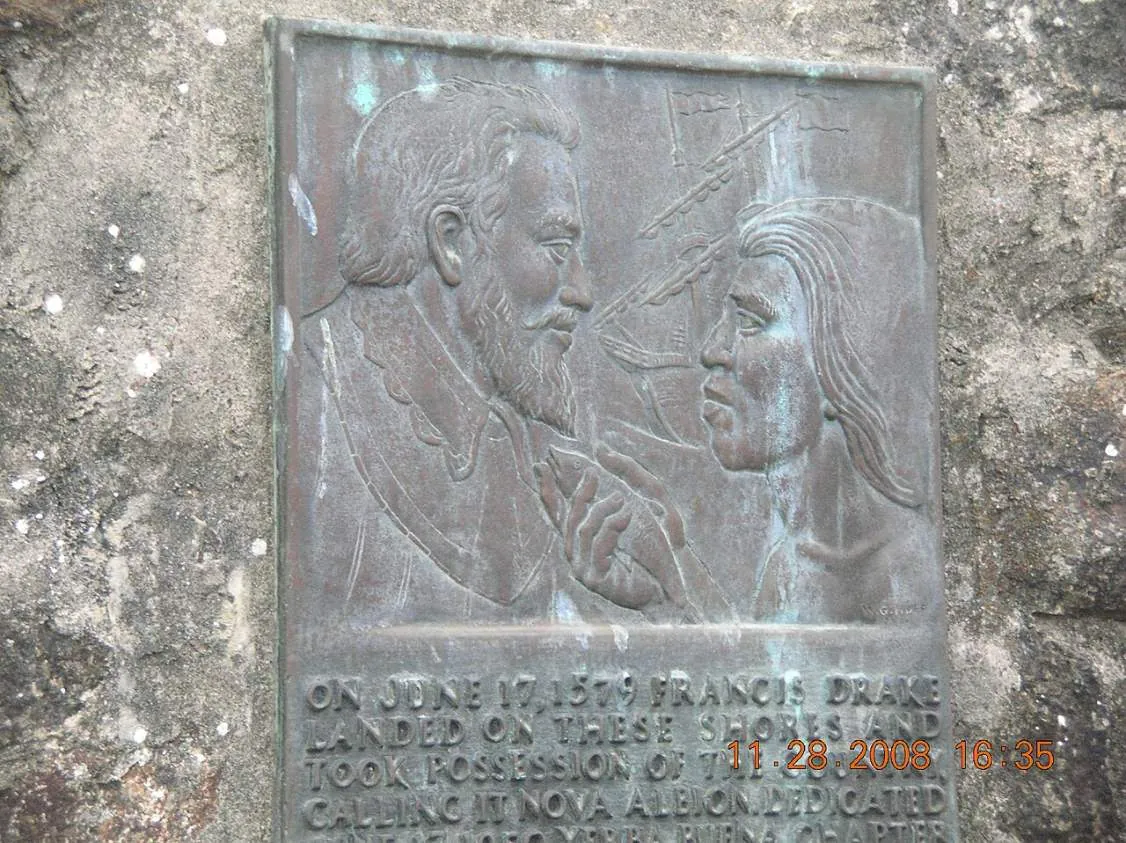
- Francis Drake Point Reyes National Seashore. “On June 17, 1579, Francis Drake landed on these shores” (Yerba Buena No. 1, 1950). See it on the Historical Marker Database ›66
- Grand Procrastination Monterey, 99 Prescott Avenue. Steinbeck’s Tortilla Flat honored in 1938, mounted in 1985: “It took 47 years however, to get around to mounting it.” See it on the Historical Marker Database ›67
- John Mohler Studebaker Placerville. “Wheelbarrow Johnny,” blacksmith of Hangtown, honored in 1939 (James W. Marshall No. 49). See it on the Historical Marker Database ›68
- Site of the E.C.V. Saloon Murphys, Main Street. “Believed to be the only E. Clampus Vitus … saloon officially recorded” (Grand Council, 1965). See it on the Historical Marker Database ›69
- Mokelumne Hill The Leger Hotel. Where, the marker says, Joe Zumwalt chartered a chapter in an unused jail in 1851; lost in 1990, found in 2009, rededicated in 2010. See it on the Historical Marker Database ›70
- Julia C. Bulette Virginia City, Nevada. “Angel of miners, friend of firemen,” put up by the chapter that bears her name in 1963. See it on the Historical Marker Database ›71
- Snowshoe Thompson Genoa, Nevada. The ski-borne mail carrier of the Sierra: “The Bravest are the Tenderest” (1986). See it on the Historical Marker Database ›72
- Once a Saloon, Always a Saloon Tres Pinos. The 19th Hole Rendezvous, “an infamous Clamper watering trough” (Monterey Viejo No. 1846, 1981). See it on the Historical Marker Database ›73
With thanks
This part has grown with help. Jim Cirner, Sublime Noble Grand Humbug No. 54, sent the order’s 1966 history, Then and Now, and opened his public albums of clippings, “ECV ® Back in the Day.” His term is marked on the leaders’ timeline above. The chapters themselves supplied much of the rest: the founding dates in “Find your chapter” come from their own histories and plaques, among them the Julia C. Bulette, Lost Dutchman, Queho Posse, Mountain Charlie, Grub Gulch, Joaquin Murrieta, De la Guerra y Pacheco, Irish Kate Barrett, Frank C. Reilly, Major William Downie and John A. Sutter chapters, and from Jim Reynolds’s ECV Gazette. If your chapter’s date is missing or wrong, or you can add to anything here, write to us; we will put it right and say who helped.
Index of names
OpenClose every person named, with links
The people in the story, with the sections where they appear. The other part has its own index: Part 1.
- Adams, Ansel The re-founders
- Aker, Raymond Drake’s Plate of Brass, 1936–2003
- Allen, Robert W. Drake’s Plate of Brass, 1936–2003
- Barron, George Haviland Drake’s Plate of Brass, 1936–2003
- Barry, Tom The re-founders · The Grand Council
- Bee, Ephraim The books of the revival
- Berry, Swift A Clamper’s glossary, revival edition
- Bolton, Herbert E. The re-founders · Drake’s Plate of Brass, 1936–2003
- Brannan, Sam The plaques · The chapters, one by one · Go and see it
- Briones, Juana The plaques
- Brown, Pat The Grand Council
- Caldeira, William Drake’s Plate of Brass, 1936–2003
- Camp, Charles The re-founders · The handover at Marysville, 1940 · The plaques
- Castor, Lt. Thomas F. The plaques
- Chandler, Robert J. Drake’s Plate of Brass, 1936–2003
- Cirner, Jim The re-founders · The handover at Marysville, 1940 · The books of the revival · Drake’s Plate of Brass, 1936–2003 · The plaques · The chapters, one by one · The Grand Council · With thanks
- Clark, George C. Drake’s Plate of Brass, 1936–2003
- Clift, Frederick C. The re-founders
- Cutten, Charles P. The re-founders
- Dalton, Roger The plaques
- Dane, Beatrice (Jodon) The re-founders
- Dane, G. Ezra The re-founders · The handover at Marysville, 1940 · Drake’s Plate of Brass, 1936–2003 · Where the archives are · Myth or record? Play along · Go and see it · Large ideas, small group
- Douglas, Lord Sholto The chapters, one by one
- Drake, Francis Drake’s Plate of Brass, 1936–2003 · Go and see it
- Dressler, Albert Drake’s Plate of Brass, 1936–2003
- Duncan, Thomas The books of the revival
- Elizabeth I, Queen Drake’s Plate of Brass, 1936–2003
- Falconer, Eric The handover at Marysville, 1940 · The plaques
- Farquhar, Francis P. The re-founders
- Fey, Charles Where the archives are
- Fey, Frank Where the archives are
- Fey, Marshall (Marsh) Where the archives are
- Fuller, Chief William Drake’s Plate of Brass, 1936–2003 · A Clamper’s glossary, revival edition
- Gifford, Edward W. Drake’s Plate of Brass, 1936–2003
- Grabhorn, Edwin The re-founders · The books of the revival · A Clamper’s glossary, revival edition
- Greer, Bob The plaques · A Clamper’s glossary, revival edition
- Hanna, Phil T. The re-founders
- Hee Li The books of the revival
- Holmes, David Drake’s Plate of Brass, 1936–2003
- Hondius, Jodocus Drake’s Plate of Brass, 1936–2003
- Huff, William Gordon The re-founders · The plaques
- Jessup, Edgar B. The re-founders · The handover at Marysville, 1940 · The Grand Council · A Clamper’s glossary, revival edition
- Lyman, George D. The re-founders
- Marshall, James W. The plaques
- McGowan, Ned The Grand Council
- McSorley, John The re-founders
- McSorley, William T. The re-founders
- Meek, William Bull The re-founders · The handover at Marysville, 1940 · The chapters, one by one · The Grand Council
- Monk, Hank The plaques · Myth or record? Play along
- Moore, Adam Lee The re-founders · The handover at Marysville, 1940 · The plaques · The chapters, one by one · A Clamper’s glossary, revival edition · Myth or record? Play along · Large ideas, small group
- Napoleon, George N. The re-founders
- Nicol, Duncan The plaques
- Noll, Lorenz Drake’s Plate of Brass, 1936–2003
- Norris, Thomas The re-founders · The handover at Marysville, 1940 · Where the archives are
- Norton, Emperor (Joshua A.) The plaques · The order today · Go and see it
- Nusbaum, Jesse L. The Grand Council
- Olson, Ronald L. The handover at Marysville, 1940 · Drake’s Plate of Brass, 1936–2003
- Peck, Sedley The handover at Marysville, 1940
- Peterson, Harry Drake’s Plate of Brass, 1936–2003
- Platford, Sid The re-founders · The Grand Council · Where the archives are
- Rather, Lois Where the archives are
- Reagan, Ronald The chapters, one by one · The Grand Council
- Rich, W. P. The handover at Marysville, 1940
- Richards, Irmagarde Drake’s Plate of Brass, 1936–2003
- Ritchie, Ward The books of the revival
- Sawyer, Grant The Grand Council
- Shinn, Beryle Drake’s Plate of Brass, 1936–2003
- Shippey, Lee The plaques
- Shumate, Albert The re-founders · The Grand Council · Myth or record? Play along
- Spitze, James M. Drake’s Plate of Brass, 1936–2003
- Springer, Milford The handover at Marysville, 1940 · The chapters, one by one
- Steinbeck, John The plaques · Go and see it
- Stewart, James D. The re-founders
- Stopple, Lee L. The re-founders · The handover at Marysville, 1940 · The plaques · The Grand Council · Myth or record? Play along
- Studebaker, John M. The plaques · Go and see it
- Stutler, Boyd The books of the revival
- Sutter, John A. The plaques
- Van der Hoof, V. L. The handover at Marysville, 1940
- Von der Porten, Edward Drake’s Plate of Brass, 1936–2003
- Wagner, Henry R. The re-founders
- Warren, Earl The re-founders
- Watson, Douglas S. The re-founders · Drake’s Plate of Brass, 1936–2003 · The chapters, one by one
- Wheat, Carl I. The re-founders · The handover at Marysville, 1940 · The books of the revival · The chapters, one by one · The Grand Council · A Clamper’s glossary, revival edition · Where the archives are · Myth or record? Play along · Go and see it
- Whited, Jesse M. The re-founders
- Whitsell, Leon O. The re-founders · The handover at Marysville, 1940 · The Grand Council · A Clamper’s glossary, revival edition · Where the archives are · Myth or record? Play along
- Wilding, Brandon The Grand Council
- Wilson, Alan L. The re-founders · The plaques · The Grand Council
- Wiltsee, Ernest A. The re-founders
- Yarbrough, Nettie Hight A Clamper’s glossary, revival edition
- Zovickian, Stephen Drake’s Plate of Brass, 1936–2003
- Zumwalt, Joel Henry Go and see it
Large ideas, small group
The Clift still stands at Geary and Taylor, a hotel to this day. In December 1931 a few men met there for lunch, called by a lawyer who promised “a small group,” with “large ideas.” They brought back an order that no one could explain, gave it books that made fun of books, a hoax that made fun of the experts, and, in 1934, its first plaque. Adam Lee Moore carried the old order across to them: taken in, by Dane’s account, at Downieville in 1867, he handed it on at Clamptonville in 1932 and lived to be ninety-nine. Today there are 51 chapters and close to nineteen hundred markers on the land, from a ghost town in the Sierra to a sidewalk in San Francisco. Most of them are a little funny, and every one marks a place someone thought worth remembering. Credo quia absurdum.
Where it all began › The earliest lodge of the order yet found with its members named met at Cassopolis, Michigan, in the spring of 1846. Walk its village in 3D: the Union Hotel, the court house and the square, rebuilt from the county histories.
To cite this page: Michael Urbanski, “E Clampus Vitus revived, 1931 to today,” Project Scroll, 31 October 2026, https://projectscroll.com/news/e-clampus-vitus-revived-1931-today/. Part 2 of 2; Part 1 is “A lodge of E Clampus Vitus, in Cassopolis, in 1846.” Corrections are welcome, and any we make are noted on this page.
Sources
- E Clampus Vitus: Then and Now, 1852–1966 (Stockton, 1966), pp. 19–25: the corporation of 1915 and the meeting at Marysville in 1940, the revival, the chapters to 1966, the Grand Council of 1954. Online from Joaquin Murrieta Chapter No. 13. A copy was sent to us by Jim Cirner.
- Albert Shumate, “The Mysterious History of E Clampus Vitus” (1991), and Alan L. Wilson, “A Short History of E Clampus Vitus” (1995). Julia C. Bulette Chapter No. 1864.
- Tom Barry, “The Re-founders,” Hewgag Monitor, October 1986, and “Adam Lee Moore,” February 1987, as reprinted online.
- Dane family papers (mssDane), Huntington Library: George Ezra Dane, 1904–1941. Online Archive of California.
- Whitsell (Leon O.) California History Scrapbooks, 1926–1952, Mss186, Holt-Atherton Special Collections; its biographical note: admitted to the Iowa bar in 1900, the Railroad Commission 1925–1938 (president from 1928), Grand Master of the Masons of California 1938–1939. Online Archive of California.
- E Clampus Vitus Archives, 1935–, Mss101, Holt-Atherton Special Collections, University of the Pacific. Online Archive of California.
- E Clampus Vitus Records, 1933–1984 (mssEClamp), Huntington Library. Online Archive of California.
- Thomas W. Norris papers, 1919–1952, BANC MSS C-B 676, Bancroft Library. Online Archive of California.
- E Clampus Vitus, Inc.: the Sublimes, the chapters, the Grand Council and the Proctors; and the decree on the title of the Sublime Grand Noble Recorder, 7 August 2019.
- Kathleen Maclay, “Historical journal reports secrets behind infamous ‘Drake’s Plate’ hoax,” UC Berkeley News, 18 February 2003.
- Edward Von der Porten, Raymond Aker, Robert W. Allen and James M. Spitze, “Who Made Drake’s Plate of Brass? Hint: It Wasn’t Francis Drake,” California History 81:2 (2002), 116–133.
- The Plate of Brass Reexamined: A Report Issued by the Bancroft Library (Berkeley, 1977); and Allan Chen, “Drake’s plate,” Berkeley Lab Science Beat, 4 April 2003.
- The revival’s books: Huntington Library catalogue records for The Curious Book of Clampus (1935), Ye Preposterous Booke of Brasse (1937) and What Was Your Name in the States? (1939).
- Fool’s Gold (Los Angeles: Platrix Chapter, 1957). Sacramento Public Library catalogue.
- William Gordon Huff’s plaques for the order (Wheat, Dane, Steinbeck, Emperor Norton, Studebaker). University of California Museum of Paleontology. Accessed November 2026.
- The Historical Marker Database, E Clampus Vitus series (1,877 entries, 31 October 2026).
- “Dusty,” “A Monograph on Nevada’s Oldest ECV Chapter,” Julia C. Bulette Chapter, 21 March 2026: its account of an early formal meeting of the Grand Council, at Fresno in 1956; the chapter chartered 1 June 1963.
- Alan J. Stein, “E Clampus Vitus chapter Doc Maynard No. 54-40,” HistoryLink Essay 8162 (2007).
- Billy Holcomb Chapter records, CSU San Bernardino, Pfau Library, SC 022. Online Archive of California. Accessed November 2026.
- Carl Irving Wheat (1892–1966), biographical note and works. Wikipedia (secondary).
- Judge Frazier, “E Clampus Vitus: An Explanation and History,” Grub Gulch Chapter No. 41-49 website (undated; read 31 October 2026) (membership by invitation; “an invitation is only given once”).
- Julia C. Bulette Chapter No. 1864, “Historical Plaques”: the chapter’s plaques and their dedication dates, in the order’s years and the common era.
- Joshua A. Norton, photograph by Bradley & Rulofson, San Francisco, about 1880 (public domain). Wikimedia Commons.
- Hank Monk, photograph, photographer not recorded, before 1883 (public domain, PD-US). Wikipedia.
- E Clampus Vitus, Inc., “Chapters”: the chapters of today and where each is based (51 when read on 31 October 2026).
- Lost Dutchman Chapter No. 5917+4, chapter website (read 31 October 2026): “established in Arizona on October 1, 1990.”
- “E Clampus Vitus Copper Queen No. 1915 is chartered on May 6, 2023,” Pizen Switch Times, 18 May 2023.
- Mountain Charlie Chapter No. 1850, chapter website (read 31 October 2026): “Preserving California History in Santa Clara County Since 1974.”
- “They’re golden: Clampers honor county’s first doctor, celebrate 50 years,” Porterville Recorder, April 2024 (photo gallery): the Dr. Samuel Gregg George chapter, “celebrating our 50th year.”
- Queho Posse Chapter No. 1919, chapter website, “Queho’s Cave: 10-year anniversary” (read 31 October 2026): the charter Doins of September 2000.
- Humbug Chapter No. 73, “established in 1973,” Illinois Valley News (Cave Junction, Oregon), 3 October 2018, p. 8. Historic Oregon Newspapers.
- De la Guerra y Pacheco Chapter No. 1.5, timeline: its charter in the Clamper year 5996. Accessed November 2026.
- Grub Gulch Chapter No. 41-49: its first Noble Grand Humbugs, from 1979.
- The Historical Marker Database: markers erected by the Lucinda J. Saunders (1986), Slim Princess (1987), Vigilantes (2000, 2005), Snake River (2012) and Matt Warner and Robert Leroy Parker (2018) chapters.
- Irish Kate Barrett Chapter No. 1858, “Our history,” chapter website (read 31 October 2026).
- Frank C. Reilly Chapter No. 5978: its first Noble Grand Humbug, 1973.
- Umpqua Joe Chapter No. 1859, Illinois Valley News (Cave Junction, Oregon), 5 December 2018, p. 8. Historic Oregon Newspapers.
- Jean Godden, “Clampers attached to the past,” Seattle Times, 11 April 2003: the Doc Maynard Outpost.
- “XNGH Marshall Fey – Silver Hills,” Julia C. Bulette Chapter No. 1864, 7 November 2024: born 2 February 1928, died 5 November 2024; a founding member and the chapter’s second Noble Grand Humbug.
- E Clampus Vitus Building, 34 B Street, Virginia City, Nevada (built 1867). NoeHill Travels.
- E Clampus Vitus, Credo quia absurdum (Placerville, 1949): the order’s anthology of its own history, with Adam Lee Moore as Clampatriarch. HathiTrust.
- Michelle D.-L. Laguna, Landmarks, Plaques, and Practical Jokes: E Clampus Vitus and Memory Making in California (M.A. thesis, California State University, Sacramento, 2025).
- Carl I. Wheat, The Enigmatical Book of Vitus (Yerba Buena, 1934). HathiTrust.
- Carl I. Wheat, “The Clampers,” Pacific Historical Review 18:1 (1949), 67–69. JSTOR.
- Lois Rather papers, Bancroft Library, finding aid (her Men Will Be Boys, Oakland, 1980, is at the Huntington Library). Online Archive of California.
- E Clampus Vitus, Inc., “Frequently Asked Questions” (updated 11 November 2023): membership by invitation; protecting the “Widder’s and Orphans.”
- Sidney M. Blumner and Rick Gavigan, E Clampus Vitus Plaques 1994–2007 (E Clampus Vitus, Inc., 2009), 244 pp.; and K. M. Castro and E. L. Fambrini, E Clampus Vitus Plaque Book 1930–1995 (Oakland: Harrington McInnes Printers, 1995). Bookseller listing.
- The E Clampus Vitus Wall of Comparative Ovations, Murphys, Calaveras County. NoeHill Travels (sent to us by Jim Cirner). Accessed November 2026.
- Jim Cirner, “ECV ® Back in the Day,” albums #1–3 (Facebook, public): hundreds of newspaper clippings on the order, old and revived, among them the Auburn Journal on the Auburn charter night (9 May 1935), the Clamper goat (1936–39) and the Downieville flood relief (16 December 1937, 10 February 1938, with the chapters of 1938); Associated Press, 19 December 1937; the Mariposa Gazette, 4 June 1936 (the roster); the first Grand Council at the Hornitos jail, 9 May 1954, and its plaque; the Norton plaque at the Bay Bridge terminal, 25 February 1939; and Eric Falconer on the revival’s minute book (1966). Album #1.
- Joaquin Murrieta Chapter No. 13: its series of Murphys pins, from 1979.
- ECV Gazette, chapter pages (Al Packer No. 100, Branciforte No. 1797, Eureka No. 101, Four Georgians No. 4681, Growlersburg No. 86, Tuleburgh No. 69, Lassen-Loomis No. 1914, Matt Warner No. 1900, South Pass 67’ers No. 1867): founding years.
- “Eureka 101 Chapter E Clampus Vitus, Inc.,” filed 15 June 1979 (California business record).
- John A. Sutter Chapter No. 1841, past boards: “chapter status granted at Grand Council 6018” (2013).
- The Historical Marker Database: “Erected 2021 by Jesse Lee Reno Chapter 1422.”
- “ECV Returns to Sonora – 1998,” marker dedicated 19 May 2023. The Historical Marker Database.
- Albert Shumate’s address, in an open letter to the members, 15 January 2019 (E Clampus Vitus, Inc.): the Grand Council of 1954 and Jessup as the first Sublime Noble Grand Humbug, 1957.
- Adam Lee Moore’s grave marker, Downieville: “May 5, 1847 – Nov. 13, 1946.” Major William Downie Chapter No. 1849.
- Lost Dutchman Chapter No. 5917+4, “About us”: “The +4 is the number of NM Members at that time.” Accessed November 2026.
- Leon Otto Whitsell (10 July 1876 – 25 February 1966), Find a Grave memorial 29850250.
- “The Storied History of the ECV Building,” from Flatlander II, November 2022. Julia C. Bulette Chapter No. 1864: Marsh Fey (XNGH ’64) at the Liberty Belle in Reno, 1969.
- “E Clampus Vitus: a tradition of celebrating, honoring community’s history,” The Union (Grass Valley): “The William Bull Meek — William Morris Stewart Chapter 10 was founded May 5, 1962.”
- The Clift Royal Sonesta Hotel, 495 Geary Street, San Francisco (opened 1913). Wikipedia (secondary).
- “Be a Miner Tonight—That’s Auburn’s New Song,” San Francisco Chronicle, 23 May 1935, as clipped in Jim Cirner’s albums and posted to the E Clampus Vitus group (#ecvinthenews).
- The Historical Marker Database: “Emperor Norton,” San Francisco, Salesforce Transit Center. Accessed November 2026.
- The Historical Marker Database: “The Hotaling Building,” San Francisco, 451 Jackson Street. Accessed November 2026.
- The Historical Marker Database: “Francis Drake,” Point Reyes National Seashore. Accessed November 2026.
- The Historical Marker Database: “Grand Procrastination,” Monterey, 99 Prescott Avenue. Accessed November 2026.
- The Historical Marker Database: “John Mohler Studebaker,” Placerville. Accessed November 2026.
- The Historical Marker Database: “Site of the E.C.V. Saloon,” Murphys, Main Street. Accessed November 2026.
- The Historical Marker Database: “Mokelumne Hill,” The Leger Hotel. Accessed November 2026.
- The Historical Marker Database: “Julia C. Bulette,” Virginia City, Nevada. Accessed November 2026.
- The Historical Marker Database: “Snowshoe Thompson,” Genoa, Nevada. Accessed November 2026.
- The Historical Marker Database: “Once a Saloon, Always a Saloon,” Tres Pinos. Accessed November 2026.
- Inspiration Point, near Columbia (marker, 1980). The Historical Marker Database.
- The Bancroft Library, exhibits: a facsimile of the Plate of Brass, third-floor foyer. Accessed November 2026.
- Murphys Old Timers Museum, 470 Main Street: hours. MyMotherLode. Accessed November 2026.
- E Clampus Vitus Building, Virginia City (marker, 1995). The Historical Marker Database.
- E Clampus Vitus Records, 1935–1970 (LSC.1796), UCLA Library Special Collections. Online Archive of California.
- “Platrix Chapter No. 2, 1994–2019,” in the E Clampus Vitus collection, USC Libraries Special Collections.
- MS 49, E Clampus Vitus Historic Sites Collection (the John P. Squibob Chapter’s reports), San Diego History Center. Accessed November 2026.
- Thomas Duncan (ed.), E Clampus Vitus: Anthology of New Dispensation Lore (Lulu.com, 2009): The Enigmatical Book of Vitus, The Curious Book of Clampus, My Darling’s ECV, Ye Preposterous Booke of Brasse, Credo quia absurdum and Fool’s Gold. Bookseller listing.
- “Clampers Flock to North San Juan for ‘Light Up’ Ceremony Tonight,” Sacramento Bee, 12 May 1939: “The William Bull Meek chapter of E Clampus Vitus was instituted in Nevada City, March 26 1938”; and “Moore, 100 [he was 91], Will Aid San Juan Clampers,” Sacramento Bee, 13 April 1939. As clipped in Jim Cirner’s album “1939 – William Bull Meek Chapter No. 10.”
- Bob Wyckoff, “The rebirth of E Clampus Vitus and the local chapter,” The Union (Grass Valley): the chapter “chartered in 1936.”
- The Architect and Engineer of California, May 1913, p. 48: “Clift Estate Hotel, Geary and Taylor Streets, San Francisco. G. A. Applegarth, Architect.” Internet Archive.
- Pictures: Wikimedia Commons, the E Clampus Vitus category: the plaques at Drakes Bay (MikeVdP, 2008, CC BY-SA 3.0), Volcano (Sgerbic, 2021, CC BY-SA 4.0) and the Hotaling building (Scenography, 2010, CC0), the sign at Belden (Frank Schulenburg, 2022, CC BY-SA 4.0), the clampout near Cayucos (public domain), and Bodie in May 1972 (Dick Rowan, National Archives, public domain). Joel Henry Zumwalt’s plaque, 2021, and the Auburn clipping of 1935: Jim Cirner, used with permission.
- Robert J. Chandler, James M. Spitze, Stephen Zovickian and David Holmes, An E Clampus Vitus Hoax Goes Awry: Sir Francis Drake’s 1579 Plate of Brasse (Grand Council of E Clampus Vitus, 2017), 74 pp., ISBN 978-0-9996486-0-5. Google Books.
- Jim Cirner, album “1937, 1948, 1950 and 1965 / ECV Drake Hoax” (Facebook): the Pony Express Courier, June 1937; the California Centennials Commission’s Centennial Caravan, 1948; Irmagarde Richards, Early California (California State Series, Sacramento, 1950), chapter 13; Mabel Young Williams, California: A History, teacher’s manual (Sacramento City Unified School District, 1965).
- “Clampatriarch Coming to Nor. San Juan Event,” Nevada County Nugget (Nevada City), 14 April 1939: Moore “instituted the William Bull Meek Chapter at Nevada City on April 2 of last year.” As clipped in Jim Cirner’s album “1940 – ECV North San Juan Diggins Chapter No. 13.”
- Jim Cirner, album “1940 – ECV North San Juan Diggins Chapter No. 13” (Facebook): the charter of 21 September 1940, signed by Adam Lee Moore, and the Nevada County Nugget, 31 October 1940.
- Bob Stragnell and Tom Bent, Platrix Chapter No. 2: A History of the First 60 Years, 1933–1993, ed. Jackson Norwood: the first plaque, 15 September 1934; Sutter’s Fort, 22 February 1936; Moffat’s Mint, June 1936. As transcribed in Jim Cirner’s album of it (Facebook).
- Jim Ritch, “E Clampus Vitus Brethren to Honor Emperor Norton,” 23 July 1950, with Eric Falconer on the Norton plaque of 1939 and the Marysville corporation. As transcribed in Jim Cirner’s album (Facebook).
- Ye Preposterous Booke of Brasse (1937): pp. 1–10, “Historie of Ye Plate of Brasse,” with the “E.C.V.” found under ultraviolet light; pp. 51–53, the charter of Cherry Tree Chapter No. 11, 18 March 1937; pp. 54–55, “Minutes of the Last Meeting,” 6 February 1937 (Bolton on Drake; the plaque on the site of the California Star). Jim Cirner’s page-by-page album of Ed Grabhorn’s copy (Facebook).
- The Pisco Punch plaque, Montgomery Block, 29 January 1938: the Sacramento Bee, 31 January 1938, the San Francisco Examiner, 30 January 1938, and a period leaflet with the plaque’s text. Jim Cirner’s album “1938 – Pisco Punch – San Francisco – Yerba Buena #1” (Facebook).
- Carl I. Wheat, “The Clampers,” as transcribed in Jim Cirner’s album “The Clampers – By Carl I. Wheat” (Facebook): the four books of the 1930s, in order. Accessed November 2026.
- Frank Legato (CDC Gaming Reports), review of Marshall Fey, Slot Machines: America’s Favorite Gaming Device, sixth edition (Liberty Belle Books, 2006): Charles Fey’s machines from 1894 and the Liberty Bell of 1898; the Liberty Belle opened by Marshall and Frank Fey in 1958, closed 2006.
- “Last chance — see famous slot machine collection at Nevada State Museum by May 1,” This Is Reno, April 2013: Charles Fey’s machines, 1895–1937, shown at the Liberty Belle until it closed, and the name’s added “e.”
- KTVN 2 News (Reno), “Historical plaque to honor Liberty Belle saloon’s legacy in Reno,” 2026: the Julia C. Bulette Chapter No. 1864’s plaque, in front of the Reno-Sparks Convention Center.
- Jim Cirner, “ECV ® Back in the Day,” album #2 (Facebook): the first pilgrimage to Camptonville, 28 May 1932 (Morning Union, 29 May; Sacramento Bee, 1 June; Appeal-Democrat, 2 and 6 June 1932); Norris elected at Auburn (Appeal-Democrat, 19 June 1934); the Tuolumne pow-wow and counter-plate of 29 May 1937 (The Banner, 27 May 1937); Adam Lee Moore (San Francisco Chronicle, 23 February 1937; May 1943); Athabasca No. 93A (1978).
- Jim Cirner, “ECV ® Back in the Day” #3 (Facebook): Bill Meek chapter, 2 April 1938 (Appeal-Democrat, 30 March 1938; Nevada City papers, March–April 1938); Estanislao No. 58 (Oakdale Leader and another Oakdale paper, 29 May and 26 June 1958); Monterey Viejo (Hollister Evening Free Lance, 6 March 1962); Peter Lebeck (Inyo Independent, 11 May 1962); the Grand Council at Murphys (Stockton Record, 6 June 1963, 1 June 1964, 5 June 1965, 1 June 1966); Pair-O-Dice and Ronald Reagan (Paradise Post, 18 November 1966).
- Carl I. Wheat, letter of 18 May 1933 in the San Francisco Chronicle, 22 May 1933 (Bill Meek’s motto); and Wheat’s answer to Common Sense, Oakland Tribune, 27 November 1938. As clipped in Jim Cirner’s album “ECV ® Back in the Day” #3.
- Jim Cirner, “ECV ® Back in the Day,” albums #1–3 (Facebook): Navajo Phil Johnston, “Camp Cady and Calico” (1936); Lee Shippey, Los Angeles Times, 20 October 1937 (Fort Tejon); Santa Fe New Mexican, 13 June 1935; the Carson county chapter postponed (a Nevada paper, 21 October 1942); “Border Dispute Ended” (Sacramento, 4 May 1964); Governor Ronald Reagan’s proclamation of 3 July 1968; Hope Standard (British Columbia), 7 August 1968; the Neversweats chapter; Fresno Bee, 12 and 15 February 1959 (Jim Savage chartered); Redwood City Tribune, 25 July 1967; Oakland Tribune, 3 November 1976; Ardis M. Walker (1970) on Nettie Hight Yarbrough; Auburn Journal, 1957 (Swift Berry, Noble Grand Historian).
- Tuolumne Prospector, 21 May 1937: the gathering at the Tuolumne roundhouse with Chief William Fuller. As clipped in Jim Cirner’s album “ECV ® Back in the Day” #2.
- Jim Cirner, “ECV ® Back in the Day,” albums #1–3 (Facebook), clippings used in the sections on the plate, the plaques and the handover: “The Great Flag Hoax,” a Sacramento paper, 8 March 1936, and Sacramento Union, 5 April 1936; the Chilean miners’ plaque (18 January 1956); the Borden Chinese cemetery (Madera Daily Tribune, October 1966); Sacramento Union, 11 May 1969; Platrix, 3 September 1976; San Francisco Chronicle, 11 June 2007 (Juana Briones); Oakland Tribune, 11 April 1957 (Mormon Island); Placerville, 23 January 1959; the Chester plaque (dedicated 17 June 1972); Prattville, September 1973; Associated Press, 30 March 1992 (Bummer and Lazarus); Elko Daily Free Press, 22 June 1993 (Mary Jane); Appeal-Democrat, 7 and 15 June 1934; Sedley Peck (1940), in the Platrix chapter’s sixty-year history; International News Service, September 1937; Auburn, 13 June 1946 (Earl Warren); Associated Press, 2 and 9 January 1964, and United Press, 5 January 1964 (“East California”).
- Pictures added 2 November 2026, from Wikimedia Commons: the Yale, British Columbia, photograph of 1882 (Richard Maynard, public domain).
- Pictures added 2 November 2026, from Wikimedia Commons: Edward Jump, “Funeral of Lazarus” (1863, public domain); the Bummer and Lazarus plaque (BrokenSphere, 2008, CC BY-SA 4.0); the Murphys Hotel (Chris Krylov, 2007, CC BY 3.0); Fort Tejon (Carol M. Highsmith, Library of Congress, no known restrictions).
- Oroville Daily Register, 20–21 April 1916: “Clamper Day” at Oroville, with Chico’s horn, “so long that it took twelve men to carry it.” As clipped in Jim Cirner’s album “ECV ® Back in the Day” #3.
- “Drake’s Plate of Brass,” Wikipedia: Shinn brought the plate to Bolton in February 1937; Bolton announced it at a meeting of the California Historical Society on 6 April 1937.
- “California Star,” Historical Marker Database, marker 71460: the plaque of 1937 by E Clampus Vitus at 743 Washington Street, San Francisco, and its inscription.
- Handbill, “Gold Rush Prevue,” State Theatre, Auburn, 9–10 May 1935: “Presentation of Charter to Auburn Lodge of E Clampus Vitus … by Adam Lee Moore,” Douglas S. Watson’s Gold from Ophir, and “Mr. and Mrs. Moore the oldest married couple who sing for the radio.” As photographed in Jim Cirner’s album “ECV ® Back in the Day” #2.
- United Press, Tuolumne, 27 May 1937: “England’s Claim to California To Be Denied Officially, May 29.” As clipped (from the Provo Daily Herald) in Jim Cirner’s album “ECV ® Back in the Day” #1.
- “Chief William Fuller,” Mi-Wuk Village (Matuca Chapter No. 1849, 1963), and “Bald Rock Ranch” (Matuca Chapter, 1967; rededicated 2008). The Historical Marker Database, markers 49882 and 53339.
- Phil Hindley, Christmas editorial, 24 December 1964: the Downieville story of 1937 broadcast on KNBC “for the 21st time.” As clipped in Jim Cirner’s album “ECV ® Back in the Day” #1.
- A newspaper of 18 May 1961 on the Plumas-Eureka State Park dedication: Coke Wood, “editor of the Clamper newspaper.” As clipped in Jim Cirner’s album “ECV ® Back in the Day” #1.
- Pictures added 2 November 2026, from Wikimedia Commons: Samuel Brannan, engraved by W. H. Thwaites for The Annals of San Francisco (1855) (public domain); the Chinese Telephone Exchange, Washington Street, photograph by Daniel Hartwig, 2011 (CC BY 2.0); the Bear Flag about 1890, Santa Barbara Mission Archive (public domain); Herbert E. Bolton, 1905, Bancroft Library (public domain); Treasure Island, 1939, Tichnor Brothers postcard, Boston Public Library (public domain); Downieville about 1865 (HABS CAL,46-DOWNV,1-1) and Sierra City, 29 March 1934, Roger Sturtevant (HABS CAL,46-SIRCI,7-1), Library of Congress (public domain).
- “Clamper Day” at the Golden Gate International Exposition, Treasure Island, 25 February 1939, for Adam Lee Moore and the Emperor Norton plaque: a San Francisco column of 19 February 1939, as clipped in Jim Cirner’s album “ECV ® Back in the Day” #1.
- Sam Brannan Chapter No. 1004, E Clampus Vitus, Book of Plaques: for the occasion of the Chapter’s re-chartering in 1973 and the first plaque erected in 1974, compiled and produced by Loren A. Wilson (no date): the chapter’s history and its list of plaques and Noble Grand Humbugs. From Jim Cirner’s collection.
- “The rebirth of E Clampus Vitus and the local chapter,” The Union (Grass Valley): the Wm. Morris Stewart chapter (1958) and the Bull Meek chapter combined in 1962 as Chapter No. 10.
- Historical Marker Database: Sam Brannan Park, Yuba City (Sam Brannan Chapter; rededicated 3 May 1988 by Chapter No. 10 with Sam Brannan No. 1004).
- Historical Marker Database: Dobbins, “Erected 1966 by Sam Brannan Chapter 1004.”
- Historical Marker Database: Knights Landing, “Erected 1974 by Sam Brannan Chapter No. 1004.”
- City of Placerville, inventory of markers (10 July 2017): “Hank Monk, To Remember Hank Monk,” E Clampus Vitus, 30 April 1938, at the Historic Cary House Hotel, 300 Main Street, in the dining room.
- “In History: Cary House Hotel in Placerville,” Style magazine, 27 September 2016: renamed the Raffles Hotel in 1926; the Cary House name restored after 1978.
- UNLV Special Collections, Gillhouse Collection PH-00032: a commemorative postcard of the Hank Monk plaque at the Raffles Hotel, Placerville.
- Carol M. Highsmith, “Historic Cary House Hotel in the gold-country mining town of Placerville,” 2012. Library of Congress, Carol M. Highsmith Archive (public domain).
- Statutes of California and Digest of Measures, 1968, vol. 2, index, p. 409: “E Clampus Vitus Day, 164.” HathiTrust Digital Library.
- Carl I. Wheat, ed., “California’s Bantam Cock: The Journals of Charles E. De Long, 1854–1863” (continued), California Historical Society Quarterly 9, no. 1 (March 1930): the 1856 journal and note 50 on E Clampus Vitus. Internet Archive.
- The Society’s report of its meetings, California Historical Society Quarterly 9, no. 4 (December 1930), p. 408: Carl I. Wheat on “The Post Gold-Rush Era in California,” Clift Hotel, 25 November 1930. Internet Archive.
- “Clampers Will Bury San Juan’s Oil Lamps at Fiesta,” Sacramento Bee, 8 May 1939: “Fiat Lux!”, Adam Lee Moore by stagecoach, and Clyde Gwin of the William Bull Meek chapter. As clipped in Jim Cirner’s album (Facebook).
- E Clampus Vitus, Inc., chapter list (51 chapters and four outposts, November 2026).
- E Clampus Vitus, Inc., the Grand Council at Sonora.
- “Being a clamper: a lifetime commitment,” The Union (Grass Valley), 14 September 2006.
- Julia C. Bulette chapter, “ECV and the Historical Marker Database,” 4 May 2013.
- “Clampers put up Rhyolite interpretive markers in Nevada,” Pahrump Valley Times, 20 October 2017.
- “Historical plaque unveiling ceremony,” KJCT, Grand Junction, 9 August 2025.
- “All hail Emperor Norton,” Local News Matters, 13 September 2019.
- E Clampus Vitus Estanislao No. 58 Scholarship, Fastweb.
- Julia C. Bulette chapter, scholarship to the Virginia City High School valedictorian, 31 May 2019.
- Illinois Valley News, 21 July 2021: Umpqua Joe’s oysters and trade-school scholarships.
- “Clampers donate to museum,” Fallon Post, 8 April 2019.
- “Clampers support the SLV Museum,” SLV Post, 19 June 2024.
- Lyon County Museum gift, Pizen Switch Times, 2 July 2022.
- Murphys Old Timers Museum, E Clampus Vitus.
- “Local Clampers donate over $1K for Friends of South Pass,” County 10.
- “Clampers work day benefits Oakdale Citizens Cemetery,” Oakdale Leader, 2025.
- “Clampers volunteer at the Boulder Creek IOOF Cemetery,” SLV Post, 2021.
- “Clampers with a Messenger of Peace,” Northwest Railway Museum, 2012.
- “Local fraternity seeking help restoring piece of Nevada history,” KOLO, 20 February 2025.
- Nevada Legislature, Assembly Concurrent Resolution 8 (2009), honoring E Clampus Vitus.
- Historical Marker Database, marker 309526.
- Historical Marker Database, marker 261679.
- Historical Marker Database, marker 264680.
- Historical Marker Database, marker 244726.
- Historical Marker Database, marker 312482.
- Historical Marker Database, marker 242749.
- Historical Marker Database, marker 220542.
- Historical Marker Database, marker 147732.
- Historical Marker Database, marker 152989.
- Historical Marker Database, marker 211235.
- Historical Marker Database, marker 58831.
- “Four Georgians monument unveiled at new location,” KRTV, Helena, 2019.
- “Around Wyoming,” Wyoming Public Media, 27 June 2025: the Irma Hotel plaque at Cody, and a Wyoming chapter chartered in 2022.
Where a small number appears in the text, it points to this list; the text also names its sources by author and date. How we research › · The libraries behind all our stories ›
Part 1: Cassopolis, 1846 Write to us
Corrections: none
First published 31 October 2026; last updated 4 November 2026. Like all our pages, it is expanded from time to time with new records, pictures and features. No factual corrections have been needed so far.
About this research
Research and reporting Michael Urbanski Project Scroll
- About the author
- Michael Urbanski is an independent historian and the researcher and writer behind Project Scroll, with a B.F.A. in Visual Communications. ORCID 0009-0006-8183-5828. More about the author ›
- Sources
- Every fact on this page is drawn from the sources listed above, and each can be checked where it is held.
- Corrections
- Errors are corrected on the page, and each correction is noted there.
- Contact
- To report an error or share a record that adds to the story, write to research@projectscroll.com.
- Method
- How we research ›
© 2026 Michael Urbanski and Project Scroll. All rights reserved. The text, original maps, charts and illustrations may not be reproduced without permission; brief quotations with credit and a link back are welcome. Material from other sources belongs to its holders and is credited where it appears; public-domain material is marked as such.


